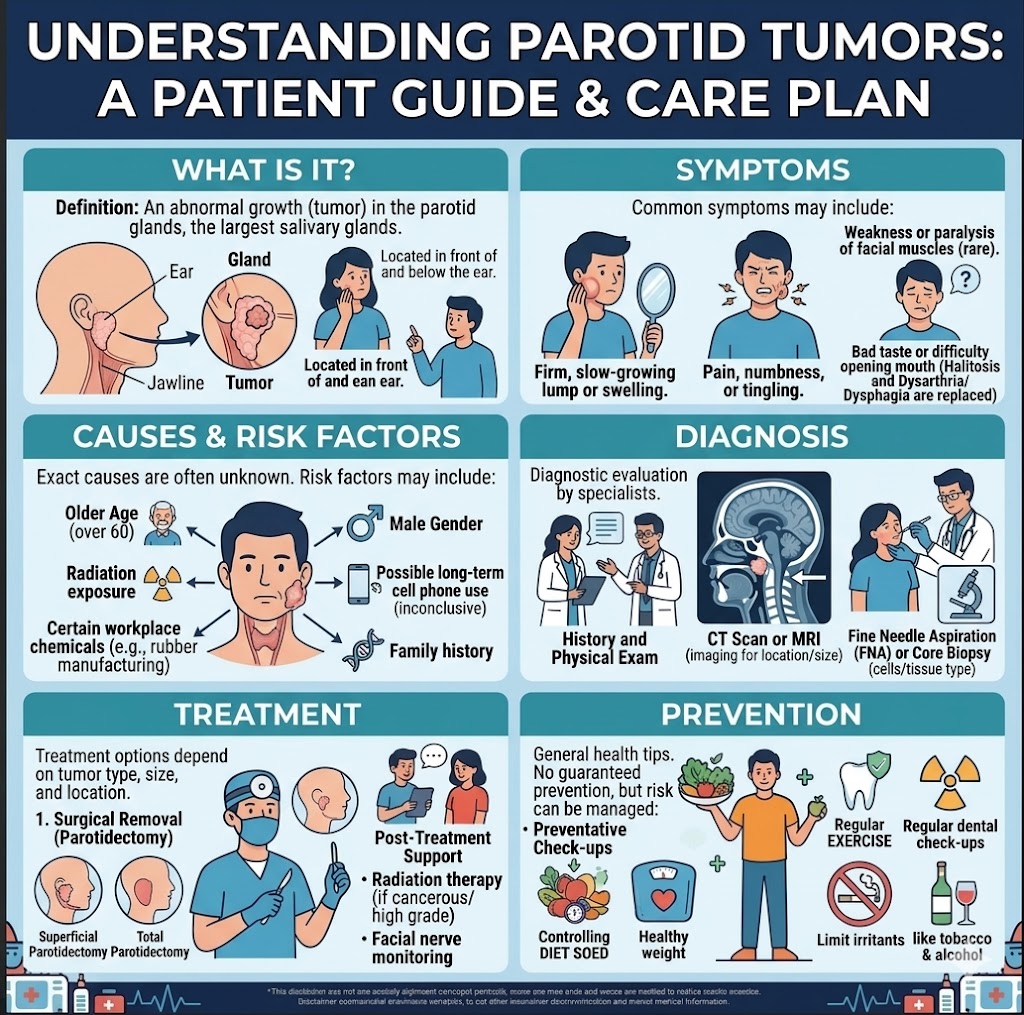
Parotid tumors are growths of cells that begin in the parotid glands. These are the largest of the salivary glands, with one located just in front of each ear on the sides of your face. Salivary glands produce saliva, which is essential for chewing, swallowing, and starting the digestion process. While many salivary glands exist throughout the mouth and throat, the parotid glands are the most common site for these growths to occur. Most parotid tumors are non-cancerous (benign), meaning they do not spread. However, some can be cancerous (malignant), which are called parotid gland cancers. Tumors form when cells in the parotid glands develop changes in their DNA, leading to uncontrolled growth and multiplication.
Understanding the Condition
Parotid Tumors: Understanding Growths in Your Salivary Glands
Understanding the Condition
Parotid tumors are growths of cells that begin in the parotid glands. These are the largest of the salivary glands, with one located just in front of each ear on the sides of your face. Salivary glands produce saliva, which is essential for chewing, swallowing, and starting the digestion process. While many salivary glands exist throughout the mouth and throat, the parotid glands are the most common site for these growths to occur. Most parotid tumors are non-cancerous (benign), meaning they do not spread. However, some can be cancerous (malignant), which are called parotid gland cancers. Tumors form when cells in the parotid glands develop changes in their DNA, leading to uncontrolled growth and multiplication.
Common Symptoms
Lump or Swelling: A noticeable lump or swelling on one side of the face, typically appearing near the ear or cheek.
Difficulty Swallowing: Problems or discomfort when trying to swallow food or liquids.
Limited Mouth Opening: Trouble opening the mouth as wide as usual.
Facial Numbness: A loss of sensation or numbness in a specific part of the face.
Facial Muscle Weakness: Weakness in the muscles on one side of the face, which can affect expressions or movement.
Facial Pain: Ongoing pain or discomfort in the face.
Consultation Guide
Which Specialist to Meet
If you experience any concerning symptoms, you should consult an Ear, Nose, and Throat (ENT) specialist, also known as an otolaryngologist. These doctors specialize in conditions affecting the head and neck, including parotid tumors.
Preparations Before Your Visit
Before your visit, make a detailed list of all your symptoms, noting when they started and any changes you've observed. Be prepared to share your complete medical history, including any past illnesses, surgeries, and all current medications (prescription, over-the-counter, and supplements). It's also helpful to write down any questions you have for the doctor to ensure all your concerns are addressed during the appointment.
Book a doctor visit near me
Be Aware of Age-Related Risk: While parotid tumors can affect individuals of any age, they are more frequently diagnosed in older adults. As you age, maintaining regular health check-ups and promptly reporting any new or unusual facial lumps or symptoms to your doctor becomes increasingly important for early detection.
Limit Head and Neck Radiation Exposure: Individuals with a past history of radiation therapy to the head or neck area for other medical conditions may have an elevated risk of developing parotid tumors. It's crucial to discuss any previous radiation exposure with your healthcare provider and understand if ongoing monitoring is recommended.
Practice Occupational Safety: Certain work-related exposures, particularly in industries involving rubber manufacturing or nickel, have been associated with an increased risk of salivary gland tumors. If you work in such environments, consistently adhere to all safety protocols, use appropriate personal protective equipment, and discuss any potential health concerns with your healthcare provider.
Self-Monitoring for Changes: Remain vigilant and attentive to your body. It is important to immediately report any new or worsening symptoms, such as the appearance of new lumps, alterations in facial sensation, or any difficulties with facial movements, to your doctor without delay.
Consultation Guide
During a CT scan, you will lie comfortably on a motorized table that slowly slides into a large, doughnut-shaped machine. The scanner rotates around you as it takes pictures. You may be asked to hold your breath for brief moments to ensure clear images. In some cases, a special dye, called contrast material, may be administered intravenously or orally to highlight specific areas, which might cause a temporary warm sensation. The procedure is generally painless and typically lasts between 10 and 30 minutes.
Diagnostic Procedures
CT Scan (Computed Tomography Scan)
What to Expect
A needle biopsy is a medical procedure used to collect a small sample of cells or tissue from a suspicious area in the body, such as a parotid lump. This sample is then sent to a pathology laboratory where it is meticulously examined under a microscope by a specialist to determine if the cells are cancerous or benign, or to diagnose other medical conditions. Common types include fine-needle aspiration (collects individual cells) and core needle biopsy (collects a small cylinder of tissue).
What to Expect
Before the biopsy begins, your doctor will clean the skin over the area where the lump is located. A local anesthetic will then be injected to numb the site, meaning you will feel minimal to no pain during the procedure itself, only a sensation of pressure. The doctor will carefully guide a thin, hollow needle into the lump, often using imaging guidance like ultrasound or CT to ensure precise placement. Multiple samples might be taken. Once the samples are collected, the needle is removed, and firm pressure is applied to the site to prevent bleeding, followed by the application of a bandage. The entire procedure typically takes between 15 and 30 minutes.
Consistent Follow-Up Appointments: Regular follow-up visits with your ENT specialist are a critical component of long-term care after the diagnosis and treatment of a parotid tumor. These appointments allow your medical team to meticulously monitor your recovery, check for any signs of tumor recurrence, or detect any new growths at the earliest possible stage.
Treatment Options
A CT scan is an advanced imaging technique that uses multiple X-ray images taken from different angles around your body. A powerful computer then processes these images to create detailed cross-sectional views, often referred to as 'slices,' of bones, blood vessels, and soft tissues inside the body. This provides much more detailed information than a standard X-ray and is invaluable for detecting growths, injuries, or other diseases and planning treatments.
Surgical Procedures
Surgical Removal (Parotidectomy): This is often the primary and most effective treatment for parotid tumors. The surgeon carefully removes the tumor, which may involve removing a portion or the entire parotid gland. The exact extent of the surgery depends on factors like the tumor's size, its specific location, and whether it is benign or malignant. Great care is taken during the procedure to protect surrounding vital structures, especially the delicate facial nerve, which controls facial movements and expressions. (Duration: Recovery typically requires a hospital stay of a few days. Complete healing and a return to normal activities usually take several weeks, during which close follow-up with your surgical team is essential.)
Therapies
Radiation Therapy: This treatment uses high-energy beams, such as X-rays or protons, precisely targeted to destroy tumor cells or prevent their growth. It can be delivered from a machine outside the body (external beam radiation therapy) or, less commonly for parotid tumors, by placing a radioactive source directly into or near the tumor (brachytherapy). Radiation therapy may be used after surgery to eliminate any remaining cancer cells, or it can be a primary treatment option if surgery is not feasible, or for certain types of benign tumors. (Duration: Treatment courses typically span several weeks, with daily sessions on weekdays. Each individual session is usually brief, lasting only a few minutes, though preparation and setup time for each session can be longer.)
Prevention & Long-Term Wellbeing
Prevention
Tags & Topics
Notice an error or need an update?
Help us keep medical information accurate. Report incorrect info or suggest an edit.


