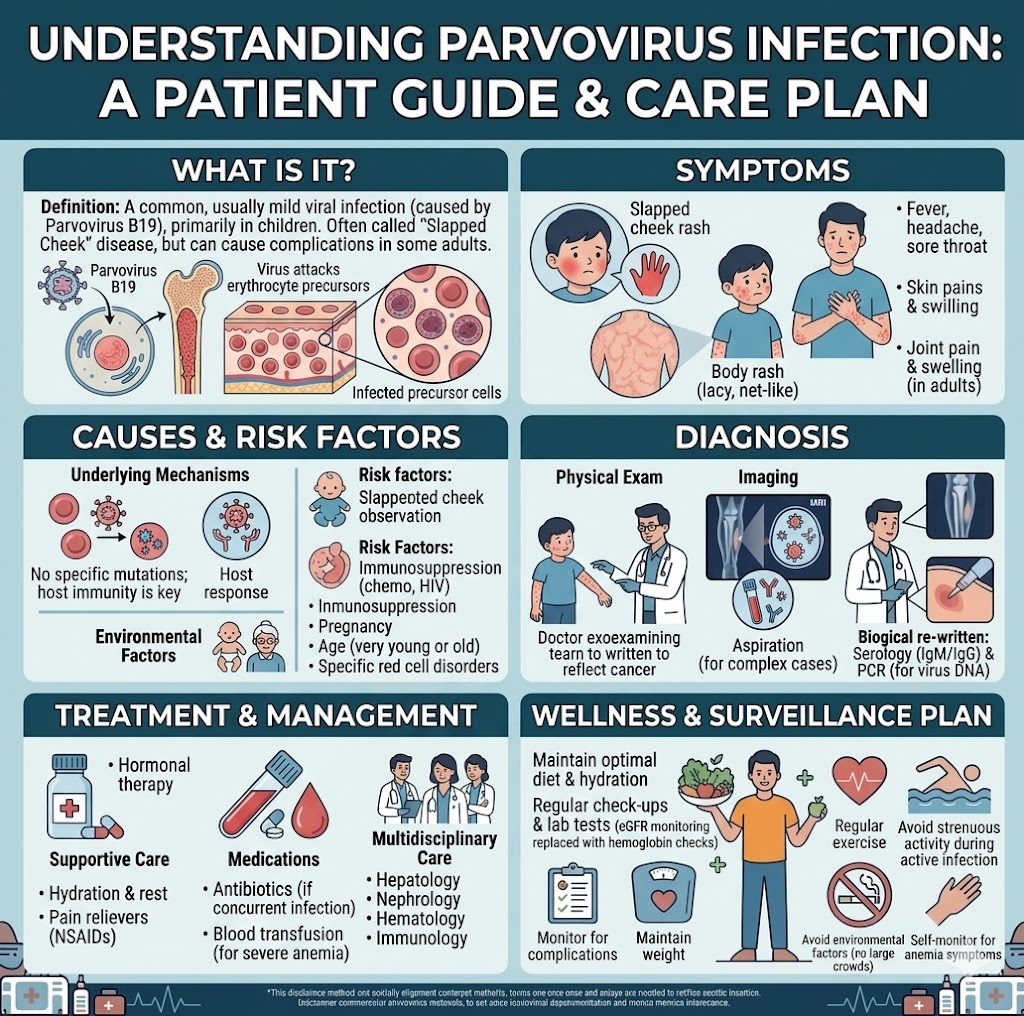
Parvovirus B19 infection is a common viral illness, most frequently seen in children. It spreads easily through respiratory droplets from person to person. While often mild, it can be more serious for specific groups, including pregnant individuals, those with weakened immune systems, or certain blood disorders. The infection is sometimes known as 'fifth disease,' particularly when it causes a distinctive facial rash.
Understanding the Condition
Parvovirus B19 Infection: Understanding the Causes, Symptoms, and Care
Understanding the Condition
Common Symptoms
Early Symptoms (Children and Adults): These non-specific symptoms often appear first, about 5 to 10 days after contact with the virus. They can include: low-grade fever, a runny nose, headache, and generalized body aches or muscle discomfort.
Distinctive Rash (Children): A bright red rash often appears suddenly on the cheeks, giving them a 'slapped cheek' appearance. This rash is typically more visible on lighter skin tones. On brown or Black skin, the rash may appear purplish or be harder to detect. This distinctive rash is a symptom of 'fifth disease' and usually emerges as the body starts to recover from the infection. The rash can then spread to the body, arms, and legs, often creating a lace-like pattern.
Joint Problems (Adults): Adults, especially women, may experience joint pain, stiffness, or swelling, most commonly in the hands, wrists, knees, and ankles. These symptoms can sometimes persist for several weeks or even months, though they usually resolve completely.
Asymptomatic Cases: Many people, particularly adults, may become infected with parvovirus B19 but never develop any noticeable symptoms, making diagnosis difficult without specific testing.
Consultation Guide
Which Specialist to Meet
For children, a **pediatrician** or **family doctor** is the primary point of contact. Adults should consult their **family doctor** or **general practitioner**. If the infection affects a pregnant individual, an **obstetrician/gynecologist** will be involved. In cases of severe complications, such as significant anemia or weakened immune systems, a **hematologist** (blood specialist) or **infectious disease specialist** may be consulted.
Preparations Before Your Visit
Before your visit, make a list of all current symptoms, when they started, and any potential exposure to sick individuals. Include information about your medical history, any existing health conditions, and all medications or supplements you are currently taking. It's also helpful to note any questions you have for the doctor.
Book a doctor visit near me
General Care and Symptom Management
Rest and Fluids: Getting plenty of rest helps your body conserve energy to fight the infection, and staying well-hydrated by drinking water and other clear fluids can help manage fever and overall discomfort. (Duration: Throughout the illness, typically 1-3 weeks.)
Over-the-Counter Pain and Fever Relievers: Medications such as acetaminophen or ibuprofen can help reduce fever, alleviate headache, and ease body aches or joint pain. Always follow dosage instructions. (Duration: As needed for symptoms, usually for several days.)
Itch Relief: For an itchy rash, over-the-counter anti-itch creams (e.g., containing hydrocortisone) or oral antihistamines can provide relief from discomfort. (Duration: As needed for rash symptoms, typically 5-10 days.)
Specific Medical Interventions
Avoid Contact with Sick Individuals: Whenever possible, try to maintain distance from people who are showing symptoms of illness, particularly if you are pregnant, have a weakened immune system, or have a chronic blood condition, as these groups are at higher risk for severe complications.
Avoid Touching Face: Minimize touching your eyes, nose, and mouth to reduce the transfer of viruses from contaminated surfaces to your body.
Long-Term Monitoring and Special Considerations
Monitoring for Anemia (High-Risk Groups): Individuals with chronic blood disorders (e.g., sickle cell anemia, thalassemia) who contract parvovirus B19 should be closely monitored by their doctor for signs of severe anemia, as the virus can temporarily halt red blood cell production, potentially requiring medical intervention like transfusions.
Consultation Guide
Parvovirus B19 infection is a common viral illness, most frequently seen in children. It spreads easily through respiratory droplets from person to person. While often mild, it can be more serious for specific groups, including pregnant individuals, those with weakened immune systems, or certain blood disorders. The infection is sometimes known as 'fifth disease,' particularly when it causes a distinctive facial rash.
Blood Transfusion: In rare but severe cases, particularly in individuals with pre-existing blood disorders (like sickle cell anemia) or severely weakened immune systems, parvovirus B19 can cause severe anemia by temporarily stopping the body from making new red blood cells. A blood transfusion is a procedure where donated, healthy blood components (usually red blood cells) are delivered into your bloodstream through an intravenous line placed in a vein. This replaces lost or damaged red blood cells, restoring the body's ability to deliver vital oxygen to tissues and organs. (Duration: A single transfusion session typically takes 1-4 hours, with potential for repeat transfusions depending on the underlying condition and recovery.)
Diagnostic Procedures
Parvovirus B19 Blood Test
This test checks for specific antibodies (IgM and IgG) to parvovirus B19 or the presence of the virus's genetic material (DNA) in your blood. IgM antibodies indicate a recent or active infection, while IgG antibodies suggest a past infection and immunity. A PCR (polymerase chain reaction) test can detect the viral DNA, confirming an active infection, which is particularly useful for individuals with weakened immune systems or pregnant individuals.
What to Expect
A healthcare professional will draw a small sample of blood, usually from a vein in your arm. This is a quick procedure, typically involving a momentary prick as the needle is inserted. You may feel slight pressure or discomfort. The blood sample is then sent to a laboratory for analysis. There are no special preparations needed for this test, and you can typically resume your normal activities immediately afterward.
Treatment Options
Immunoglobulin Therapy: For individuals with severely weakened immune systems who struggle to clear the virus on their own, a treatment involving concentrated antibodies (immunoglobulin) collected from healthy donors may be given intravenously. This provides the body with the antibodies needed to fight off the infection and can prevent or treat severe anemia and other complications. (Duration: Typically administered as a series of intravenous infusions over several days, with follow-up as needed based on the patient's immune status and viral clearance.)
Prenatal Monitoring (Pregnant Individuals): Pregnant individuals who contract parvovirus B19 or are exposed to it should have close medical supervision. The virus can, in rare cases, affect the developing fetus, leading to complications like severe anemia or hydrops fetalis, which requires specialized monitoring and potentially treatment.
Immune-Compromised Individuals: People with weakened immune systems (due to conditions like HIV, organ transplant, or chemotherapy) are at risk for persistent parvovirus infections and severe anemia. They should be monitored carefully by their healthcare provider and may require specific treatments to help clear the virus.
Prevention & Long-Term Wellbeing
Prevention
Frequent Handwashing: Wash your hands thoroughly and often with soap and water for at least 20 seconds, especially after coughing, sneezing, or touching shared surfaces. If soap and water aren't available, use an alcohol-based hand sanitizer.
Cover Coughs and Sneezes: Always cover your mouth and nose with a tissue when you cough or sneeze. If a tissue isn't available, cough or sneeze into your elbow, not your hands. Dispose of used tissues immediately.
Tags & Topics
Notice an error or need an update?
Help us keep medical information accurate. Report incorrect info or suggest an edit.


