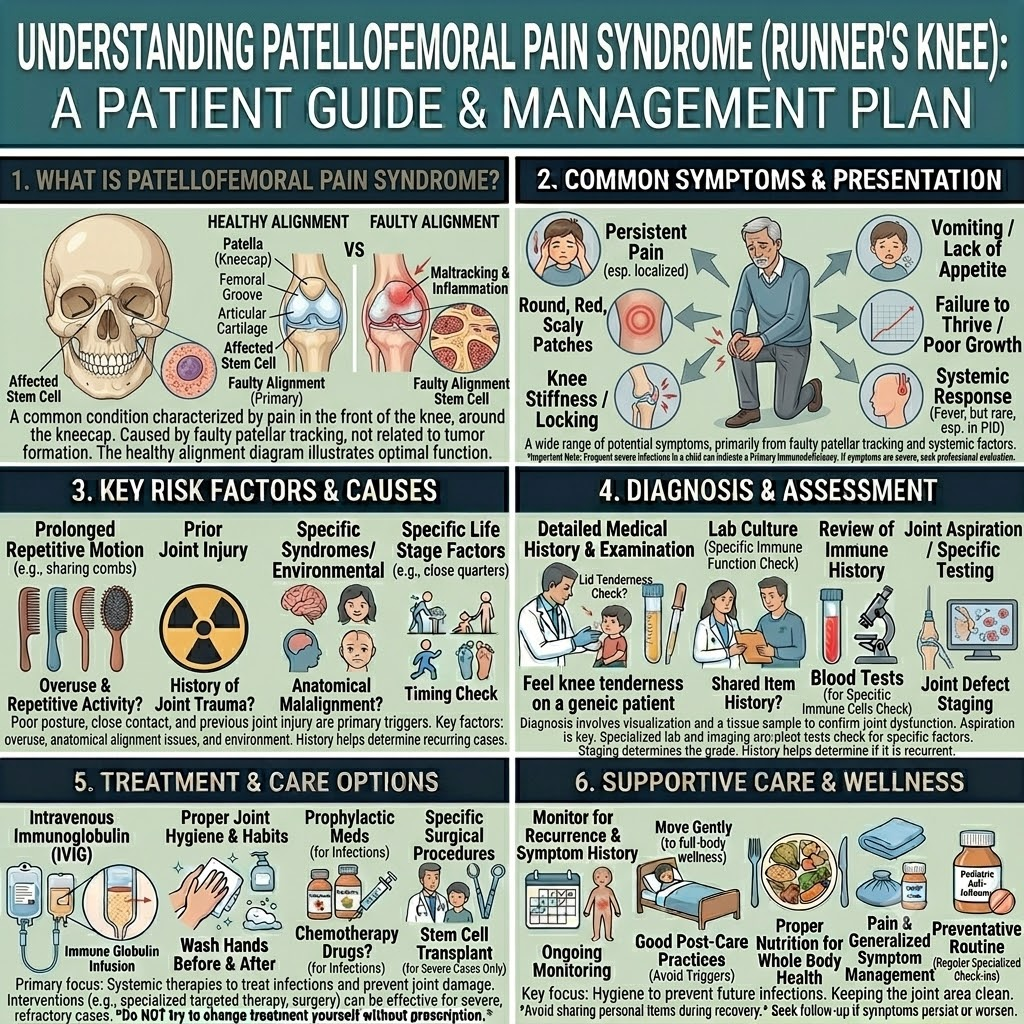
Patellofemoral pain syndrome, commonly referred to as runner's knee, is characterized by dull, aching pain felt at the front of the knee, specifically around the kneecap (patella). This condition is highly prevalent among runners, jumpers, and individuals participating in sports that place repetitive stress on the knee joint. While simple home treatments such as rest and ice can alleviate symptoms, some individuals require physical therapy or specialized interventions to recover fully and restore normal knee function.
Understanding the Condition
Understanding Patellofemoral Pain Syndrome (Runner's Knee)
Understanding the Condition
Patellofemoral pain syndrome, commonly referred to as runner's knee, is characterized by dull, aching pain felt at the front of the knee, specifically around the kneecap (patella). This condition is highly prevalent among runners, jumpers, and individuals participating in sports that place repetitive stress on the knee joint. While simple home treatments such as rest and ice can alleviate symptoms, some individuals require physical therapy or specialized interventions to recover fully and restore normal knee function.
Common Symptoms
Frontal Knee Pain: A persistent dull, aching pain located directly behind, around, or under the kneecap.
Aggravation During Activity: Noticeable increase in knee pain when climbing up or down stairs, squatting, or kneeling.
Stiffness After Prolonged Sitting: Discomfort or aching in the knee joint after sitting for long periods with the knees bent, often called 'theater sign'.
Consultation Guide
Which Specialist to Meet
Diagnostic Procedures
You should consult a primary care sports medicine doctor, an orthopedic specialist, or a licensed physical therapist for an accurate diagnosis and customized recovery plan.
Preparations Before Your Visit
A quick, painless imaging test that uses a small amount of radiation to capture detailed views of your knee's bone structures. This helps doctors rule out fractures, arthritis, or other bone-related issues.
What to Expect
During the X-ray, you will be asked to stand or lie down in specific positions so the machine can capture different angles of your knee. You must remain completely still for a few seconds while the images are taken. The process takes less than 15 minutes.
CT Scan (Computerized Tomography)
An imaging scan that combines a series of X-ray images taken from different angles to create cross-sectional, 3D views of the bones and soft tissues inside your knee. This is highly useful for checking the alignment of your kneecap.
What to Expect
You will lie on a flat, motorized table that slowly glides into a large, doughnut-shaped scanner. You must lie still to prevent blurry images. The scan is painless, usually takes 10 to 20 minutes, and may occasionally require an intravenous contrast dye to make soft tissues stand out more clearly.
A minimally invasive surgical procedure used to diagnose and sometimes treat joint damage. A tiny camera (arthroscope) is inserted into the knee joint, transmitting high-definition, live video to a monitor for the surgeon to examine.
What to Expect
Performed under local, regional, or general anesthesia in an outpatient setting. The surgeon makes small, buttonhole-sized incisions around your knee to insert the camera and pencil-thin surgical tools. The procedure takes between 30 to 90 minutes. You will need someone to drive you home afterward.
Treatment Options
Before your appointment, document when your knee pain started, what activities worsen or relieve it, and any previous knee injuries or surgeries. Bring the athletic shoes you wear most often during workouts, as your doctor may want to evaluate their wear patterns.
Book a doctor visit near me
Home Remedies and Conservative Care
R.I.C.E. Protocol: Resting the affected joint, applying ice packs wrapped in a towel for 15-20 minutes several times a day, using a supportive compression bandage, and elevating the knee above heart level to control swelling. (Duration: Typically performed for 1 to 2 weeks following an acute flare-up.)
Medications
Over-the-Counter Pain Relievers: Non-prescription anti-inflammatory medications taken orally to manage pain and reduce localized tissue inflammation under the kneecap. (Duration: Used as needed for temporary relief, typically restricted to 5 to 10 consecutive days unless supervised by a physician.)
Therapies
Physical Therapy: Targeted rehabilitation programs focusing on strengthening the quadriceps, hamstrings, and hip abductors to improve kneecap tracking, alongside stretching exercises to increase joint flexibility. (Duration: Usually spans 6 to 12 weeks, with sessions 2 to 3 times per week, supplemented by home exercises.)
Orthotics and Knee Taping: Using customized shoe inserts (orthotics) or specialized kinesiology tape applied to the knee to distribute pressure evenly and keep the kneecap aligned during physical activities. (Duration: Worn daily or during athletic activities for several weeks to months until muscular balance is restored.)
Surgical Procedures
Arthroscopic Realignment or Debridement: A minor surgical procedure to shave down damaged cartilage under the kneecap or release tight lateral tissues to allow the kneecap to track more naturally. (Duration: A 1-hour procedure followed by 4 to 12 weeks of structured post-operative physical therapy.)
Prevention & Long-Term Wellbeing
Prevention and Long-Term Joint Health
Build Leg and Hip Strength: Incorporate strength training for your quadriceps, hamstrings, and outer hip muscles to ensure balanced support for the knee joint, while avoiding deep squats during heavy weight training.
Optimize Movement Biomechanics: Work with a trainer or physical therapist to ensure proper technique when running, jumping, and pivoting, preventing the knees from caving inward during movement.
Maintain a Healthy Weight: Losing excess body weight directly reduces the mechanical stress and pressure placed on your patellofemoral joints during daily activities.
Active Warm-Ups and Stretching: Always spend 5 to 10 minutes performing a low-intensity dynamic warm-up before exercise, followed by gentle stretching afterward to promote joint flexibility.
Gradual Progression of Training: Avoid sudden changes or rapid increases in the intensity, duration, or frequency of your workouts to prevent overuse injuries.
Wear Activity-Specific Footwear: Choose athletic shoes that offer proper shock absorption and arch support tailored to your foot type, and replace them regularly as they wear down.
Tags & Topics
Notice an error or need an update?
Help us keep medical information accurate. Report incorrect info or suggest an edit.


