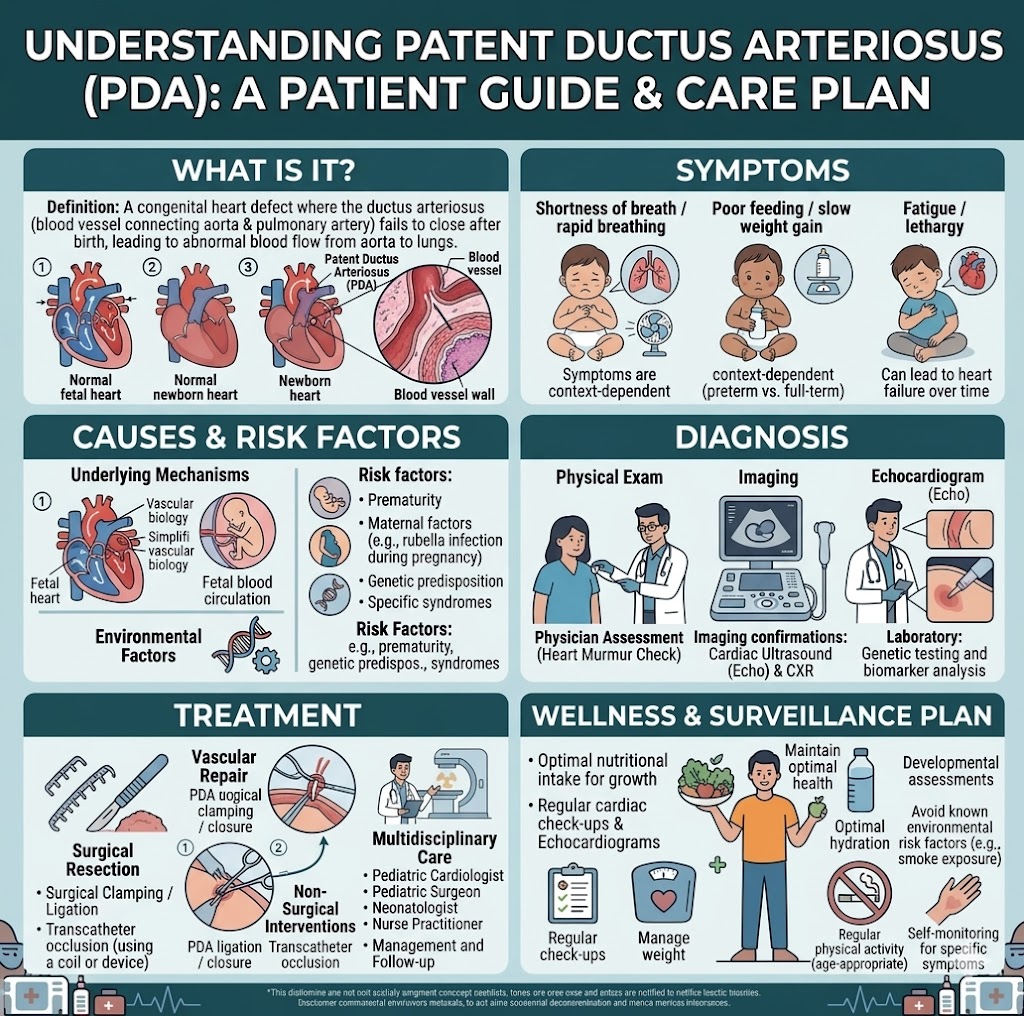
Patent ductus arteriosus (PDA) is a congenital heart defect where a specific blood vessel, called the ductus arteriosus, remains open after birth. This vessel is vital for an unborn baby's blood circulation, allowing blood to bypass the developing lungs. Normally, it closes soon after birth. When it stays open, it creates an abnormal connection between the two main arteries leaving the heart (the aorta and the pulmonary artery). A small PDA may not cause problems, but a large, untreated one can lead to too much blood flowing to the lungs and heart, potentially weakening the heart muscle and causing serious complications like heart failure.
Understanding the Condition
Patent Ductus Arteriosus (PDA): Understanding a Common Heart Condition
Understanding the Condition
Common Symptoms
No Symptoms (Small PDA): Many people with a small PDA may never experience symptoms, or they may only become noticeable in adulthood during a routine check-up.
Poor Eating and Growth: Infants and children with a large PDA may struggle to eat well, leading to slower growth and weight gain.
Excessive Sweating: Noticeable sweating, particularly during crying or feeding, can be a symptom in babies.
Rapid or Labored Breathing: Babies and young children might breathe constantly fast, appear out of breath, or experience gasping breaths.
Easy Tiring: Children may tire quickly during play or feeding, indicating their heart is working harder than it should.
Fast Heart Rate: The heart may beat unusually fast, even when the child is at rest.
Consultation Guide
Which Specialist to Meet
If you suspect your child or yourself might have symptoms of PDA, you should consult with your general practitioner first. They can refer you to a cardiologist, a doctor specializing in heart conditions. For children, a pediatric cardiologist is the appropriate specialist.
Preparations Before Your Visit
Before your visit, gather any relevant medical records, including your family’s medical history of heart conditions. Make a list of all current symptoms, including when they started and how often they occur. List all medications, supplements, and vitamins you or your child are taking. Prepare a list of questions for your doctor to ensure all your concerns are addressed.
Book a doctor visit near me
Observation: For very small PDAs that are not causing symptoms or complications, doctors may recommend regular check-ups to monitor the condition over time. Some small PDAs can close on their own, especially in infants. (Duration: Ongoing, with periodic follow-up visits)
Diuretics and other heart medications: If a large PDA is causing symptoms of heart failure, such as fluid buildup, medications may be prescribed to manage these symptoms and support heart function. (Duration: Varies; may be short-term or ongoing depending on severity and other treatments)
Minimally Invasive Procedures
Consultation Guide
Patent ductus arteriosus (PDA) is a congenital heart defect where a specific blood vessel, called the ductus arteriosus, remains open after birth. This vessel is vital for an unborn baby's blood circulation, allowing blood to bypass the developing lungs. Normally, it closes soon after birth. When it stays open, it creates an abnormal connection between the two main arteries leaving the heart (the aorta and the pulmonary artery). A small PDA may not cause problems, but a large, untreated one can lead to too much blood flowing to the lungs and heart, potentially weakening the heart muscle and causing serious complications like heart failure.
Get Recommended Vaccinations: Ensure your vaccinations are up-to-date, especially for German measles (rubella), before becoming pregnant. Rubella infection during pregnancy can cause congenital heart defects.
Blood Sugar Control: If you have diabetes, careful management of your blood sugar levels before and during pregnancy can lower the risk of heart conditions in the baby.
Long-Term Monitoring and Management
Regular Follow-ups: Individuals with PDA, whether treated or under observation, need ongoing monitoring by a cardiologist to check heart function and address any potential complications. This is especially important if complications like pulmonary hypertension or heart failure have developed.
Diagnostic Procedures
A chest X-ray is a quick imaging test that uses a small amount of radiation to create pictures of your heart, lungs, and surrounding structures. It can reveal the size and shape of the heart and show signs of fluid in the lungs, which might indicate heart failure.
What to Expect
During a chest X-ray, you will stand or sit in front of an X-ray plate, sometimes in different positions. You will be asked to hold your breath for a few seconds while the image is taken. The procedure is painless and usually takes only a few minutes.
An echocardiogram is an ultrasound of the heart, using sound waves to create detailed moving pictures of the heart's chambers, valves, and blood vessels. It allows doctors to see the size of the PDA, the direction and speed of blood flow, and how well the heart is pumping.
What to Expect
You will lie on an examination table. A gel is applied to your chest, and a handheld device called a transducer is moved across your skin. The transducer sends and receives sound waves, which are converted into images on a screen. You may hear whooshing sounds as the blood flow is detected. The test is painless and typically lasts 30-60 minutes.
Electrocardiogram (ECG or EKG)
An electrocardiogram records the electrical signals of your heart. It shows how fast your heart is beating and whether its rhythm is normal or irregular. While it can't directly diagnose a PDA, it can detect signs of heart strain or enlargement that may result from a large PDA.
What to Expect
Small, sticky patches called electrodes are placed on your chest, arms, and legs. Wires connect these patches to an ECG machine, which records your heart's electrical activity. The test is quick, painless, and usually takes about 5-10 minutes.
Cardiac Catheterization
Cardiac catheterization is a procedure where a thin, flexible tube (catheter) is inserted into a blood vessel, usually in the groin or arm, and guided to the heart. It can be used to measure pressures within the heart and blood vessels, take blood samples, or even close the PDA.
What to Expect
Treatment Options
Medications
Non-steroidal anti-inflammatory drugs (NSAIDs): For premature infants, certain medications, typically given intravenously, can help encourage the ductus arteriosus to close. These medications work by blocking chemicals in the body that keep the duct open. (Duration: Typically given for a few days immediately after birth)
Catheter-based Closure: This procedure uses a thin tube (catheter) inserted through a blood vessel, usually in the leg, to reach the heart. A small device, such as a coil or plug, is then deployed to close the PDA. This prevents abnormal blood flow without open surgery. (Duration: One-time procedure, typically 1-2 hours, with a short hospital stay and recovery time of a few days to a week)
Surgical Ligation: For larger PDAs, especially in infants or when catheter closure isn't suitable, surgery may be performed. A small incision is made between the ribs, and the ductus arteriosus is tied off or clipped shut. This permanently closes the abnormal connection. (Duration: One-time surgery, typically 1-3 hours, followed by a hospital stay of several days and a recovery period of several weeks.)
Early and Regular Prenatal Care: Seeking comprehensive prenatal care, ideally starting before pregnancy, helps ensure a healthy environment for fetal development. Discuss all medications, including over-the-counter ones, with your healthcare provider.
Folic Acid Supplementation: Taking 400 micrograms of folic acid daily before and during early pregnancy can reduce the risk of certain birth defects, including some heart conditions.
Managing Complications: If a large PDA has led to complications such as high blood pressure in the lungs or heart failure, specific treatments and lifestyle adjustments will be necessary to manage these conditions and prevent further damage.
Family Planning with PDA: Women with a history of PDA, particularly those with a large PDA or complications, should consult with a healthcare professional before pregnancy. They can assess risks, adjust medications, and plan for specialized care to ensure a safe pregnancy for both mother and baby.
Prevention & Long-Term Wellbeing
This procedure is performed in a hospital setting. You or your child will typically receive sedation or anesthesia to ensure comfort. A small incision may be made to access the blood vessel. The catheter is then carefully threaded to the heart. During the procedure, doctors can measure pressures and may inject a special dye to visualize blood flow. If closure is planned, a device can be delivered through the catheter. The procedure can last from an hour to several hours, followed by a recovery period where you'll need to lie still.
Prevention during Pregnancy
Maintain a Healthy Lifestyle: Regular exercise (as approved by your doctor), avoiding alcohol and smoking (including secondhand smoke), and managing underlying health conditions like diabetes can significantly contribute to a healthy pregnancy.
Tags & Topics
Notice an error or need an update?
Help us keep medical information accurate. Report incorrect info or suggest an edit.


