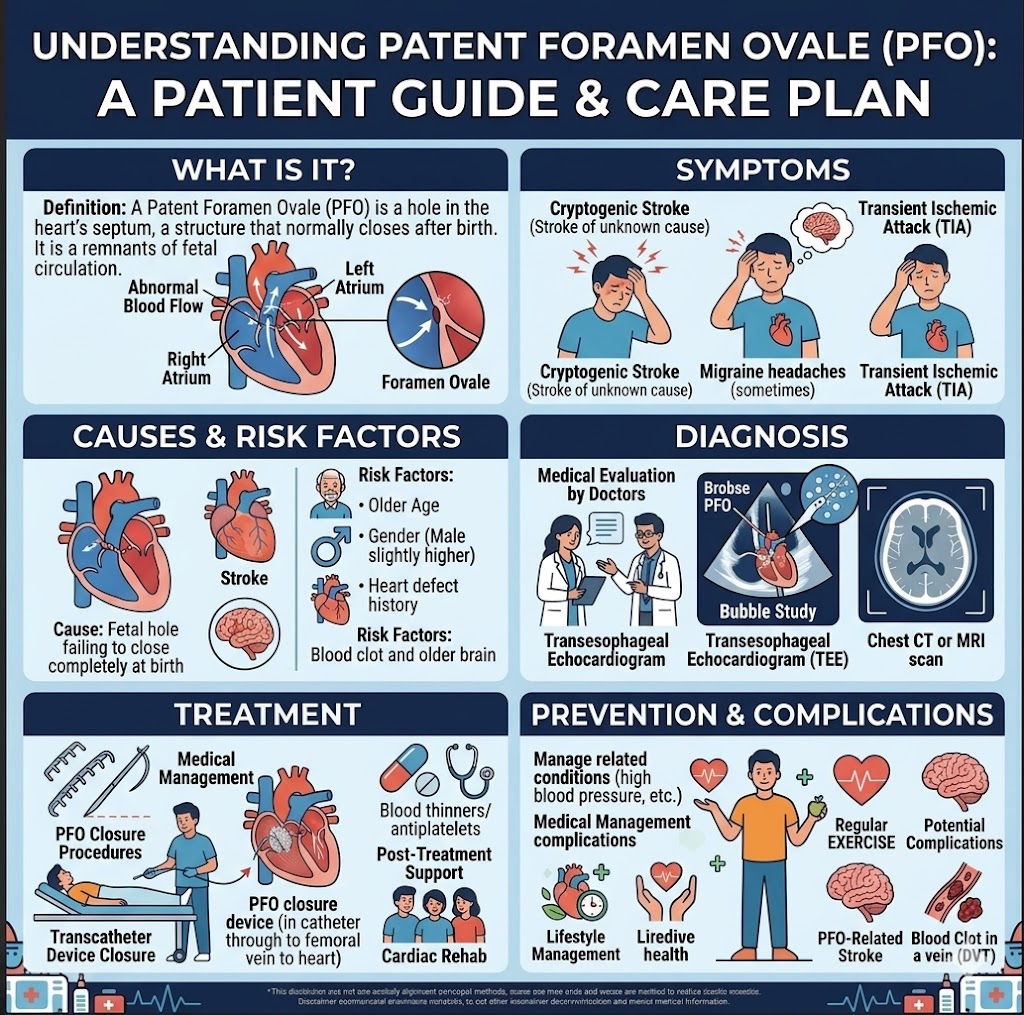
A Patent Foramen Ovale (PFO) is a small, flap-like opening located in the wall between the two upper chambers of the heart, called the atria. This opening is a normal part of everyone's heart development before birth. In the womb, a baby's lungs don't function, so the foramen ovale allows blood to bypass them, receiving oxygen from the mother. After birth, with the first breaths, pressure changes in the heart typically cause this flap to seal shut within months. If it doesn't fully close, it's called a PFO. PFOs are very common, found in about one in four people, yet most individuals never experience symptoms or health problems and remain unaware they have one. It's often discovered incidentally during unrelated medical tests. The reason it stays open in some isn't fully known, but genetics may play a role. For the vast majority, a PFO needs no specific treatment.
Understanding the Condition
Patent Foramen Ovale (PFO): Understanding a Common Heart Opening
Understanding the Condition
A Patent Foramen Ovale (PFO) is a small, flap-like opening located in the wall between the two upper chambers of the heart, called the atria. This opening is a normal part of everyone's heart development before birth. In the womb, a baby's lungs don't function, so the foramen ovale allows blood to bypass them, receiving oxygen from the mother. After birth, with the first breaths, pressure changes in the heart typically cause this flap to seal shut within months. If it doesn't fully close, it's called a PFO. PFOs are very common, found in about one in four people, yet most individuals never experience symptoms or health problems and remain unaware they have one. It's often discovered incidentally during unrelated medical tests. The reason it stays open in some isn't fully known, but genetics may play a role. For the vast majority, a PFO needs no specific treatment.
Common Symptoms
Asymptomatic Nature: Most people with a patent foramen ovale (PFO) have no symptoms, and the condition is usually found by chance during tests for other health issues. In rare cases, a PFO might be linked to unexplained strokes or certain types of migraines with aura, but these are often considered complications rather than direct symptoms of the PFO itself.
Consultation Guide
Which Specialist to Meet
For concerns about a PFO, consult a cardiologist, a heart specialist. If closure is considered, a cardiac interventionist or surgeon may be involved.
Preparations Before Your Visit
Before your visit, list all medications, supplements, and any symptoms you've experienced. Be ready to discuss your full medical history. Prepare questions for your doctor.
Book a doctor visit near me
Regular Medical Check-ups: Even with an asymptomatic PFO, routine doctor or cardiologist visits are important for monitoring heart health and early detection of potential issues.
Communicate with Healthcare Providers: Always inform any new healthcare provider about your PFO, especially before procedures or if new symptoms arise.
Consultation Guide
Watchful Waiting: As most PFOs cause no issues, many are simply monitored. This involves regular check-ups to track heart health. (Duration: Ongoing, as advised by your doctor.)
Diagnostic Procedures
This non-invasive test uses sound waves to create moving pictures of your heart. It shows the heart's structure, pumping action, and blood flow through chambers and valves. It's vital for visualizing a PFO and assessing its size and blood flow direction.
What to Expect
You'll lie on a table, and gel will be applied to your chest. A technician uses a handheld transducer to capture images. You may be asked to hold your breath briefly. The test is painless and takes 30-60 minutes. A "bubble study" may involve injecting tiny saline bubbles into a vein; their appearance on the left side of the heart suggests a PFO. For clearer views, a "transesophageal echocardiogram" (TEE) might be done, where a smaller transducer is guided down your throat under mild sedation.
Cardiac Catheterization
A more invasive procedure providing detailed heart function and structure information, including PFO characteristics. A thin, flexible tube (catheter) is inserted into a blood vessel and guided to the heart.
What to Expect
Treatment Options
Observation and Monitoring
Medications
Blood-Thinning Medications: If a PFO is linked to a stroke or transient ischemic attack (TIA), blood-thinning agents (antiplatelets or anticoagulants) may be prescribed. These help prevent blood clots and reduce future risks. (Duration: Long-term, determined by your cardiologist.)
Transcatheter Device Closure: A minimally invasive option, often for patients with PFO-related stroke despite medication. A catheter is guided through a blood vessel to the heart. A small, umbrella-like device is then deployed to seal the PFO, stopping blood flow through it. (Duration: Procedure takes 1-2 hours. Hospital stay typically 1-2 days, with full recovery in several weeks. The device stays permanently.)
Surgical Procedures
Surgical PFO Repair: Open-heart surgery to stitch the PFO closed is rare for PFO alone. It's usually considered if a patient is already undergoing other heart surgery (e.g., valve repair). (Duration: Surgery lasts several hours. Hospital stay is typically 5-7 days, with full recovery and return to normal activities taking 6-12 weeks.)
Manage Associated Health Conditions: If your PFO is linked to other concerns (e.g., specific migraines, stroke history), diligently follow medical advice for those conditions, including prescribed medications and lifestyle changes.
Prevention & Long-Term Wellbeing
You'll receive local anesthetic for the insertion site (typically groin or wrist) and possibly a mild sedative. A small incision is made, and the catheter is carefully threaded to your heart, guided by X-ray imaging. The doctor can measure heart pressures, inject dye to visualize blood flow, or perform interventions. If PFO closure is planned, the device can be deployed during this procedure. You'll feel pressure but generally no pain. The procedure lasts 1-several hours. Afterward, the catheter is removed, and pressure is applied to prevent bleeding. You'll need to lie flat for several hours for recovery.
Prevention and Long-Term Monitoring
Maintain a Heart-Healthy Lifestyle: Embrace habits promoting overall cardiovascular health: a balanced diet, regular physical activity, maintaining a healthy weight, and avoiding smoking.
Tags & Topics
Notice an error or need an update?
Help us keep medical information accurate. Report incorrect info or suggest an edit.


