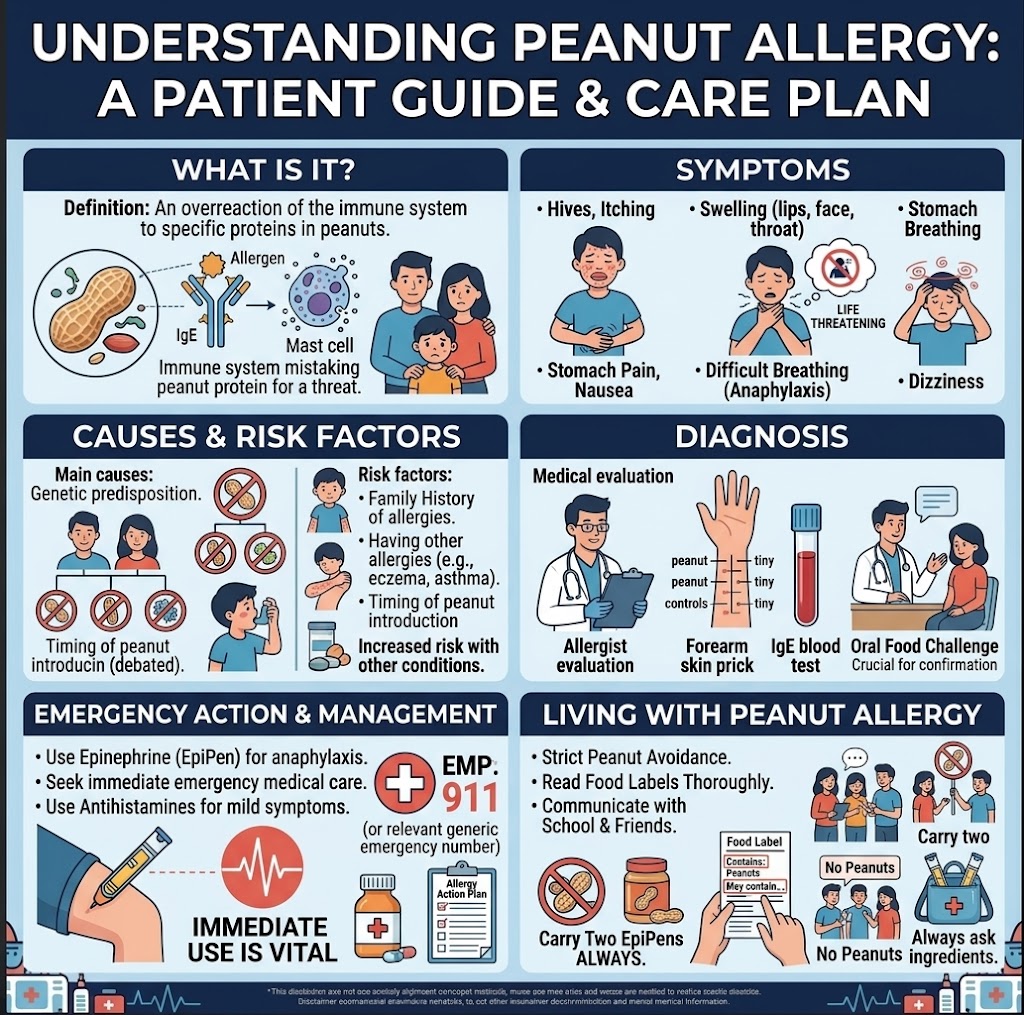
A peanut allergy occurs when your body's immune system mistakenly identifies peanut proteins as dangerous invaders. It is one of the most common food allergies and a leading cause of severe, life-threatening allergic reactions known as anaphylaxis. Even if past reactions have been mild, there is always a risk that future exposures could trigger a much more severe and dangerous reaction.
Understanding the Condition
Understanding Peanut Allergy: Symptoms, Causes, and Management
Understanding the Condition
Common Symptoms
Skin Reactions: These include itchy red bumps on the skin (hives), localized swelling, or widespread redness.
Oral and Throat Discomfort: A tingling, itching, or swelling sensation in or around the mouth, lips, and throat.
Digestive Issues: Stomach cramps, nausea, vomiting, or watery diarrhea occurring shortly after eating peanuts.
Respiratory Problems: Shortness of breath, wheezing, coughing, nasal congestion, or a runny nose.
Anaphylaxis (Severe Emergency): A rapid, life-threatening reaction marked by airway constriction, severe throat swelling making breathing difficult, a sudden drop in blood pressure (shock), a rapid pulse, dizziness, and loss of consciousness.
Consultation Guide
Which Specialist to Meet
Before your appointment, keep a detailed food diary of all meals and symptoms. Make a list of all your medications, as you may need to stop taking antihistamines several days before allergy testing. Write down any questions you have and be ready to describe your family's history of allergies or eczema.
Book a doctor visit near me
Antihistamine Medications: Oral medications used to relieve mild symptoms such as itching, hives, or a runny nose after accidental exposure. They do not prevent or treat severe reactions. (Duration: Taken as-needed immediately after exposure; symptoms typically improve within 30 minutes to an hour.)
Oral Immunotherapy: Under strict medical supervision, patients ingest daily, precisely measured, gradually increasing amounts of peanut protein to desensitize the immune system to accidental exposures. (Duration: Requires an initial multi-month build-up phase followed by daily maintenance dosing, which must be continued indefinitely to maintain protection.)
Consultation Guide
A peanut allergy occurs when your body's immune system mistakenly identifies peanut proteins as dangerous invaders. It is one of the most common food allergies and a leading cause of severe, life-threatening allergic reactions known as anaphylaxis. Even if past reactions have been mild, there is always a risk that future exposures could trigger a much more severe and dangerous reaction.
Diagnostic Procedures
You should consult a board-certified Allergist and Immunologist, a specialist dedicated to diagnosing and treating allergies and immune system disorders.
Preparations Before Your Visit
Allergy Skin Prick Test
A safe and rapid test used to check your skin's immediate reaction to peanut proteins.
What to Expect
A healthcare provider will place a tiny drop of diluted peanut extract on your skin, usually on your forearm or back, and gently scratch or prick the surface. You will wait 15 minutes. If you are allergic, a raised, red, itchy bump resembling a mosquito bite will appear at the test site.
Specific IgE Blood Test
A laboratory test that measures the amount of allergy-associated antibodies (Immunoglobulin E) in your bloodstream.
What to Expect
A nurse will draw a small sample of blood from a vein in your arm. This sample is sent to a lab to measure your immune system's sensitivity to peanut proteins. Results are typically available within a few days, and there is no risk of an allergic reaction during the test.
The most definitive way to diagnose or rule out a food allergy, performed under strict medical supervision.
What to Expect
You will be given tiny, gradually increasing amounts of peanut to eat in a specialized medical facility. Doctors will monitor you closely for any signs of a reaction. If a reaction occurs, the test stops immediately, and rescue medication is administered. If no reaction occurs, you are not allergic.
Treatment Options
Emergency Rescue Treatments
Emergency Muscle Injection: An immediate injection of rescue medication given into the outer thigh during a severe reaction (anaphylaxis) to open airways and raise blood pressure. (Duration: Administered immediately in an emergency; requires immediate transport to an emergency room for 4 to 6 hours of observation.)
Carry Emergency Medication: Always carry two emergency auto-injectors with you at all times and share a written Emergency Action Plan with schools, caregivers, and workplaces.
Prevention & Long-Term Wellbeing
Prevention
Early Childhood Introduction: Introducing age-appropriate, peanut-containing foods (such as diluted peanut butter) to infants starting between 4 and 6 months of age can reduce the risk of developing a peanut allergy by up to 80%.
Long-Term Management
Vigilant Label Reading: Always read food labels carefully to avoid peanuts and warning statements such as 'may contain peanuts' or 'manufactured in a facility that processes peanuts.'
Cross-Contact Prevention: Thoroughly wash hands, utensils, and cooking surfaces with soap and water before preparing food to prevent trace amounts of peanuts from transferring to safe foods.
Tags & Topics
Notice an error or need an update?
Help us keep medical information accurate. Report incorrect info or suggest an edit.


