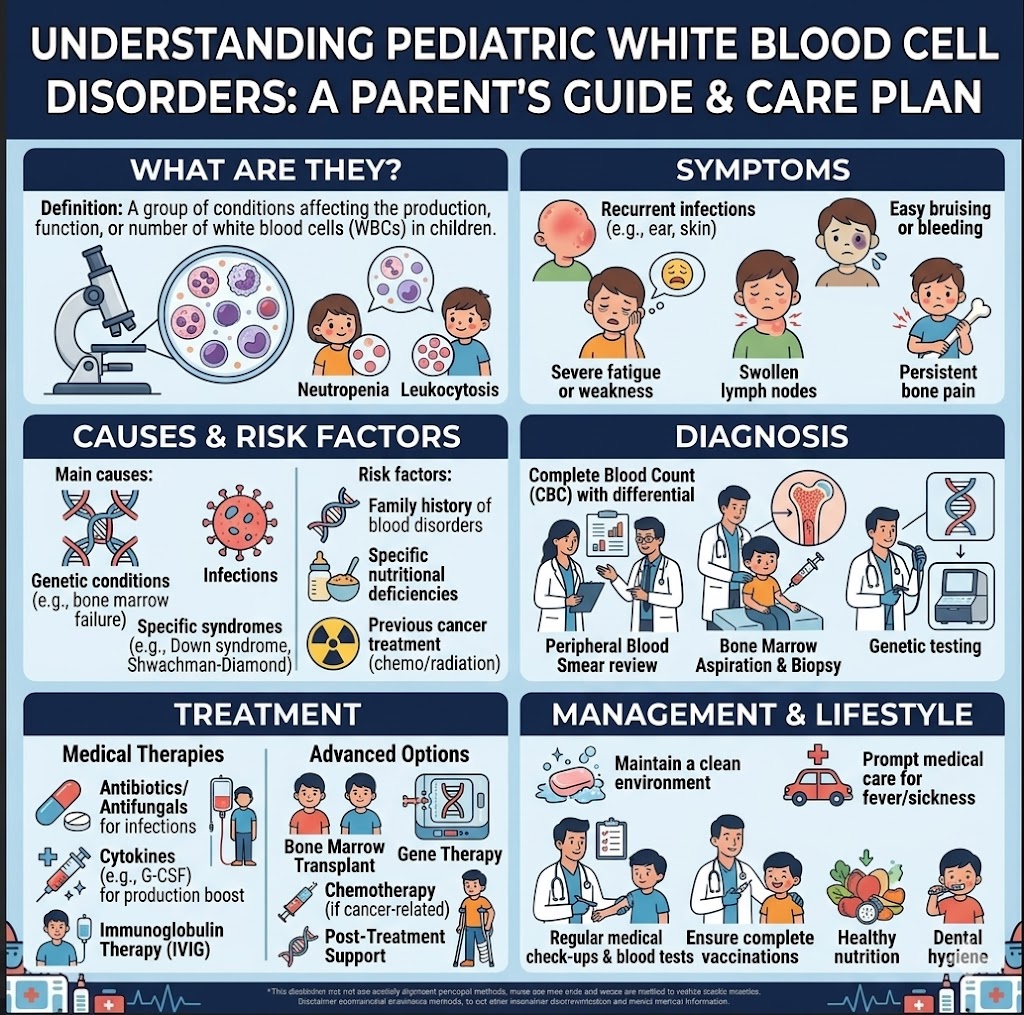
White blood cells (leukocytes) are key immune system defenders, produced in bone marrow, protecting children against infections. White blood cell disorders occur when a child has either too few or too many of these crucial cells. A low count (Leukopenia) means too few white blood cells, increasing infection risk. A high count (Leukocytosis) means too many, often due to infection or inflammation. The main types include: Neutrophils (fight bacteria/fungi; too few is neutropenia), Lymphocytes (fight viruses; too few is lymphocytopenia), Monocytes (clear damaged tissue, aid immune response), Eosinophils (involved in allergies, parasites, inflammation; too many is eosinophilia), and Basophils (least common, roles in healing, asthma, allergies). Causes range from infections and inherited conditions to autoimmune diseases, certain cancers, and some medications.
Understanding the Condition
White Blood Cell Disorders in Children
Understanding the Condition
Common Symptoms
Frequent or Severe Infections: Recurrent fevers, chills, persistent tiredness, or slow-healing infections, especially with low white blood cell counts.
Allergy-like Reactions: Rashes, itching, or swelling, particularly with elevated eosinophils or basophils.
General Illness: Unexplained fatigue, weakness, weight loss, or persistent low energy.
Unexplained Swelling or Pain: Swollen glands or joint pain.
Autoimmune Signs: Symptoms where the body's immune system attacks healthy tissues, like specific rashes or joint stiffness.
Consultation Guide
Which Specialist to Meet
For suspected white blood cell disorders, consult a healthcare professional. Start with your primary care pediatrician. They may refer your child to a pediatric hematologist (a doctor specializing in blood disorders in children) or a pediatric immunologist (a doctor specializing in immune system disorders in children).
Preparations Before Your Visit
Before the visit, make a list of all your child's symptoms (including when they started and how often they occur). Note any recent illnesses, all medications (including over-the-counter drugs and supplements), relevant family medical history, and any known allergies. Prepare a list of questions you have for the doctor.
Book a doctor visit near me
Symptom Vigilance: Parents and caregivers should be vigilant for new or worsening symptoms, especially signs of infection, and report them promptly to the healthcare team.
Emotional and Psychological Support: Living with a chronic condition can be challenging for children and families. Access to counseling, support groups, or child life specialists can provide valuable emotional support.
Consultation Guide
White blood cells (leukocytes) are key immune system defenders, produced in bone marrow, protecting children against infections. White blood cell disorders occur when a child has either too few or too many of these crucial cells. A low count (Leukopenia) means too few white blood cells, increasing infection risk. A high count (Leukocytosis) means too many, often due to infection or inflammation. The main types include: Neutrophils (fight bacteria/fungi; too few is neutropenia), Lymphocytes (fight viruses; too few is lymphocytopenia), Monocytes (clear damaged tissue, aid immune response), Eosinophils (involved in allergies, parasites, inflammation; too many is eosinophilia), and Basophils (least common, roles in healing, asthma, allergies). Causes range from infections and inherited conditions to autoimmune diseases, certain cancers, and some medications.
If CBC results are concerning, this procedure collects liquid bone marrow (aspiration) and a small piece of bone marrow tissue (biopsy). These samples are then examined under a microscope to evaluate cell production, detect abnormalities, or identify underlying causes of blood disorders.
Diagnostic Procedures
Complete Blood Count (CBC)
A standard blood test measuring red blood cells, white blood cells (total count and individual types like neutrophils, lymphocytes, monocytes, eosinophils, basophils), and platelets. It identifies unusual increases or decreases in any of these cells, which can indicate a potential issue.
What to Expect
A healthcare professional will draw a small blood sample, usually from a vein in your child's arm or from a heel stick for infants. The skin is cleaned, a tourniquet applied to make the vein visible, and a sterile needle is used for collection. Your child might feel a quick pinch or sting. The process is brief, typically a few minutes, followed by applying pressure to the site to stop any bleeding.
Bone Marrow Aspiration and Biopsy
What to Expect
This procedure is performed in a clinic or hospital setting. Your child will lie down, often on their stomach or side. The area (usually the back of the hip bone) is numbed with a local anesthetic; sedation may also be used to help your child relax. A specialized needle is carefully inserted into the bone to collect the liquid marrow and a small core of bone tissue. Your child might feel pressure or a brief, sharp pain. After samples are collected, the needle is removed, and a dressing is applied. The procedure typically takes about 30-60 minutes, with some soreness expected afterward.
Scheduled Blood Tests: Routine complete blood counts and other specific blood tests will be performed to track the disorder's progression and treatment effectiveness.
Treatment Options
Medications
Anti-Infective Medications: Antibiotics, antivirals, or antifungals may be prescribed to treat existing infections or prevent them in children with low white blood cell counts. (Duration: Short-term (days to weeks) for acute infections; long-term for prevention (months to years).)
Immune-Modulating Medications: For conditions where the immune system is overactive or attacking healthy cells (autoimmune conditions), these medications suppress or adjust the immune response. (Duration: Often long-term, requiring ongoing specialist monitoring.)
White Blood Cell Growth Factors: These medications stimulate the bone marrow to produce more white blood cells (e.g., neutrophils) when counts are too low. (Duration: Can be short-term during acute drops or ongoing for chronic conditions.)
Anti-inflammatory and Allergy Medications: For conditions involving elevated eosinophils or basophils, these medications help reduce inflammation or manage allergic reactions. (Duration: Varies, from short-term for acute flares to ongoing for chronic issues.)
Procedures and Therapies
Blood Component Transfusions: In severe cases of very low white blood cell counts, specific white blood cell transfusions might be considered. (Duration: As needed during critical periods.)
Intravenous Immunoglobulin (IVIG): This therapy involves infusing antibodies into the bloodstream to help fight infections or regulate the immune system in certain conditions. (Duration: Typically administered periodically, often every few weeks or months.)
Cancer Therapies: For white blood cell disorders linked to certain cancers, treatments like chemotherapy or radiation therapy are used to destroy rapidly growing abnormal cells. (Duration: Varies significantly based on cancer type and stage, often spanning months to over a year.)
Regular Medical Check-ups: Consistent follow-up appointments with specialists are vital to monitor white blood cell counts, assess the child's overall health, and adjust treatments as needed.
Education: Understanding the specific disorder, its treatment plan, and potential complications empowers families to actively participate in their child's care.
Prevention & Long-Term Wellbeing
Stem Cell Transplant (Bone Marrow Transplant): For severe cases, particularly those involving bone marrow failure or certain cancers, replacing damaged bone marrow with healthy stem cells may be an option. (Duration: A complex, intensive process typically lasting several months for the procedure and recovery, followed by long-term monitoring.)
Rest and Hydration: Encouraging adequate rest and fluid intake supports overall immune function, especially during periods of illness. (Duration: Ongoing, particularly during active infections.)
Balanced Nutrition: A healthy, balanced diet is crucial for supporting bone marrow health and overall immune function. (Duration: Ongoing lifestyle practice.)
Prevention
Infection Control: Practice good hand hygiene, avoid sick individuals, and ensure appropriate vaccinations (as advised by the doctor, as some vaccines may be contraindicated for children with weakened immune systems).
Healthy Lifestyle: Encourage a balanced diet rich in fruits, vegetables, and lean proteins, ensure adequate sleep, and promote regular, moderate physical activity suitable for the child's condition.
Trigger Avoidance: If specific allergies or environmental factors worsen the condition (e.g., certain allergens for eosinophilia), identifying and minimizing exposure to these triggers is important.
Long-Term Monitoring
Tags & Topics
Notice an error or need an update?
Help us keep medical information accurate. Report incorrect info or suggest an edit.


