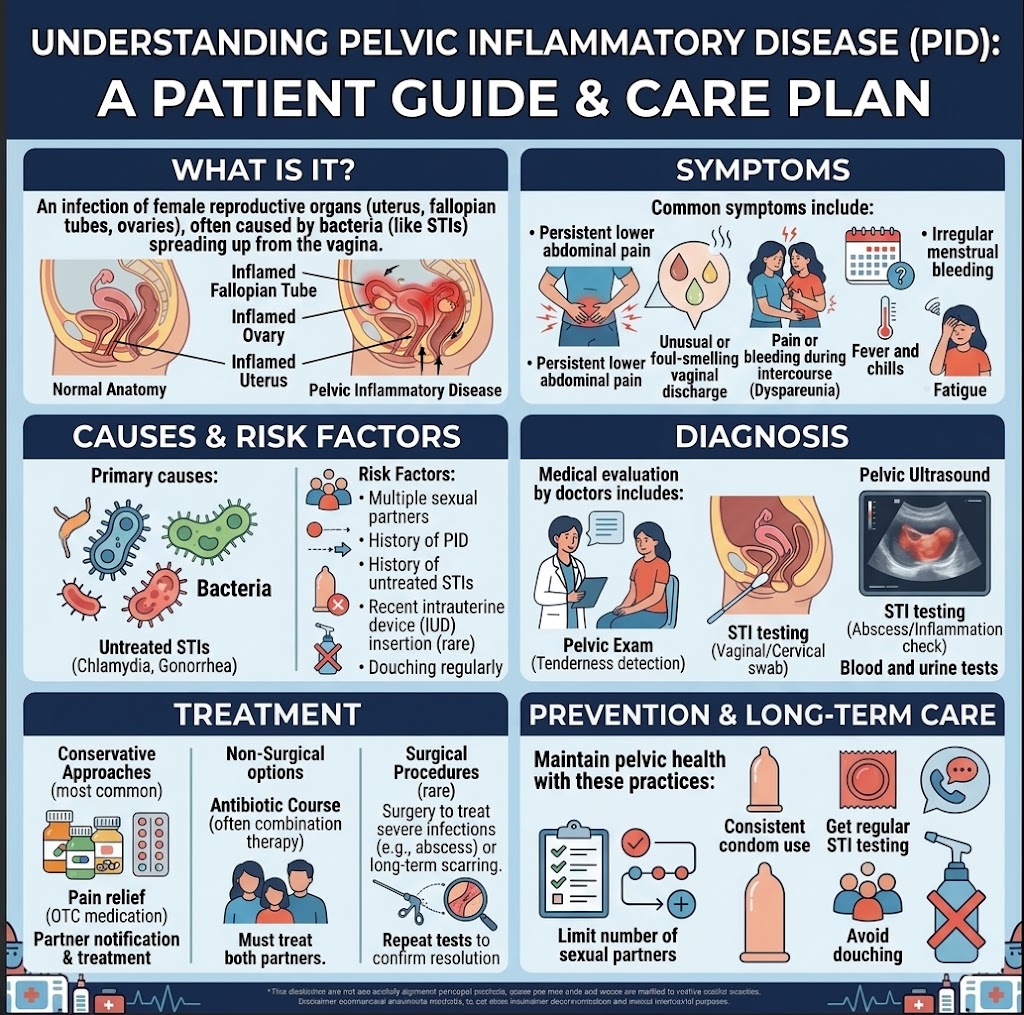
Pelvic inflammatory disease (PID) is an infection affecting the female reproductive organs, including the uterus, fallopian tubes, and ovaries. It typically occurs when sexually transmitted bacteria travel from the vagina upward into these deeper reproductive tissues. If left untreated, PID can lead to severe long-term complications, such as permanent scar tissue, pockets of infected fluid (abscesses), chronic pelvic pain, and difficulties achieving pregnancy (infertility). Symptoms can range from highly noticeable to completely absent, making awareness and timely detection vital.
Understanding the Condition
Understanding Pelvic Inflammatory Disease (PID)
Understanding the Condition
Pelvic inflammatory disease (PID) is an infection affecting the female reproductive organs, including the uterus, fallopian tubes, and ovaries. It typically occurs when sexually transmitted bacteria travel from the vagina upward into these deeper reproductive tissues. If left untreated, PID can lead to severe long-term complications, such as permanent scar tissue, pockets of infected fluid (abscesses), chronic pelvic pain, and difficulties achieving pregnancy (infertility). Symptoms can range from highly noticeable to completely absent, making awareness and timely detection vital.
Common Symptoms
Pelvic and Lower Abdominal Pain: The most common symptom is mild-to-severe pain or discomfort felt in the lower belly and pelvis.
Abnormal Vaginal Discharge: Vaginal discharge that may increase in volume, change in color or consistency, or have an unpleasant odor.
Irregular Bleeding: Bleeding or spotting that occurs between menstrual cycles, after sexual intercourse, or unusually heavy periods.
Painful Urination and Intercourse: A burning sensation or sharp pain when urinating, or deep pain during sexual intercourse.
Before your visit, track the dates of your last menstrual cycle and write down your symptoms, including when they started. Prepare a list of all current medications, vitamins, and supplements. Avoid sexual intercourse, douching, or using vaginal creams for 24 to 48 hours prior to your exam, as these can interfere with laboratory test results.
Book a doctor visit near me
A laboratory evaluation of a urine sample to rule out a urinary tract infection (UTI) or check for pregnancy, as both can mimic or coexist with PID symptoms.
Prompt Evaluation of Recurrent Symptoms: Seek immediate medical attention if pelvic pain, abnormal discharge, or irregular bleeding returns, to prevent recurrent infection and subsequent tissue scarring.
Consultation Guide
Fever and Chills: In severe cases, the infection may cause a high temperature, sweating, or body shakes, indicating a systemic response.
Consultation Guide
Which Specialist to Meet
You should consult an Obstetrician-Gynecologist (OB-GYN) or a primary care physician who specializes in women's reproductive health.
Preparations Before Your Visit
Diagnostic Procedures
A physical assessment of your reproductive organs to check for tenderness, swelling, abnormal discharge, or physical anomalies.
What to Expect
During the exam, you will lie on your back on an exam table with your feet in stirrups. The doctor will insert a lubricated metal or plastic instrument called a speculum into the vagina to gently widen it and inspect the vagina and cervix. They will also collect swab samples of vaginal and cervical fluids. Finally, the doctor will perform a bimanual exam by placing two gloved fingers inside the vagina while pressing on your lower abdomen from the outside to check for pain or swelling in the uterus and ovaries.
An imaging test that uses high-frequency sound waves to construct pictures of your internal reproductive organs, helping detect inflammation, scar tissue, or fluid-filled abscesses.
What to Expect
This test can be done in two ways. For an abdominal ultrasound, a gel is applied to your lower stomach, and a hand-held device is glided across the skin. For a transvaginal ultrasound (which provides clearer images of reproductive tissues), a slender, lubricated probe is gently inserted into your vagina. The procedure is generally painless, though you may feel some pressure or mild discomfort when the probe is moved.
What to Expect
You will be given a sterile cup and instructed to collect a 'clean-catch' urine sample. This involves cleaning your genital area with a wipe, starting to urinate into the toilet, and then catching a midstream portion of the urine flow in the cup. There is no discomfort involved, and results are often available quickly.
Treatment Options
Medications
Prescription Antibiotics: A combination of oral or intravenous antibiotics designed to target the broad spectrum of bacteria responsible for the infection. It is critical to complete the entire course even if you start feeling better. (Duration: Typically 14 days of daily oral medication, or a brief hospital stay with continuous intravenous (IV) delivery for severe infections.)
Partner Treatment: Simultaneous antibiotic treatment for all sexual partners to prevent the cycle of reinfection, even if they show no signs of illness. (Duration: Typically matches the 14-day duration or involves a single-dose treatment regimen as prescribed by a provider.)
Surgical Procedures
Abscess Drainage or Laparoscopic Surgery: In rare, severe cases where pelvic abscesses form and do not respond to antibiotics, or are at risk of rupturing, a surgeon may need to drain the fluid or remove the affected tissues laparoscopically. (Duration: The surgical procedure takes 1 to 2 hours, with a recovery period of 2 to 6 weeks depending on severity.)
Therapies and Home Care
Temporary Sexual Abstinence: Avoiding all sexual contact to allow the pelvic organs to heal completely and prevent spreading the infection. (Duration: Until both you and your sexual partner(s) have finished the entire course of antibiotics and are cleared by your doctor.)
Rest and Supportive Pain Relief: Getting ample rest and using over-the-counter anti-inflammatory pain medications to manage pelvic discomfort. (Duration: Used daily as needed during the initial 1 to 2 weeks of antibiotic treatment.)
Attend Follow-Up Appointments: Return to your doctor for scheduled check-ups after finishing treatment to verify that the infection has cleared entirely and to evaluate pelvic health.
Prevention & Long-Term Wellbeing
Prevention Strategies
Practice Safe Sex: Consistently and correctly use latex or polyurethane condoms during every sexual encounter to block the transmission of infection-causing bacteria.
Get Regular STI Screenings: Schedule routine screenings for sexually transmitted infections (like chlamydia and gonorrhea) annually or whenever you have a new sexual partner.
Avoid Douching: Steer clear of vaginal douches. Douching disrupts the natural, protective balance of healthy bacteria in the vagina and can actively push harmful bacteria upward into the reproductive tract.
Long-Term Monitoring
Tags & Topics
Notice an error or need an update?
Help us keep medical information accurate. Report incorrect info or suggest an edit.


