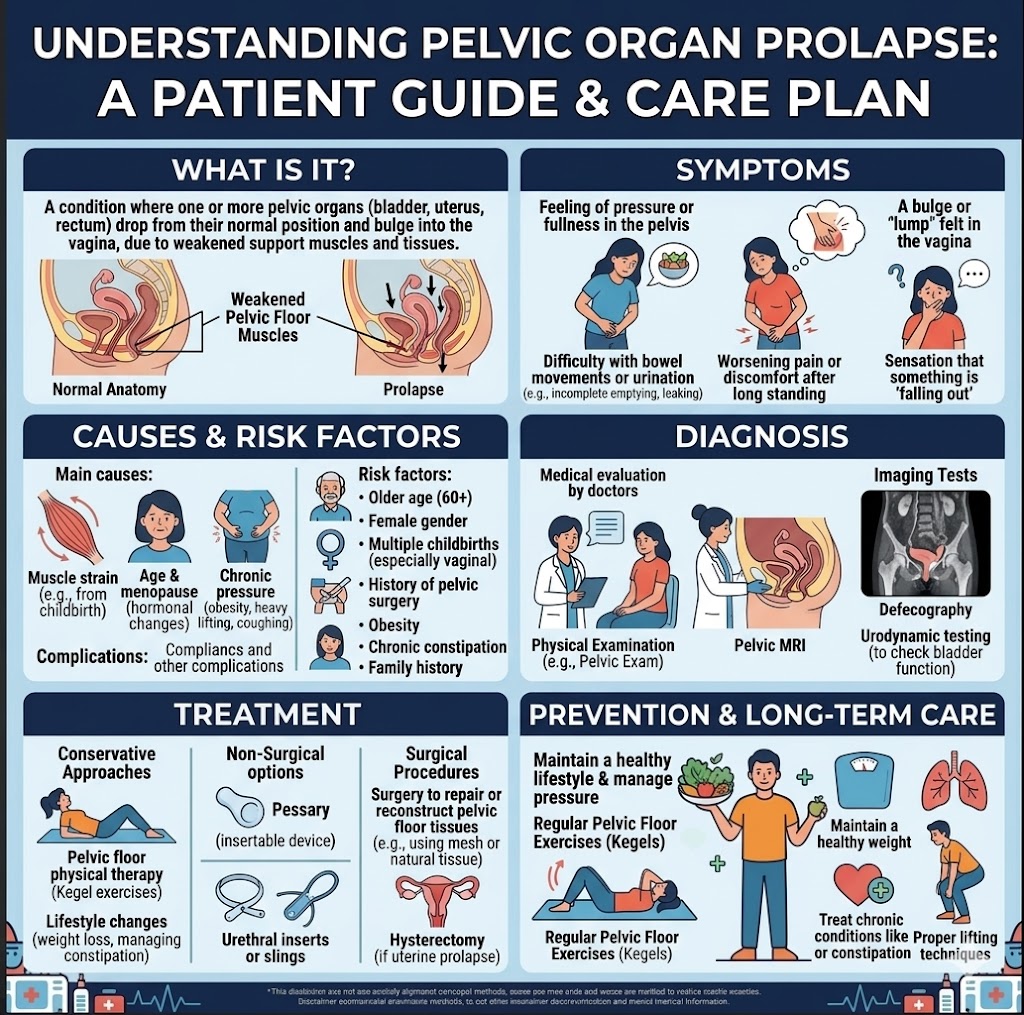
Pelvic organ prolapse (POP) occurs when one or more pelvic organs shift downwards from their normal position, often causing a sensation of a bulge or pressure in the vagina. The pelvic floor, a strong network of muscles and connective tissues, typically supports organs like the bladder, uterus, vagina, urethra, and rectum. POP happens when this support weakens, commonly due to pregnancy, childbirth, or menopause. While bothersome, POP is treatable, often with non-surgical methods, though surgery may be necessary to restore organ position.
Understanding the Condition
Pelvic Organ Prolapse: Understanding and Managing a Common Condition
Understanding the Condition
Common Symptoms
Vaginal Bulge or Tissue Sensation: Seeing or feeling a bulge of tissue at or beyond the vaginal opening.
Pelvic Pressure or Heaviness: A sensation of pressure, heaviness, or discomfort in the pelvis.
Lower Back Pain: Pain experienced in the lower back region.
Difficulty Retaining Tampons: Trouble keeping a tampon in place.
Urinary Changes: Includes increased frequency of urination, an urgent need to urinate, feeling like the bladder isn't fully empty, or a weak urine stream.
Bowel Changes: Such as incomplete bowel emptying, or needing to press on the vaginal area to help pass stool (known as 'splinting').
Sexual Issues: Discomfort or pain during sexual activity.
Consultation Guide
Which Specialist to Meet
You might first see your primary care doctor for referral to a gynecologist (a doctor specializing in women's reproductive health), a urogynecologist (a gynecologist with specialized training in pelvic floor disorders), or a pelvic floor physical therapist.
Preparations Before Your Visit
Before your visit, list your symptoms (including when they started and their impact on daily life). Be prepared to discuss your medical history, including any pregnancies, births, surgeries, and chronic conditions. Also, list all current medications and any questions you have for the doctor.
Book a doctor visit near me
A lab test checking a urine sample for signs of infection or other urinary tract issues, especially if you have urinary symptoms.
A series of tests to evaluate how well your bladder and urethra are storing and releasing urine, often recommended if urinary symptoms are significant.
Symptom Awareness: Be mindful of any changes in your symptoms and report them to your doctor promptly.
Consultation Guide
Small catheters may be inserted into your bladder and rectum to measure pressure. Your bladder will be filled with sterile water, and you might be asked to cough or change positions. This helps understand bladder function and identify causes of leakage or difficulty emptying. It can be uncomfortable but usually not painful, lasting 30-60 minutes.
Diagnostic Procedures
A physical examination where your doctor visually inspects and manually feels your pelvic organs. You may be asked to cough or strain to help reveal the prolapse.
What to Expect
You will lie on an examination table with your feet in stirrups. The doctor gently inserts a gloved finger into your vagina and rectum to assess the position and support of your pelvic organs. This quick exam identifies which organs are involved and the prolapse's severity, generally causing pressure but not pain.
What to Expect
You will be given a sterile cup and asked to provide a "clean catch" urine sample in a private restroom. The sample is then sent to a laboratory for analysis.
What to Expect
Treatment Options
Pelvic organ prolapse (POP) occurs when one or more pelvic organs shift downwards from their normal position, often causing a sensation of a bulge or pressure in the vagina. The pelvic floor, a strong network of muscles and connective tissues, typically supports organs like the bladder, uterus, vagina, urethra, and rectum. POP happens when this support weakens, commonly due to pregnancy, childbirth, or menopause. While bothersome, POP is treatable, often with non-surgical methods, though surgery may be necessary to restore organ position.
Manage Chronic Cough: Seek treatment for persistent coughs to reduce pressure on the pelvic floor.
Regular Follow-ups: Attend scheduled appointments with your healthcare provider to monitor your condition and adjust treatment as needed.
Prevention & Long-Term Wellbeing
Lifestyle and Home Remedies
Pelvic Floor Exercises (Kegels): Daily exercises to strengthen the muscles supporting your pelvic organs. (Duration: Ongoing.)
Weight Management: Achieving and maintaining a healthy body weight to reduce pressure on the pelvic floor. (Duration: Ongoing lifestyle change.)
Constipation Management: Eating a fiber-rich diet, staying hydrated, and using stool softeners if needed to prevent straining during bowel movements. (Duration: Ongoing lifestyle change.)
Pessary: A removable device, typically made of silicone, inserted into the vagina to provide support for the prolapsed organs. (Duration: Worn daily or as needed; requires regular cleaning and periodic fitting.)
Pelvic Floor Physical Therapy: Guided exercises, manual therapy, and education provided by a specialized physical therapist to strengthen pelvic floor muscles. (Duration: Several weeks to months of sessions, with ongoing home exercises.)
Vaginal Repair (Native Tissue): The surgeon repairs weakened pelvic floor tissues through an incision in the vagina, using your own tissues and stitches to lift and support the organs. (Duration: Single procedure; recovery typically takes 4-6 weeks, with full recovery taking several months.)
Abdominal Repair (Native Tissue): The surgeon makes an incision in the abdomen (or uses laparoscopic/robotic techniques) to lift and reattach prolapsed organs to stronger structures in the pelvis. (Duration: Single procedure; recovery can take 6-8 weeks, with full recovery taking several months.)
Vaginal Mesh Repair (Selected Cases): In specific complex or recurrent cases, a synthetic mesh material may be surgically implanted through the vagina for added tissue support. (Note: This approach is less common due to potential complications.) (Duration: Single procedure; recovery typically takes 4-6 weeks, with ongoing complication monitoring.)
Abdominal Mesh Repair (Sacrocolpopexy): A mesh is attached to the vagina (or cervix/uterus) and then to the sacrum (tailbone) to lift and hold the organs in place, often performed laparoscopically or robotically. (Duration: Single procedure; recovery typically takes 6-8 weeks, with full recovery taking several months.)
Hysterectomy (for Uterine Prolapse): Surgical removal of the uterus, often performed in conjunction with other prolapse repairs if the uterus is significantly prolapsed and fertility is not desired. (Duration: Single procedure; recovery typically takes 4-8 weeks depending on approach.)
Prevention
Strengthen Pelvic Floor: Regularly perform pelvic floor exercises (Kegels) especially after childbirth.
Prevent Constipation: Consume a high-fiber diet, drink water, and stay active for regular, easy bowel movements.
Maintain Healthy Weight: Keep your body weight within a healthy range to minimize pressure on pelvic floor structures.
Practice Proper Lifting: When lifting, bend at your knees, keep your back straight, and engage your core; avoid straining the pelvic floor.
Long-Term Management
Continue Lifestyle Modifications: Maintain healthy habits, including diet, exercise, and weight management, to support pelvic floor health.
Tags & Topics
Notice an error or need an update?
Help us keep medical information accurate. Report incorrect info or suggest an edit.


