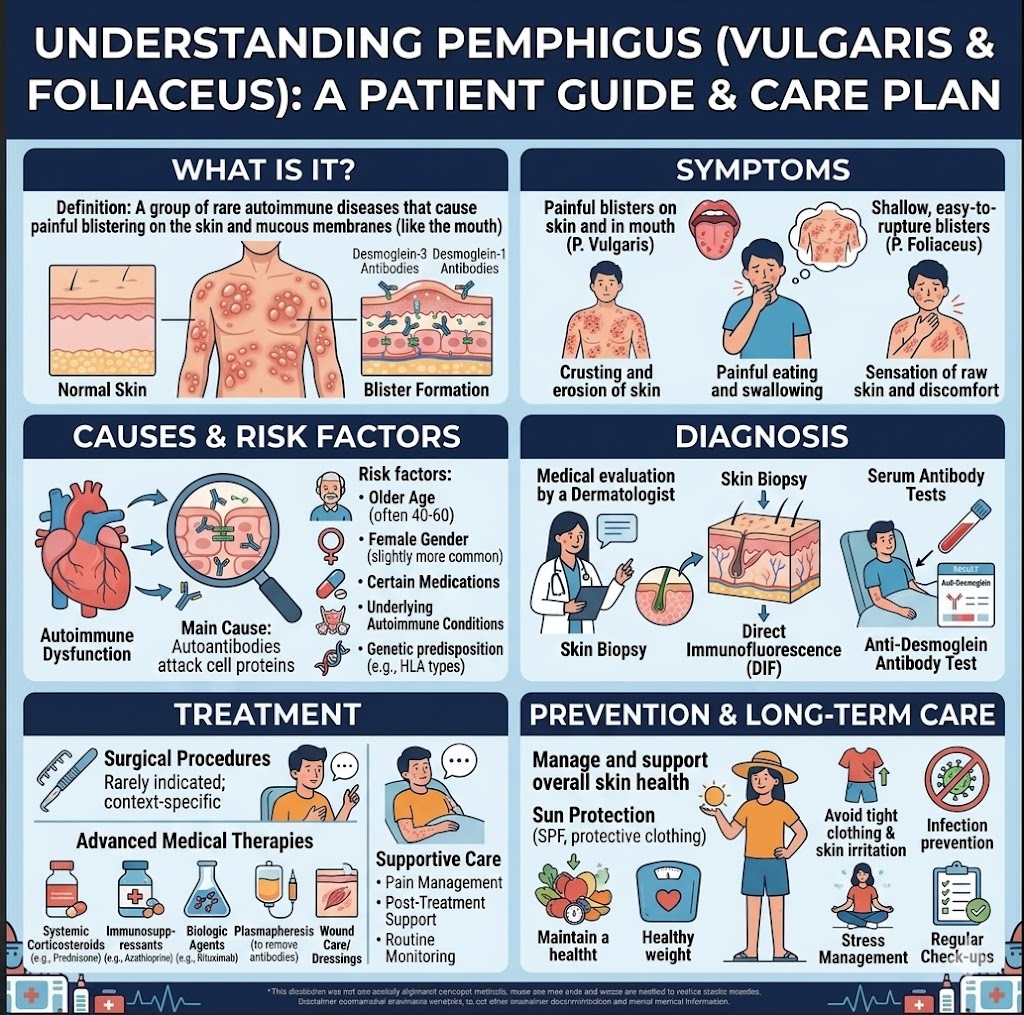
Pemphigus is a group of uncommon autoimmune skin disorders where the body's immune system mistakenly attacks healthy cells in the skin and inner linings (mucous membranes), such as those in the mouth or genital area. This attack leads to fragile blisters and sores. It primarily affects middle-aged or older individuals. Early detection and consistent treatment are crucial for better management, as untreated sores can become infected, potentially leading to serious, life-threatening complications. Pemphigus is not contagious. While often unknown, its cause can sometimes be a side effect of certain medications, typically resolving once the drug is stopped.
Understanding the Condition
Understanding Pemphigus: A Guide to Blistering Skin Conditions
Understanding the Condition
Common Symptoms
Before your appointment, list your symptoms (onset, progression), all medications (including OTC, supplements), and medical history. Photos of blisters over time can be helpful.
Book a doctor visit near me
Consultation Guide
Pemphigus is a group of uncommon autoimmune skin disorders where the body's immune system mistakenly attacks healthy cells in the skin and inner linings (mucous membranes), such as those in the mouth or genital area. This attack leads to fragile blisters and sores. It primarily affects middle-aged or older individuals. Early detection and consistent treatment are crucial for better management, as untreated sores can become infected, potentially leading to serious, life-threatening complications. Pemphigus is not contagious. While often unknown, its cause can sometimes be a side effect of certain medications, typically resolving once the drug is stopped.
General Blister Characteristics: Pemphigus causes fragile blisters on the skin and mucous membranes that break easily, leaving open sores. These sores may become infected and ooze.
Pemphigus Vulgaris: This common type often begins with painful blisters inside the mouth, making it difficult to talk, drink, or eat. Blisters can also appear on the skin or genital areas. They are usually painful but typically do not itch.
Pemphigus Foliaceus: This type primarily causes blisters on the chest, back, and shoulders. These can be itchy or painful, but do not appear inside the mouth.
Important Distinction: Pemphigus differs from bullous pemphigoid, another blistering skin condition mainly affecting older adults.
Consultation Guide
Which Specialist to Meet
Consult a dermatologist, a doctor specializing in skin conditions. An oral medicine specialist may also be involved if mouth sores are prominent.
Preparations Before Your Visit
Skin Care: Protect affected skin; use gentle cleansers and moisturizers. Healing blisters may cause lasting skin color changes, especially in brown or Black skin.
Emotional Well-being: Living with pemphigus is challenging. Seek support from family, friends, groups, or a mental health professional to cope.
Understanding Risk Factors: Risk factors include being middle-aged or older, and having Jewish, Indian, Southeast European, or Middle Eastern ancestry.
Diagnostic Procedures
A skin biopsy removes a small skin sample for microscopic lab examination. This helps identify the specific skin condition, including pemphigus, by detecting characteristic changes and specific antibodies.
What to Expect
You'll receive a local anesthetic to numb the area. For a Shave Biopsy, a sterile razor or scalpel scrapes the top skin layers for a surface sample. It's quick, usually requiring no stitches, just a small bandage. For a Punch Biopsy, a circular tool removes a small, deeper core of skin tissue; you might feel pressure, and stitches may be needed. For an Excisional Biopsy, a scalpel removes an entire abnormal skin area with surrounding healthy skin; stitches are usually required. In all cases, the removed tissue goes to a lab for analysis (results in days-weeks). You'll receive wound care instructions to prevent infection.
Treatment Options
Medications
Oral Corticosteroids: These reduce inflammation and suppress the overactive immune system, crucial for controlling pemphigus. (Duration: High doses initially for weeks, then tapered to lower maintenance doses for many months or years.)
Immunosuppressant Drugs: Used with corticosteroids or long-term, they further suppress the immune system, reducing self-attack and helping lower corticosteroid doses. (Duration: Long-term, often several years, depending on disease control.)
Biologic Therapies: Newer treatments targeting specific immune system parts; used for severe or resistant cases. (Duration: Periodically administered (e.g., intravenously or injection) over months or years.)
Topical Creams and Ointments: Steroid or medicated creams directly applied to lesions reduce inflammation and aid healing, especially for localized blisters. (Duration: As needed for specific lesions, short-term or intermittently.)
Wound Care: Proper cleaning and dressing of open sores prevent infection, promote healing, and manage discomfort. (Duration: Ongoing, as long as blisters and sores are present.)
Intravenous Immunoglobulin (IVIg): Healthy donor antibodies injected intravenously; helps regulate the immune system in severe or unresponsive cases. (Duration: Typically given in cycles over several days, repeated as necessary.)
Consistent Medical Follow-up: Regular dermatologist visits are essential to monitor disease, adjust medications, and manage side effects.
Managing Medication Side Effects: Long-term medications can have side effects (e.g., high blood pressure, infection risk, bone thinning). Your doctor will monitor and manage these.
Medication-Induced Pemphigus: Rarely, certain medications (e.g., some blood pressure drugs) can trigger pemphigus; discuss new blisters with your doctor.
Prevention & Long-Term Wellbeing
Long-Term Management and Lifestyle
Infection Prevention: Keep open sores clean and covered. Watch for infection signs (redness, pain, pus, fever) and seek prompt medical attention.
Nutritional Support: For painful mouth sores, eat soft, bland foods. Good nutrition is vital for healing. Consult a provider or dietitian if eating is difficult.
Tags & Topics
Notice an error or need an update?
Help us keep medical information accurate. Report incorrect info or suggest an edit.


