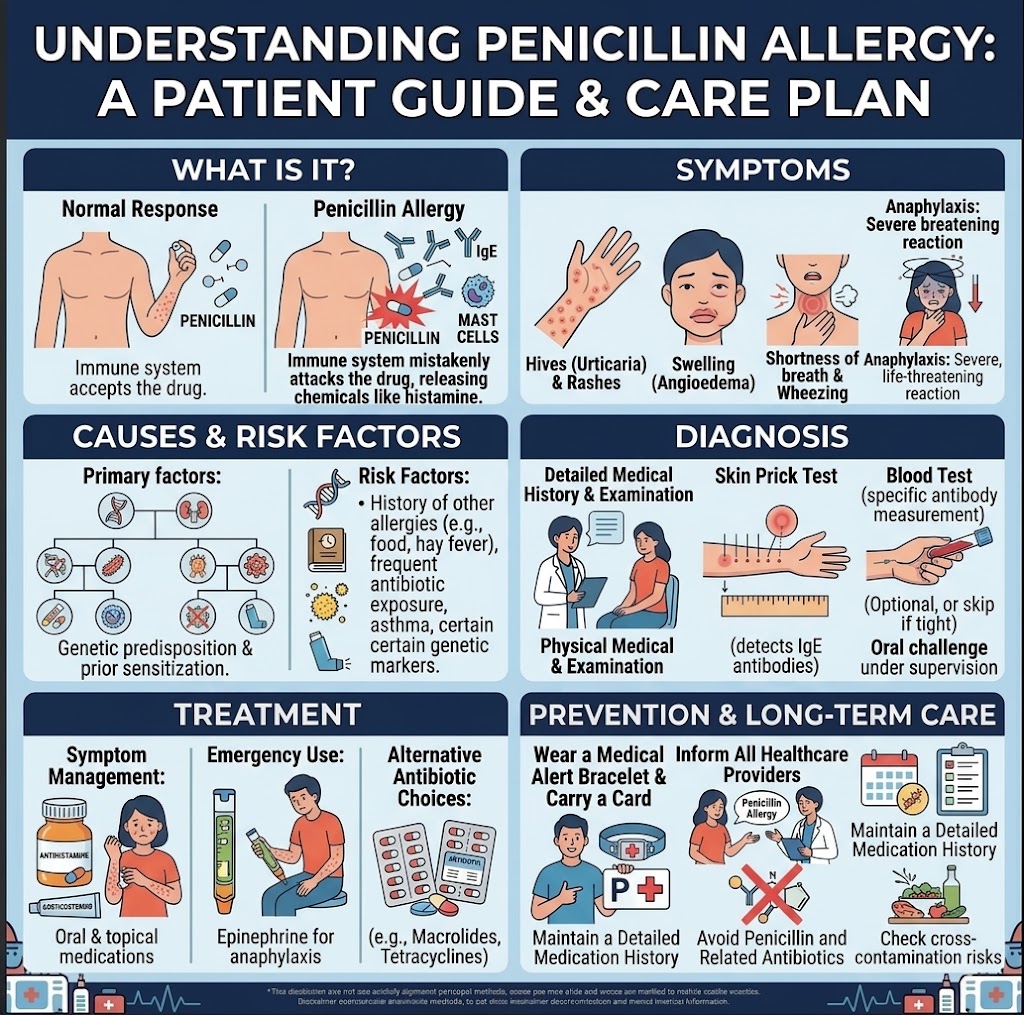
Penicillin allergy is when your body's immune system overreacts to the antibiotic medicine penicillin, used for bacterial infections. Reactions range from mild symptoms like hives and itching to severe, life-threatening conditions like anaphylaxis, involving throat swelling and difficulty breathing. Accurate diagnosis is crucial, as penicillin allergies are often misreported. Incorrect diagnosis can lead to less effective or more expensive antibiotic choices. Allergic reactions typically appear within an hour of taking penicillin, but can occur hours, days, or even weeks later. Other antibiotics similar to penicillin can also cause allergic reactions.
Understanding the Condition
Penicillin Allergy: Understanding Your Immune System's Reaction
Understanding the Condition
Penicillin allergy is when your body's immune system overreacts to the antibiotic medicine penicillin, used for bacterial infections. Reactions range from mild symptoms like hives and itching to severe, life-threatening conditions like anaphylaxis, involving throat swelling and difficulty breathing. Accurate diagnosis is crucial, as penicillin allergies are often misreported. Incorrect diagnosis can lead to less effective or more expensive antibiotic choices. Allergic reactions typically appear within an hour of taking penicillin, but can occur hours, days, or even weeks later. Other antibiotics similar to penicillin can also cause allergic reactions.
Common Symptoms
Immediate Reactions (within one hour): These reactions typically appear shortly after taking penicillin and may include: hives (raised, itchy red welts); widespread itchy rash; general itching; fever; swelling of the face, lips, or tongue; shortness of breath; runny nose; and watery eyes.
Severe Immediate Reaction (Anaphylaxis): Anaphylaxis is a rare, life-threatening allergic reaction affecting multiple body systems, requiring immediate emergency medical attention. Symptoms include: severe shortness of breath or wheezing; dizziness or lightheadedness; a rapid, weak pulse; sudden drop in blood pressure; seizures; and loss of consciousness.
Delayed Reactions (days or weeks later): Less commonly, allergic reactions can develop days or weeks after penicillin exposure and may persist after stopping the medication. These can include: Drug-induced anemia (reduced red blood cells); serum sickness (fever, joint pain, rash, swelling, nausea); drug rash with eosinophilia and systemic symptoms (DRESS), causing widespread rash, fever, swollen lymph nodes, and internal organ inflammation; and nephritis (kidney inflammation).
Non-Allergic Side Effects: It's important to distinguish true allergic reactions from common side effects, which are not caused by an immune system response. These can include mild nausea or diarrhea, headache, or vaginal itching. Symptoms of an infection being treated or unrelated issues can also be mistaken for an allergy.
Consultation Guide
Which Specialist to Meet
Before your visit, list all medications (prescription, over-the-counter, supplements) you are currently taking. Note details of any past reactions to penicillin or other medicines: when they occurred, what symptoms you experienced, and how long they lasted. Prepare questions for your doctor about distinguishing allergic reactions, typical side effects, and tolerable symptoms. Do not stop any medication without consulting your doctor first.
Book a doctor visit near me
Allergy skin tests are commonly used to diagnose penicillin allergy. Your skin is exposed to small amounts of purified penicillin (allergens), checking for a reaction. Combined with medical history, skin tests help confirm if penicillin is causing symptoms.
Antihistamines: These help relieve mild symptoms like itching, hives, and rash by blocking histamine, a chemical released during an allergic reaction. (Duration: Taken as needed for symptoms, usually for a few days.)
Corticosteroids: For more severe rashes and swelling, corticosteroids reduce inflammation and suppress the immune response. (Duration: Typically prescribed for a short course of 5-10 days, depending on severity.)
Epinephrine (Adrenaline): Crucial for life-threatening anaphylaxis. It rapidly opens airways, raises blood pressure, and reduces swelling. (Duration: Administered immediately in an emergency; a second dose might be needed. Patients at risk may carry an auto-injector for self-administration.)
Long-Term Management and Specialized Procedures
Regular Allergy Re-assessment: Penicillin allergies can sometimes fade over time. Discuss retesting with your allergist, especially if your initial allergy was diagnosed many years ago or based on uncertain symptoms. This could potentially expand your antibiotic options.
Educate Yourself and Family: Ensure family members know about your allergy and what to do in case of an allergic reaction, especially regarding emergency procedures for anaphylaxis.
Diagnostic Procedures
Initially, consult your primary care doctor or general practitioner if you suspect a penicillin allergy. They may refer you to an allergist or immunologist, who specialize in diagnosing and managing allergies. These specialists are experts in understanding immune system reactions.
Preparations Before Your Visit
What to Expect
For a skin prick test, a drop of allergen is placed on the skin (usually forearm or back), then gently pricked. For an intradermal test, a small amount is injected just under the skin. After 15-20 minutes, a positive reaction appears as a raised, red, itchy bump (wheal) like a mosquito bite. Skin tests are generally safe. However, they are not recommended if you have severe skin conditions like widespread eczema, take certain medications (e.g., antihistamines or some antidepressants that interfere with results), or have a history of severe anaphylaxis. Your doctor will advise if this test is appropriate for you.
Understand Your Reaction: Clearly distinguish between a true allergic reaction and a medication side effect. Discuss past reactions with your doctor for accurate diagnosis, preventing limited future treatment options.
Long-Term Monitoring and Re-evaluation
Treatment Options
Immediate Treatment for Allergic Reactions
Avoiding Penicillin: If a penicillin allergy is confirmed, the primary treatment is to avoid penicillin and similar antibiotics. Your doctor will ensure you receive alternative antibiotics for infections. (Duration: Lifelong, unless desensitization is performed.)
Penicillin Desensitization: In rare cases, if no other suitable antibiotic can treat a severe infection, this procedure gives gradually increasing penicillin doses under close medical supervision, temporarily allowing tolerance. (Duration: Typically performed in a hospital setting over hours or days, providing temporary tolerance for the duration of the treatment course.)
Carry Emergency Medication: If you have a history of severe allergic reactions (anaphylaxis), your doctor may prescribe an epinephrine auto-injector. Learn how to use it and always carry it with you.
Prevention & Long-Term Wellbeing
Prevention and Awareness
Inform Healthcare Providers: Always inform all healthcare professionals (doctors, dentists, pharmacists) about your penicillin allergy to prevent accidental use.
Medical Alert Identification: Consider wearing a medical alert bracelet or necklace. Crucial for severe allergies, it informs emergency responders if you're incapacitated.
Tags & Topics
Notice an error or need an update?
Help us keep medical information accurate. Report incorrect info or suggest an edit.


