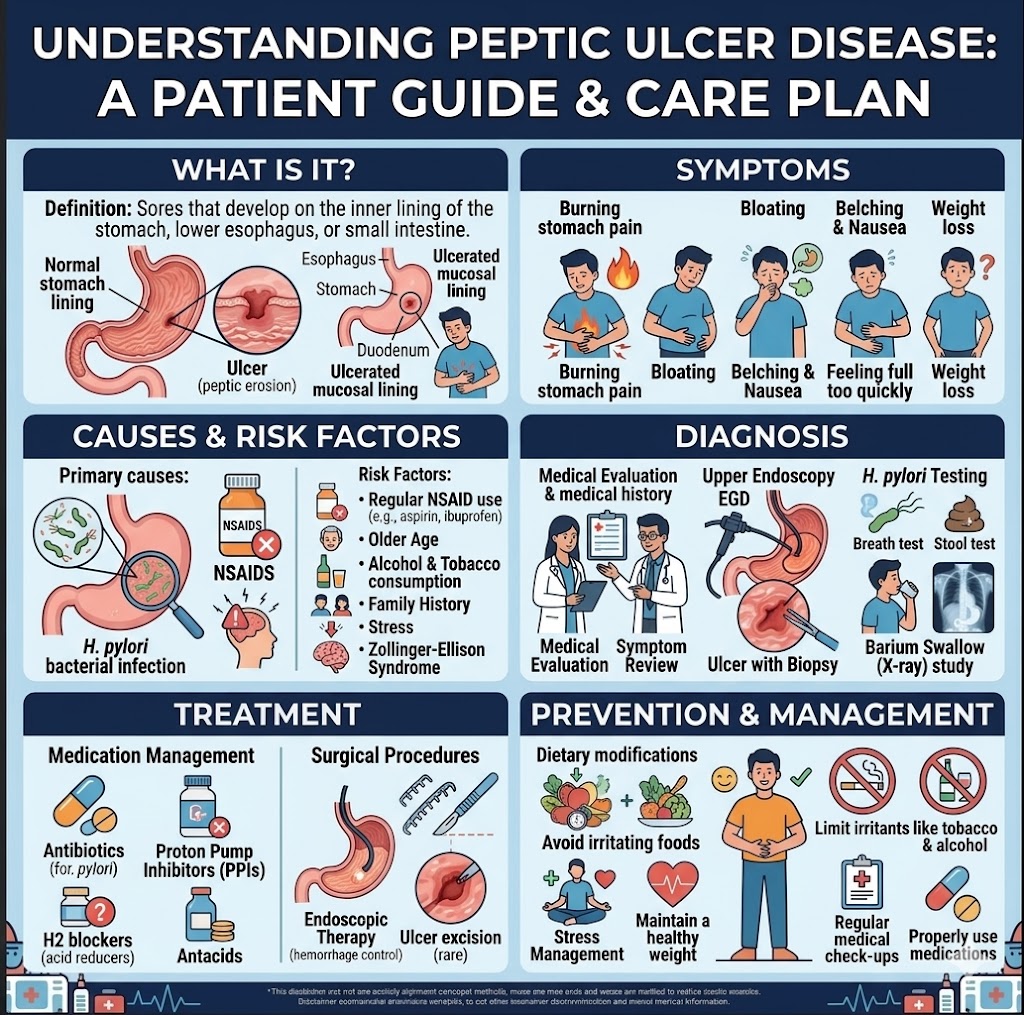
Peptic ulcers are open sores that form on the inner lining of your stomach or the first part of your small intestine, called the duodenum. These painful sores occur when the protective layer of your digestive tract is damaged, allowing stomach acid to erode the tissue. The two most common causes are an infection with a common germ named Helicobacter pylori (H. pylori) and the regular, long-term use of certain pain relievers, such as ibuprofen and naproxen. While stress and spicy foods do not cause ulcers, they can make existing symptoms feel worse.
Understanding the Condition
Understanding Peptic Ulcers: Causes, Symptoms, and Care
Understanding the Condition
Peptic ulcers are open sores that form on the inner lining of your stomach or the first part of your small intestine, called the duodenum. These painful sores occur when the protective layer of your digestive tract is damaged, allowing stomach acid to erode the tissue. The two most common causes are an infection with a common germ named Helicobacter pylori (H. pylori) and the regular, long-term use of certain pain relievers, such as ibuprofen and naproxen. While stress and spicy foods do not cause ulcers, they can make existing symptoms feel worse.
Common Symptoms
Stomach Pain: A dull or burning pain in the stomach area. This pain might be more noticeable when your stomach is empty (between meals or at night) or, for some, after eating.
Feeling of Fullness or Bloating: A sensation of being uncomfortably full or bloated in your abdomen, even after eating a small amount.
Bleeding (Serious Symptoms): If the ulcer bleeds, you might experience severe symptoms such as vomiting blood (which can appear red or black), having dark, tarry, or black stools, feeling dizzy, or even fainting due to blood loss. These symptoms require immediate medical attention.
Consultation Guide
Which Specialist to Meet
Initially, you should see your primary care doctor or general practitioner. If needed, they may refer you to a gastroenterologist, who is a specialist in diseases of the digestive system.
Preparations Before Your Visit
Before your appointment, make a list of all your symptoms, including when they started, what makes them better or worse, and how often they occur. List all medications you are currently taking, including over-the-counter pain relievers, vitamins, and supplements. Be prepared to discuss your diet, alcohol consumption, and smoking habits. If you suspect certain pain relievers are causing your discomfort, discuss this with your doctor before stopping any prescribed medication. If you experience severe symptoms like vomiting blood, black stools, or fainting, seek urgent medical care.
Book a doctor visit near me
Manage Stress: While stress doesn't cause ulcers, it can intensify symptoms. Finding healthy ways to manage stress can improve comfort. (Duration: As advised)
Dietary Adjustments: Identify and avoid foods that trigger or worsen your symptoms, such as very spicy or acidic items. (Duration: As advised)
Procedures and Surgical Interventions
Endoscopic Procedures: For bleeding ulcers or blockages, a specialist can use tools inserted through an endoscope to stop bleeding, widen narrowed areas, or remove obstructions. (Duration: Single procedure, but may require follow-ups)
Moderate Alcohol Intake: Excessive alcohol consumption can irritate the stomach lining and increase stomach acid, contributing to ulcer formation and worsening symptoms. Moderating intake is recommended.
Monitor Symptoms: Be aware of any returning or new symptoms of an ulcer and report them to your doctor promptly.
Adhere to Treatment: Continue prescribed medications and lifestyle changes even after symptoms improve to prevent ulcer recurrence and promote long-term digestive health.
Consultation Guide
Antibiotics: If your ulcer is caused by H. pylori, a combination of medications will be prescribed to kill the bacteria. (Duration: Typically 10-14 days)
Diagnostic Procedures
This procedure allows a doctor to visually examine the lining of your upper digestive system, including your esophagus, stomach, and the beginning of your small intestine (duodenum). A tiny camera on a long, flexible tube is used to look for ulcers, check for bleeding, and take small tissue samples (biopsies) if needed.
What to Expect
These tests are used to detect the presence of the H. pylori germ. They can be done using a breath test, a stool test, or a blood test. A breath test involves drinking a special liquid and then breathing into a bag; a stool test checks for H. pylori substances in your bowel movement; and a blood test looks for antibodies to the bacteria.
What to Expect
For a breath test, you'll drink a specific liquid and then blow into a collection bag. For a stool test, you'll provide a stool sample. For a blood test, a small blood sample will be drawn from your arm. These tests are generally quick and minimally invasive, and your doctor will provide specific instructions for preparation, such as avoiding certain medications before the test.
This imaging test uses X-ray beams to create pictures of the structures inside your body. For a peptic ulcer evaluation, you will drink a special liquid called barium (a contrast medium) that coats the lining of your upper digestive tract, making ulcers or blockages more visible on the X-ray images.
What to Expect
You will be asked to drink a chalky-tasting liquid (barium) which helps the X-ray capture clearer images of your esophagus, stomach, and duodenum. You'll then lie on an X-ray table, and different images will be taken. The procedure is usually quick and painless, although the barium liquid might be unpleasant to drink.
Address H. pylori Infection: If tested positive for H. pylori, complete the full course of prescribed treatment to eliminate the bacteria, as this is a primary preventive step against recurrence.
Regular Medical Check-ups: Follow your doctor's advice for follow-up appointments, especially if you have a history of ulcers or are at higher risk for recurrence.
Treatment Options
You will likely receive medication to help you relax or fall asleep during the procedure. The doctor will gently guide a thin, flexible tube (endoscope) down your throat. You might feel some pressure, but it's generally not painful. The entire procedure usually takes about 15-30 minutes. Afterward, you'll need someone to drive you home, and you might have a sore throat for a short time.
Medications
Acid-Reducing Medications: These medications reduce the amount of acid your stomach produces, allowing the ulcer to heal. (Duration: Several weeks to months, as directed by your doctor)
Stomach-Protecting Medications: These drugs help to coat and protect the ulcer surface from stomach acid, aiding in the healing process. (Duration: Varies based on ulcer severity and healing progress)
Surgery: In rare cases of severe complications like a hole in the stomach wall (perforation), or uncontrolled bleeding that cannot be managed endoscopically, surgery may be necessary. (Duration: A single surgical procedure, with recovery time varying)
Smart Use of Pain Relievers: If you frequently use certain pain relievers (like ibuprofen or naproxen), always take them with food, use the lowest effective dose, and avoid combining them with alcohol. Your doctor might suggest additional stomach-protective medications if you need long-term use.
Stop Smoking: Smoking significantly increases the risk of peptic ulcers and interferes with healing. Quitting is one of the most effective preventive measures.
Prevention & Long-Term Wellbeing
Lifestyle Changes
Avoid Problematic Pain Relievers: If possible, discontinue using certain pain relievers (like ibuprofen or naproxen) that can irritate the stomach. If you must use them, always take them with food and at the lowest effective dose, under medical guidance. (Duration: As advised)
Limit Alcohol and Quit Smoking: Both alcohol and smoking can worsen ulcers and hinder their healing process. Reducing alcohol intake and quitting smoking are crucial for recovery. (Duration: As advised)
Prevention
Tags & Topics
Notice an error or need an update?
Help us keep medical information accurate. Report incorrect info or suggest an edit.


