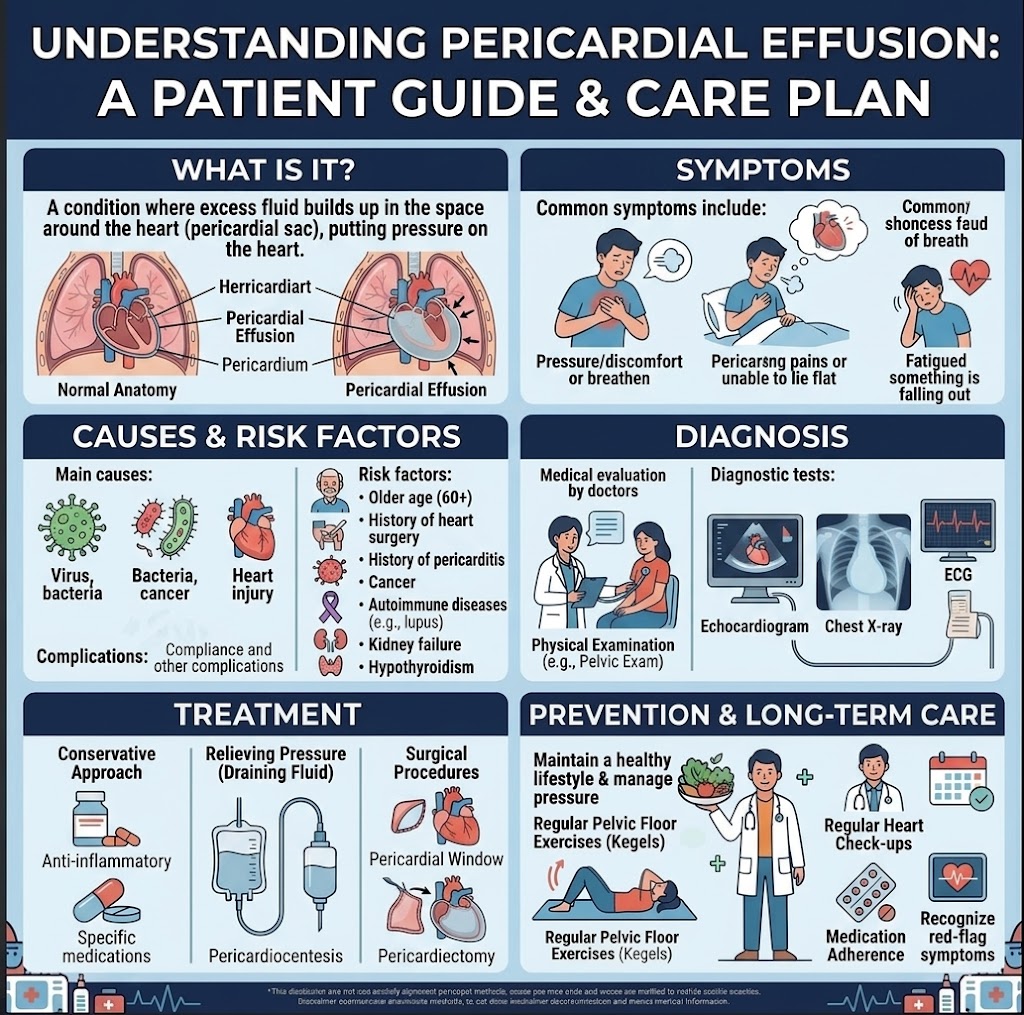
Pericardial effusion is a condition where too much fluid builds up in the sac surrounding the heart, called the pericardium. Normally, a thin layer of fluid helps the heart move freely within this two-layered sac. However, if the pericardium becomes inflamed, injured, or experiences bleeding, excessive fluid can collect. This extra fluid puts pressure on the heart, making it harder for it to pump blood effectively. If left untreated, pericardial effusion can lead to serious complications such as heart failure or even death. Sometimes, symptoms may develop slowly and go unnoticed at first.
Understanding the Condition
Pericardial Effusion: Understanding Fluid Around Your Heart
Understanding the Condition
Pericardial effusion is a condition where too much fluid builds up in the sac surrounding the heart, called the pericardium. Normally, a thin layer of fluid helps the heart move freely within this two-layered sac. However, if the pericardium becomes inflamed, injured, or experiences bleeding, excessive fluid can collect. This extra fluid puts pressure on the heart, making it harder for it to pump blood effectively. If left untreated, pericardial effusion can lead to serious complications such as heart failure or even death. Sometimes, symptoms may develop slowly and go unnoticed at first.
Common Symptoms
Chest Pain: Often sharp and stabbing, typically made worse by taking deep breaths or lying down, and may feel better when leaning forward.
Shortness of Breath: Difficulty breathing, especially when lying flat, or with mild activity.
Cough: A persistent or new cough.
Swelling: Noticeable swelling in the legs, ankles, or abdomen due to fluid retention.
Fever: An elevated body temperature, which may indicate an underlying infection or inflammation.
Weakness or Fatigue: Unexplained tiredness or lack of energy.
Lightheadedness or Fainting: Feeling dizzy or passing out, indicating reduced blood flow to the brain.
Heart Palpitations: A sensation of a rapid, fluttering, or irregular heartbeat.
Emergency Symptoms: Seek immediate medical help (call your local emergency number) if you experience severe shortness of breath, sudden and intense chest pain, or fainting spells. These could indicate a life-threatening complication.
Consultation Guide
Which Specialist to Meet
You should first consult your primary care doctor, who can refer you to a cardiologist (a heart specialist) if pericardial effusion is suspected. In an emergency, you will be seen by an emergency room physician.
Preparations Before Your Visit
Before your visit, make a list of all your symptoms, including when they started and how they have changed. Bring a list of all medications, vitamins, and supplements you are currently taking. Also, be prepared to discuss your medical history, including any recent illnesses, injuries, or existing health conditions. Write down any questions you have for the doctor.
Book a doctor visit near me
Rest: Allowing your body sufficient rest is important for recovery, especially if the effusion is mild and not causing significant heart pressure. Your doctor will advise on appropriate activity levels. (Duration: As advised by your doctor, often until symptoms improve and the effusion resolves.)
Monitor for Symptoms: Be aware of your body and report any new or worsening symptoms, such as shortness of breath, chest pain, or swelling, to your doctor promptly.
Consultation Guide
Diuretics (Water Pills): These medicines help your body get rid of excess fluid and salt through urine, which can reduce overall fluid volume and pressure on the heart. (Duration: As needed, can be short-term or ongoing depending on the cause.)
Specific Treatments for Underlying Causes: If the effusion is due to an infection (e.g., bacterial), antibiotics will be prescribed. For autoimmune conditions, specific immune-suppressing therapies may be used. (Duration: Varies significantly based on the underlying condition, from days to lifelong management.)
Pericardiocentesis (Fluid Drainage): A procedure where a thin needle is carefully guided, often with ultrasound or X-ray imaging, through the chest wall and into the pericardial sac to drain the excess fluid. This relieves pressure on the heart. (Duration: A one-time procedure. In some cases, a small catheter might be left in place for a few days to drain fluid continuously, or the procedure may need to be repeated if fluid reaccumulates.)
Pericardial Window: If fluid repeatedly builds up, a surgeon may create a small opening (window) in the pericardium. This allows any future fluid to drain into the chest cavity, where it can be absorbed, preventing dangerous pressure on the heart. (Duration: A one-time surgical procedure.)
Pericardiectomy: In rare, severe cases where the pericardium has become thickened or scarred and causes ongoing problems, a surgeon may remove all or part of the pericardium. This is a major surgery. (Duration: A one-time surgical procedure.)
Diagnostic Procedures
A common imaging test that uses a small amount of radiation to create pictures of your heart, lungs, blood vessels, airways, and the bones of your chest and spine. It can help detect problems like fluid around the heart or lungs, or other issues within the chest.
What to Expect
You will typically stand or sit in front of an X-ray plate, and a technician will ask you to hold your breath for a few seconds while the images are taken. The procedure is quick, painless, and usually takes only a few minutes.
CT Scan (Computed Tomography Scan)
A sophisticated imaging method that combines multiple X-ray images taken from different angles. A computer then processes these images to create detailed cross-sectional 'slices' of your bones, blood vessels, and soft tissues, offering a more in-depth view than a standard X-ray.
What to Expect
You will lie on a motorized table that slides into a large, doughnut-shaped machine. You'll need to lie still during the scan, which can take 10-30 minutes. Sometimes, a special dye (contrast material) is given through a vein or swallowed to make certain structures show up more clearly.
Echocardiogram (Echo)
An ultrasound test that uses high-frequency sound waves to create moving pictures of your heart. It shows the heart's size, shape, and how well it's pumping, as well as blood flow through the heart chambers and valves. This test is excellent for identifying fluid around the heart.
What to Expect
You'll lie on an examination table. A technician will apply a special gel to your chest, then move a handheld device called a transducer over your skin. You might feel a slight pressure, but the test is generally painless and takes about 30-60 minutes.
Electrocardiogram (ECG or EKG)
A quick and non-invasive test that measures the electrical activity of your heart. It records the timing and strength of electrical signals as they pass through your heart, helping to identify irregular heartbeats, signs of heart strain, or damage.
What to Expect
Small, sticky patches called electrodes will be placed on your chest, arms, and legs. Wires connect these patches to a machine that records your heart's electrical signals. The test is painless, takes only a few minutes, and you simply need to lie still.
Treatment Options
Managing Underlying Conditions: Following your doctor's treatment plan for conditions like autoimmune diseases, kidney issues, or infections that may be contributing to the effusion. This is crucial for long-term health and preventing recurrence. (Duration: Ongoing, as per the specific condition.)
Medications
Anti-inflammatory Medications: These medications help reduce swelling and pain in the pericardium, which can lessen fluid buildup and discomfort. (Duration: Days to weeks, as prescribed by your doctor.)
Prompt Treatment of Infections: Address infections quickly, especially those that could spread to or affect the heart, such as severe respiratory infections.
Manage Chronic Conditions: Effectively control existing health issues like autoimmune diseases (e.g., lupus), thyroid disorders, or kidney disease, as these can contribute to pericardial effusion.
Follow-up After Heart Injury or Surgery: Adhere to all post-operative instructions and follow-up appointments after chest trauma or heart surgery to monitor for complications.
Prevention & Long-Term Wellbeing
Home Remedies & Lifestyle
Prevention
Long-Term Monitoring & Lifestyle
Regular Medical Check-ups: Maintain scheduled doctor visits, especially if you have a history of pericardial effusion or underlying conditions that increase your risk.
Healthy Lifestyle Choices: Adopt a heart-healthy diet, engage in regular physical activity as approved by your doctor, avoid smoking, and limit alcohol consumption to support overall heart health.
Tags & Topics
Notice an error or need an update?
Help us keep medical information accurate. Report incorrect info or suggest an edit.


