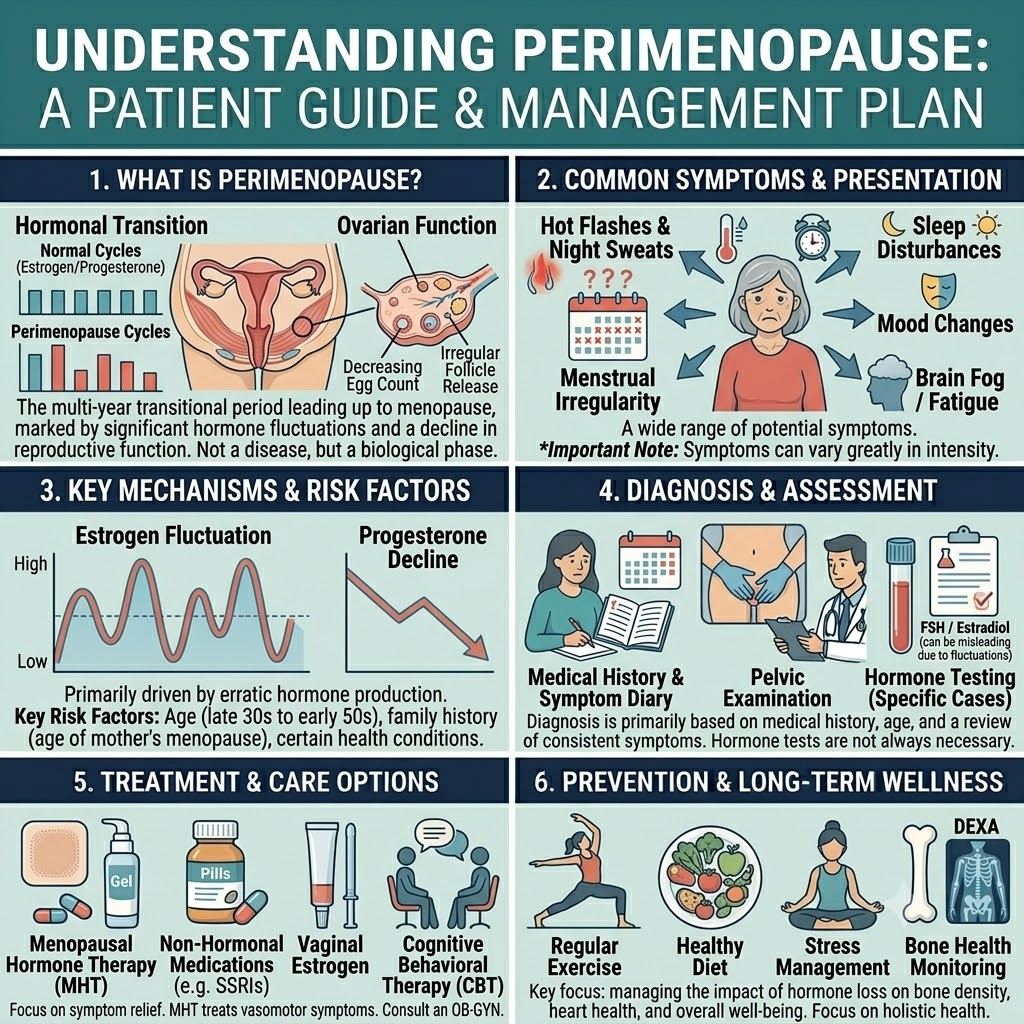
Perimenopause is the natural transition period before menopause, marking the time when a woman's body begins to prepare for the end of menstrual periods. Often called the menopausal transition, it typically starts in a woman's 40s, though it can begin as early as her 30s or as late as her 50s. During this phase, the main female hormone, estrogen, fluctuates, leading to various physical and emotional changes like irregular periods, hot flashes, sleep disturbances, and vaginal dryness. Perimenopause concludes once a woman has gone 12 consecutive months without a menstrual period, at which point she has officially reached menopause.
Understanding the Condition
Perimenopause: Understanding Your Body's Transition
Understanding the Condition
Perimenopause is the natural transition period before menopause, marking the time when a woman's body begins to prepare for the end of menstrual periods. Often called the menopausal transition, it typically starts in a woman's 40s, though it can begin as early as her 30s or as late as her 50s. During this phase, the main female hormone, estrogen, fluctuates, leading to various physical and emotional changes like irregular periods, hot flashes, sleep disturbances, and vaginal dryness. Perimenopause concludes once a woman has gone 12 consecutive months without a menstrual period, at which point she has officially reached menopause.
Common Symptoms
Irregular Periods: Periods can become unpredictable, with changes in cycle length, flow (lighter to heavier), and skipped periods. Early perimenopause may involve consistent cycle length differences of seven days or more. Late perimenopause is often marked by 60 days or more between periods. Any bleeding after 12 months without a period requires immediate medical attention.
Hot Flashes: Many women experience sudden feelings of intense warmth, often spreading through the chest, neck, and face. These 'hot flashes' can vary greatly in strength, duration, and frequency, sometimes accompanied by sweating.
Sleep Problems: Difficulty sleeping is common, often due to hot flashes and night sweats. However, sleep pattern changes and insomnia can occur during perimenopause even without these symptoms.
Mood Changes: Mood swings, irritability, and an increased risk of depression can occur. Women with a history of hormonal mood changes (like PMS or postpartum depression) or mood disorders (depression, anxiety) may be more susceptible to these shifts.
Vaginal and Bladder Problems: Lower estrogen levels can make vaginal tissues drier and less elastic, causing painful intercourse, burning during urination (even without infection), and increased susceptibility to vaginal or urinary tract infections. Urinary leakage, increased frequency, or stronger urges to urinate may also occur.
Decreasing Fertility: As ovulation becomes less regular, conceiving becomes more challenging. However, pregnancy is still possible as long as periods occur. Effective birth control is advised until 12 consecutive months without a period confirms menopause.
Changes in Sexual Function: Sexual arousal and desire can change during perimenopause, with experiences varying widely among women. Some may find less enjoyment in sex, while others may experience an increase. Discuss any concerns with a healthcare professional.
Loss of Bone: Decreasing estrogen accelerates bone loss, making bones more fragile. This increases the risk of osteoporosis, a condition that makes bones prone to fractures.
Changing Cholesterol Levels: Lower estrogen can lead to an increase in 'bad' LDL cholesterol and a decrease in 'good' HDL cholesterol. These changes collectively raise the risk of heart disease.
Consultation Guide
Which Specialist to Meet
You should consult with a Family Doctor, General Practitioner, or a Gynecologist (a doctor specializing in women's reproductive health).
Preparations Before Your Visit
Before your visit, track your menstrual cycles, noting dates, flow, and any irregularities. List all your symptoms, including when they started, their frequency, and severity. Be prepared to discuss your medical history, current medications or supplements, and family history of early menopause. Write down any questions you have for your doctor.
Book a doctor visit near me
Blood tests to check the function of your thyroid gland. Thyroid disorders can cause symptoms similar to perimenopause, so these tests are often performed to rule out such underlying conditions.
Estrogen-based Hormone Therapy: Systemic estrogen (pills, patches, gels, sprays) can relieve hot flashes and prevent bone loss. Vaginal estrogen (creams, rings, tablets) targets vaginal dryness specifically without significant systemic absorption. (Duration: Typically short-term for symptom relief; duration determined by a doctor based on individual risks and benefits.)
Non-Hormonal Options for Hot Flashes: Certain non-hormonal prescription medications can help reduce the frequency and severity of hot flashes for women who cannot or prefer not to use hormone therapy. (Duration: As needed for symptom relief, ongoing under medical supervision.)
Mood Stabilizers/Antidepressants: If mood swings, irritability, or depression are significant, specific medications can be prescribed to help manage these symptoms. (Duration: As directed by a doctor, often ongoing for several months to years.)
Procedures for Heavy Bleeding
Consultation Guide
Regular Medical Check-ups: Continue routine doctor visits for general health screenings, blood pressure checks, cholesterol monitoring, and cancer screenings (e.g., mammograms, Pap tests) as recommended for your age and risk factors.
Mental and Emotional Support
Prioritize Mental Wellbeing: Seek support for mood changes through therapy, support groups, or mindfulness practices. Connecting with others experiencing similar transitions can also be beneficial.
Strengthen Pelvic Floor: Perform Kegel exercises regularly to strengthen pelvic floor muscles, which can help prevent or manage urinary leakage and support overall pelvic health.
Diagnostic Procedures
Hormone Level Assessment (e.g., FSH, Estradiol)
Blood tests to measure levels of hormones like Follicle-Stimulating Hormone (FSH) and Estradiol (a form of estrogen). While hormone levels fluctuate during perimenopause and aren't definitive for diagnosis, they can provide supportive information or help rule out other conditions affecting ovarian function.
What to Expect
A small blood sample will be drawn from a vein, typically in your arm. The procedure is quick, and you may feel a brief pinch or sting.
Thyroid Function Tests
What to Expect
A small blood sample will be drawn from a vein, typically in your arm. The procedure is quick, and you may feel a brief pinch or sting.
A routine physical examination of your external and internal reproductive organs to check for any abnormalities, infections, or other conditions.
What to Expect
Your doctor will examine your vulva, vagina, cervix (using a speculum), uterus, and ovaries (manually). You may feel some pressure or mild discomfort, but it is generally not painful.
A non-invasive imaging technique that uses sound waves to create images of the uterus, ovaries, and other pelvic organs. This can help identify any structural abnormalities or reasons for abnormal bleeding.
What to Expect
Gel will be applied to your lower abdomen, and a handheld device (transducer) will be moved across your skin. Sometimes, a slim probe may be gently inserted into the vagina (transvaginal ultrasound) for clearer images. It is usually painless.
Endometrial Biopsy (if abnormal bleeding is a concern)
A procedure to collect a small tissue sample from the lining of the uterus (endometrium). This sample is then examined under a microscope to check for any abnormal cells or conditions that could be causing heavy or irregular bleeding.
What to Expect
A thin, flexible tube is inserted through the cervix into the uterus to collect tissue. You may experience cramping or discomfort during the procedure, which typically subsides quickly. Pain relief may be offered beforehand.
Treatment Options
Medications
Sleep Aids: For persistent sleep problems not managed by lifestyle changes, prescription or over-the-counter sleep medications may be recommended. (Duration: Short-term use, or as directed by a doctor.)
Prevention & Long-Term Wellbeing
Lifestyle Adjustments & Home Remedies
Cooling Strategies: Dress in layers, use fans, and identify/avoid triggers like spicy foods, caffeine, or alcohol to help manage hot flashes and night sweats. (Duration: Ongoing)
Sleep Hygiene Practices: Establish a consistent sleep schedule, ensure your bedroom is cool, dark, and quiet, and limit large meals, caffeine, or screen time before bed to improve sleep quality. (Duration: Ongoing)
Stress Reduction and Exercise: Regular physical activity and relaxation techniques like yoga or meditation can significantly improve mood, reduce stress, and aid sleep. (Duration: Ongoing)
Vaginal Moisturizers and Lubricants: Over-the-counter products can effectively alleviate vaginal dryness and reduce discomfort during sexual activity. (Duration: As needed)
Endometrial Ablation: A minimally invasive procedure that destroys the lining of the uterus (endometrium) to reduce heavy menstrual bleeding. It can significantly decrease blood flow or stop periods entirely. Performed by inserting slender tools through the vagina and cervix, using methods like extreme cold, heat, or radiofrequency energy. No external cuts are needed. Generally not recommended if future pregnancy is desired or after menopause. (Duration: One-time procedure with lasting effects; recovery typically a few days to a week.)
Intrauterine Devices (IUDs) or Oral Contraceptives: Hormonal IUDs or certain birth control pills can effectively reduce heavy menstrual bleeding and also provide contraception. (Duration: IUDs can last for several years (e.g., 3-8 years depending on type); oral contraceptives are taken daily.)
Maintain Bone Density: Ensure adequate intake of calcium and Vitamin D through diet or supplements, and engage in regular weight-bearing exercise (like walking, jogging, weightlifting) to slow bone loss and reduce the risk of osteoporosis.
Protect Cardiovascular Health: Adopt a heart-healthy lifestyle with a balanced diet rich in fruits, vegetables, and whole grains, regular physical activity, maintaining a healthy weight, and managing blood pressure and cholesterol levels to mitigate increased heart disease risk.
General Health and Screenings
Tags & Topics
Notice an error or need an update?
Help us keep medical information accurate. Report incorrect info or suggest an edit.


