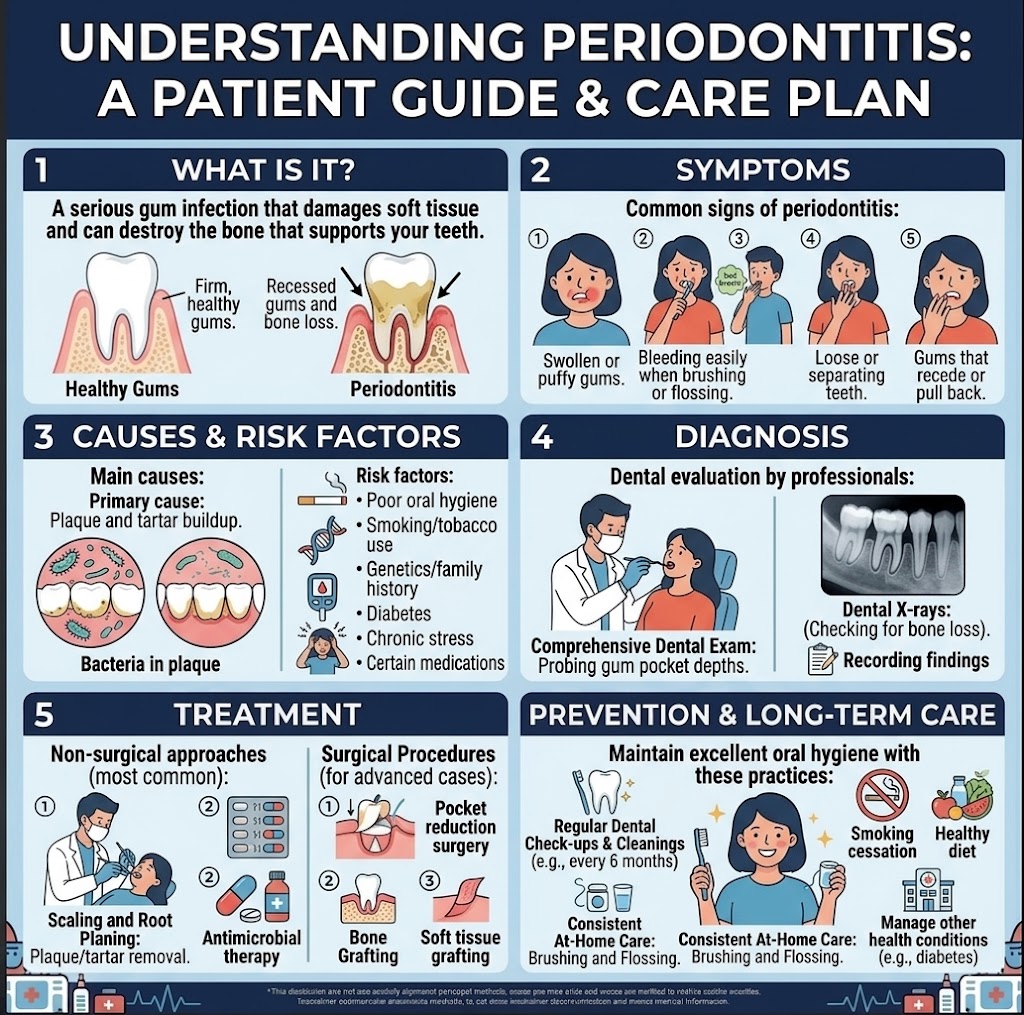
Periodontitis, or advanced gum disease, is a severe infection of the gums that damages the soft tissues supporting your teeth. If left untreated, it can destroy the bone holding your teeth in place, leading to loose teeth or even tooth loss. This common condition is largely preventable with good oral hygiene and regular dental care.
Understanding the Condition
Periodontitis: Understanding and Treating Serious Gum Disease
Understanding the Condition
Periodontitis, or advanced gum disease, is a severe infection of the gums that damages the soft tissues supporting your teeth. If left untreated, it can destroy the bone holding your teeth in place, leading to loose teeth or even tooth loss. This common condition is largely preventable with good oral hygiene and regular dental care.
Common Symptoms
Swollen or puffy gums: Gums appear inflamed and larger than usual.
Bright red, dark red or dark purple gums: A darker color than healthy pink gums indicates inflammation.
Gums that feel tender when touched: Discomfort or pain upon touching.
Gums that bleed easily: Bleeding during brushing, flossing, or even when eating.
Pink toothbrush after brushing: Blood residue from gums.
Spitting out blood when brushing or flossing: Visible blood in saliva.
Persistent bad breath: Unpleasant odor, often from bacterial infection.
Pus between teeth and gums: Visible yellowish discharge.
Loose teeth or tooth loss: Teeth feel wobbly, potentially falling out.
Painful chewing: Discomfort when biting or eating.
New spaces between teeth (black triangles): Gaps form as gums recede.
Receding gums: Gums shrink back, making teeth appear longer.
Changed bite: Teeth feel different when you close your mouth.
Consultation Guide
Which Specialist to Meet
Start by consulting a general dentist. If the condition is advanced or complex, your dentist may refer you to a periodontist, a dental specialist in gum health and disease.
Preparations Before Your Visit
Before your visit, prepare a list of your symptoms, medications you're taking, and any medical conditions. Be ready to discuss your oral hygiene habits and ask any questions you have.
Book a doctor visit near me
Monitor for Symptoms: Be vigilant for any return of symptoms like bleeding gums, persistent bad breath, or changes in your bite. Report these to your dental professional promptly.
Consultation Guide
Regular Professional Dental Cleanings: Visit your dentist for checkups and professional cleanings typically every 6 to 12 months. Those with risk factors or previous periodontitis may need more frequent visits.
Avoid Tobacco Products: Smoking or chewing tobacco significantly increases the risk and severity of periodontitis. Quitting is one of the most impactful steps for gum health.
Manage Underlying Health Conditions: Conditions like diabetes or those affecting the immune system can impact gum health. Work with your doctor to keep these conditions well-controlled.
Diagnostic Procedures
Your dentist visually inspects gums, teeth, and mouth for inflammation, plaque, tartar, and changes in gum color or texture, plus signs of tooth looseness or receding gums.
What to Expect
Expect a thorough, non-invasive examination using a mirror and light, typical of a regular dental check-up.
A periodontal probe measures gum pocket depth around teeth; shallow pockets are healthy, deep ones indicate disease. Bleeding during probing is noted.
What to Expect
Expect gentle insertion of the probe by a hygienist or dentist, possibly mild pressure, as they measure depths.
X-rays reveal bone loss around teeth, a key indicator of periodontitis progression, and other issues like cavities.
What to Expect
Expect to bite down on a plastic tab while quick, generally painless images of your teeth and jaw are captured by the X-ray machine.
Treatment Options
Enhanced Oral Hygiene: Diligent daily brushing for two minutes, twice a day, and flossing at least once daily. This removes plaque and food particles, crucial for managing gum inflammation. (Duration: Ongoing, lifelong commitment)
Non-Surgical Procedures
Scaling and Root Planing (Deep Cleaning): A professional deep cleaning to remove plaque and tartar from above and below the gumline. Tooth root surfaces are smoothed to remove bacterial toxins and prevent future buildup. (Duration: Typically completed in one to four dental visits, lasting 1-2 hours each, followed by regular maintenance cleanings every 3-4 months)
Medications
Oral Antibiotics: Oral medications may be prescribed to help control bacterial infection, especially if the infection is widespread or persistent. They work by reducing harmful bacteria. (Duration: Usually a short course, typically 7-10 days, as directed by your dentist)
Topical Antibiotics: Gels, chips, or antiseptic mouth rinses containing antimicrobial agents applied directly into the gum pockets or used as a rinse to control bacteria in specific areas. (Duration: Gels/chips may last several weeks; mouth rinses used daily or as directed for several weeks to months)
Surgical Procedures
Flap Surgery (Pocket Reduction Surgery): Gums are lifted back for effective removal of tartar and bacteria from deep pockets. The gum tissue is then re-positioned snugly around the teeth. (Duration: A single procedure for affected areas, with healing taking a few weeks to months)
Soft Tissue Grafts: Tissue from another part of your mouth or a donor source is used to cover exposed tooth roots, reduce further gum recession, and improve aesthetics. (Duration: A single procedure, with healing taking several weeks)
Bone Grafting: Small fragments of bone (your own, synthetic, or donated) are placed where bone has been destroyed. This helps regenerate lost bone and stabilize teeth. (Duration: A single procedure, with bone regeneration taking several months)
Guided Tissue Regeneration: A small mesh-like material is placed between the bone and gum tissue. This prevents gum tissue from growing into the area where bone should be, allowing bone and connective tissue to regrow. (Duration: A single procedure, with healing and regeneration taking many months)
Adhere to Your Treatment Plan: Follow all recommendations from your dentist or periodontist, including home care instructions, medication schedules, and follow-up appointments, to prevent recurrence.
Prevention & Long-Term Wellbeing
Prevention
Practice Excellent Oral Hygiene: Brush your teeth for two minutes, at least twice daily, and floss thoroughly once a day. This effectively removes plaque and food particles before they harden.
Maintain a Balanced Diet: A healthy diet, rich in essential nutrients, particularly Vitamin C, supports overall immune function and gum tissue health. Limit sugary foods and drinks.
Long-Term Management
Tags & Topics
Notice an error or need an update?
Help us keep medical information accurate. Report incorrect info or suggest an edit.


