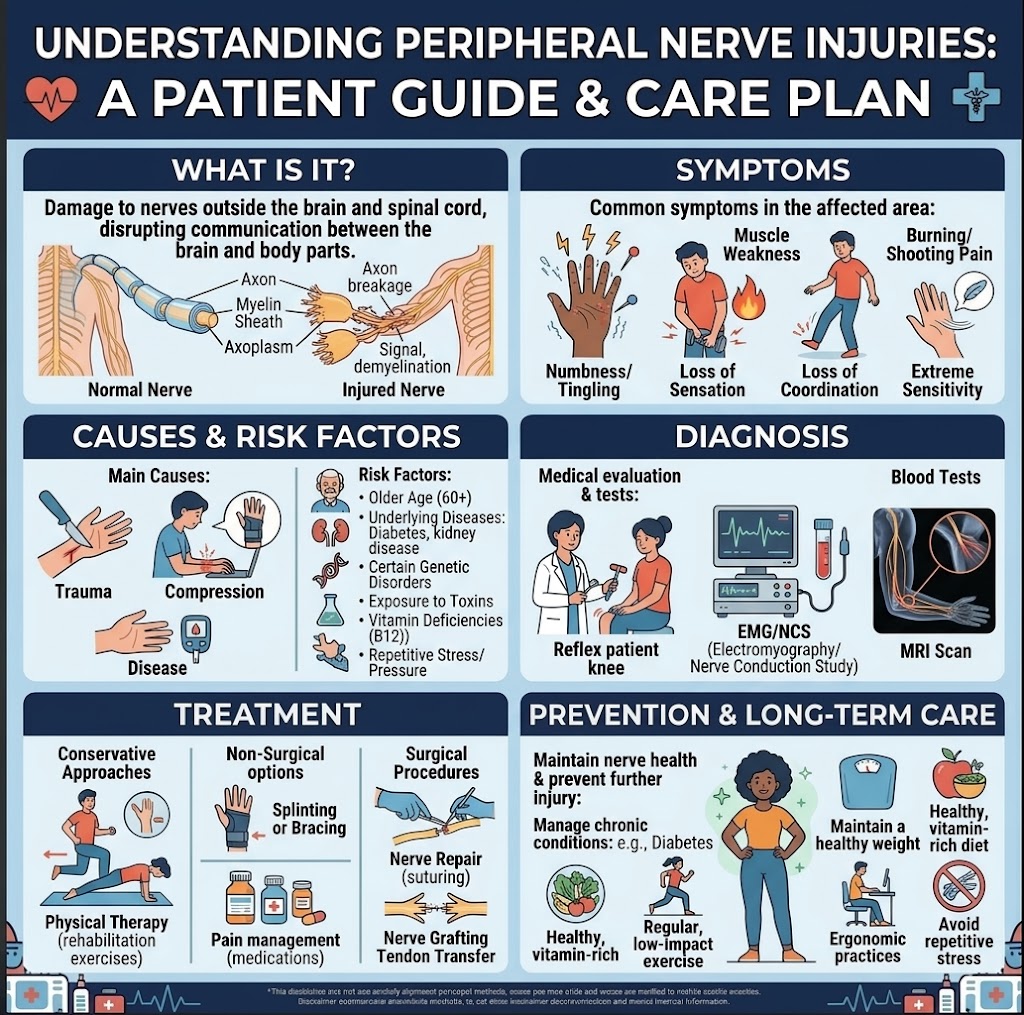
Peripheral nerves are the communication network connecting your brain and spinal cord to the rest of your body. They allow you to move your muscles, feel sensations like touch and temperature, and control automatic bodily functions such as breathing and digestion. These nerves are delicate and can be easily damaged. An injury to a peripheral nerve can disrupt messages between your brain and muscles or organs, leading to a condition called peripheral neuropathy. Seeking prompt medical attention for a peripheral nerve injury is crucial, as early diagnosis and treatment can help prevent long-term complications and permanent damage.
Understanding the Condition
Peripheral Nerve Injuries
Understanding the Condition
Common Symptoms
Motor Nerve Damage: Motor nerves control voluntary muscle movements, like walking, talking, and holding objects. Damage to these nerves can lead to muscle weakness, painful muscle cramps, and uncontrolled muscle twitching.
Autonomic Nerve Damage: Autonomic nerves regulate bodily functions you don't consciously control, such as breathing, heart rate, blood pressure, digestion, and body temperature. Symptoms can include excessive sweating, changes in blood pressure, difficulty tolerating heat, and various digestive problems.
Consultation Guide
Which Specialist to Meet
Before your appointment, make a detailed list of your symptoms, including when they started, how severe they are, and what makes them better or worse. Note down your full medical history, including any other conditions you have and all medications you are currently taking (prescription, over-the-counter, and supplements). Be prepared to discuss any recent accidents, falls, or sports injuries. It can also be helpful to write down any questions you have for the doctor.
Book a doctor visit near me
During the exam, your doctor will ask about your medical history and symptoms. They will perform tests to assess your mental status, coordination, balance, reflexes, muscle strength, and sensation. These tests may involve simple tasks like walking in a straight line, touching your finger to your nose, or reacting to light touches or pinpricks. The exam can range from a few minutes to over an hour.
Nerve Conduction Study (NCS)
Gentle Exercise: Under guidance from your doctor or therapist, engaging in gentle, regular exercise can improve blood flow, maintain muscle strength, and enhance overall well-being, but avoid activities that worsen symptoms. (Duration: As advised)
Regular Medical Check-ups: Continue to see your healthcare provider or specialist as recommended. Regular monitoring allows for early detection of any new symptoms or progression of nerve damage and ensures your treatment plan remains effective.
Adherence to Treatment Plan: Consistently follow your prescribed medications, therapy exercises, and lifestyle modifications. This is vital for promoting nerve healing, managing symptoms, and preventing complications.
Adaptive Strategies: Work with occupational therapists to learn new ways of performing daily tasks and consider assistive devices if necessary to maintain independence and quality of life despite persistent nerve damage.
Consultation Guide
Sensory Nerve Damage: Sensory nerves transmit information about touch, temperature, and pain. When these nerves are injured, you might experience numbness or tingling in your hands or feet, difficulty walking, problems with balance (especially with eyes closed), trouble with fine motor tasks like fastening buttons, or a reduced ability to sense pain or temperature changes. Nerve injury can also cause direct pain.
A neurological exam is a comprehensive assessment of your nervous system's function, including your brain, spinal cord, nerves, and muscles. It helps your healthcare team identify nervous system conditions and their underlying causes.
Medications for Underlying Conditions: If your nerve injury is caused by a medical condition like diabetes or an autoimmune disease, medications to manage that condition (e.g., blood sugar control medications, immunosuppressants) are essential for nerve healing and preventing further damage. (Duration: Long-term, as determined by the specific underlying condition and physician guidance.)
Diagnostic Procedures
Peripheral nerves are the communication network connecting your brain and spinal cord to the rest of your body. They allow you to move your muscles, feel sensations like touch and temperature, and control automatic bodily functions such as breathing and digestion. These nerves are delicate and can be easily damaged. An injury to a peripheral nerve can disrupt messages between your brain and muscles or organs, leading to a condition called peripheral neuropathy. Seeking prompt medical attention for a peripheral nerve injury is crucial, as early diagnosis and treatment can help prevent long-term complications and permanent damage.
What to Expect
This test measures how quickly and efficiently electrical signals travel along a nerve. It helps determine if a nerve is damaged, the type of damage, and its severity.
What to Expect
Small electrode patches are placed on your skin over the nerve to be tested. A mild electrical pulse is delivered through one electrode, which stimulates the nerve, and the response is recorded by another electrode. You may feel a brief, mild tingling or a small electrical 'shock' sensation.
Electromyography (EMG)
EMG measures the electrical activity of your muscles both at rest and when contracted. It helps assess the health of your muscles and the nerves that control them.
What to Expect
A very thin needle electrode is gently inserted into specific muscles. You may be asked to relax the muscle and then contract it slightly. The electrical activity is displayed on a monitor and recorded. You might feel a brief pinprick sensation or mild discomfort during the needle insertion.
Magnetic Resonance Imaging (MRI)
MRI uses powerful magnets and radio waves to create detailed images of soft tissues, including nerves, muscles, and surrounding structures. It can help identify nerve compression, inflammation, tumors, or other structural issues.
What to Expect
You will lie on a movable table that slides into a large, tunnel-shaped machine. The machine makes loud knocking or humming noises, so you will likely be offered earplugs or headphones. It's crucial to remain very still during the scan, which can last from 30 minutes to an hour or more. In some cases, a contrast dye may be injected into a vein to highlight certain structures.
Computed Tomography (CT) Scan
A CT scan uses a series of X-rays taken from different angles to create detailed cross-sectional images of your body. It is particularly useful for visualizing bone structures and can help identify fractures or other issues affecting nerves.
What to Expect
You will lie on a table that slides into a donut-shaped machine. The scanner rotates around you, taking images. The procedure is generally quick and painless. Like MRI, a contrast dye might be used in some situations to improve image clarity.
Blood tests can help identify underlying medical conditions that might be causing nerve damage, such as diabetes, autoimmune disorders, vitamin deficiencies, or infections.
What to Expect
A healthcare professional will draw a sample of blood, typically from a vein in your arm. You may feel a brief pinch or sting during the procedure.
Treatment Options
If you experience weakness, tingling, numbness, or a complete loss of feeling, it's important to consult with your primary care provider first. They may then refer you to a neurologist, a doctor specializing in nervous system conditions, for further evaluation and treatment. Depending on your needs, you might also work with physical or occupational therapists.
Preparations Before Your Visit
Medications
Pain Relievers: Over-the-counter pain medications or prescription-strength options may be used to manage discomfort. For neuropathic pain (nerve pain), specific medications such as certain antidepressants or anticonvulsants are often prescribed. (Duration: As needed for pain relief, or long-term as prescribed for chronic pain management.)
Anti-inflammatory Medications: These medications can help reduce inflammation around the damaged nerves, potentially alleviating pressure and pain. (Duration: Short-term use during acute inflammation, or as directed by a doctor.)
Nerve Decompression: If a nerve is being compressed or pinched (e.g., in carpal tunnel syndrome), surgery can be performed to release the pressure on the nerve by cutting surrounding tissue or removing obstacles. (Duration: Recovery typically ranges from weeks to a few months, depending on the severity of compression and individual healing.)
Manage Underlying Health Conditions: If you have conditions like diabetes, autoimmune diseases, or thyroid disorders, diligently follow your treatment plan to control them. Effective management can prevent or slow nerve damage progression.
Avoid Repetitive Strain: Be aware of activities that involve repetitive motions or prolonged pressure on specific nerves (e.g., in the wrists or elbows). Use ergonomic tools and take frequent breaks to reduce strain.
Pain Management: If chronic nerve pain is a factor, explore various pain management techniques, including medications, physical therapies, and complementary approaches, under the guidance of your doctor.
Prevention & Long-Term Wellbeing
Physical Therapy: Physical therapy involves targeted exercises and techniques to restore strength, improve flexibility, enhance range of motion, and regain balance and coordination. A physical therapist will create a personalized program. (Duration: Weeks to months, often ongoing as part of a long-term recovery plan.)
Occupational Therapy: Occupational therapists help you adapt to daily activities and learn new ways to perform tasks, especially if nerve damage affects your hands or arms. They can also recommend assistive devices. (Duration: Weeks to months, depending on functional goals and progress.)
Transcutaneous Electrical Nerve Stimulation (TENS): TENS therapy uses a small device to deliver low-voltage electrical current through electrodes placed on your skin. This can help block pain signals and provide temporary pain relief. (Duration: Used as needed for pain relief, often with home units.)
Procedures (Non-Surgical)
Nerve Blocks: Injections of local anesthetic, sometimes combined with corticosteroids, are administered near the affected nerve to temporarily block pain signals and reduce inflammation. (Duration: Pain relief is temporary, lasting hours to weeks, and may require repeat injections.)
Nerve Repair: If a nerve is cleanly cut or severely damaged, a surgeon may carefully reattach the severed ends. This allows the nerve to potentially regenerate and reconnect. (Duration: Recovery is a lengthy process, often taking many months to years, as nerve fibers regenerate very slowly (millimeters per day).)
Nerve Grafting: When there is a gap in a damaged nerve that is too large to directly repair, a segment of healthy nerve (often taken from a less critical nerve in your own body, or a donor nerve) is used to bridge the gap, providing a pathway for regeneration. (Duration: Similar to nerve repair, recovery is slow and can take many months to several years as the nerve regenerates through the graft.)
Nerve Transfer: In this procedure, a less important, healthy nerve or a branch of a healthy nerve is surgically rerouted and attached to the damaged nerve. This allows the healthy nerve to 'reanimate' the muscles or provide sensation where the original nerve was injured. (Duration: Recovery is extensive, typically requiring many months to a year or more for nerve regrowth and functional improvement.)
Home Remedies & Lifestyle
Pain Management Techniques: Applying warm or cool compresses can help alleviate discomfort. Learning relaxation techniques and practicing mindfulness can also help manage chronic pain. (Duration: As advised)
Healthy Diet and Lifestyle: Eating a balanced, nutrient-rich diet, avoiding excessive alcohol consumption, and quitting smoking can support nerve health and overall healing. If you have diabetes, strict blood sugar control is vital. (Duration: As advised)
Prevention
Injury Protection: Always use appropriate safety gear during sports or physical activities, and take precautions to prevent falls, especially if you have balance issues or numbness. Be mindful of your surroundings to avoid accidents.
Maintain a Healthy Lifestyle: A balanced diet, regular physical activity, maintaining a healthy weight, and avoiding smoking and excessive alcohol intake contribute significantly to overall nerve health and resilience.
Long-Term Monitoring & Support
Tags & Topics
Notice an error or need an update?
Help us keep medical information accurate. Report incorrect info or suggest an edit.


