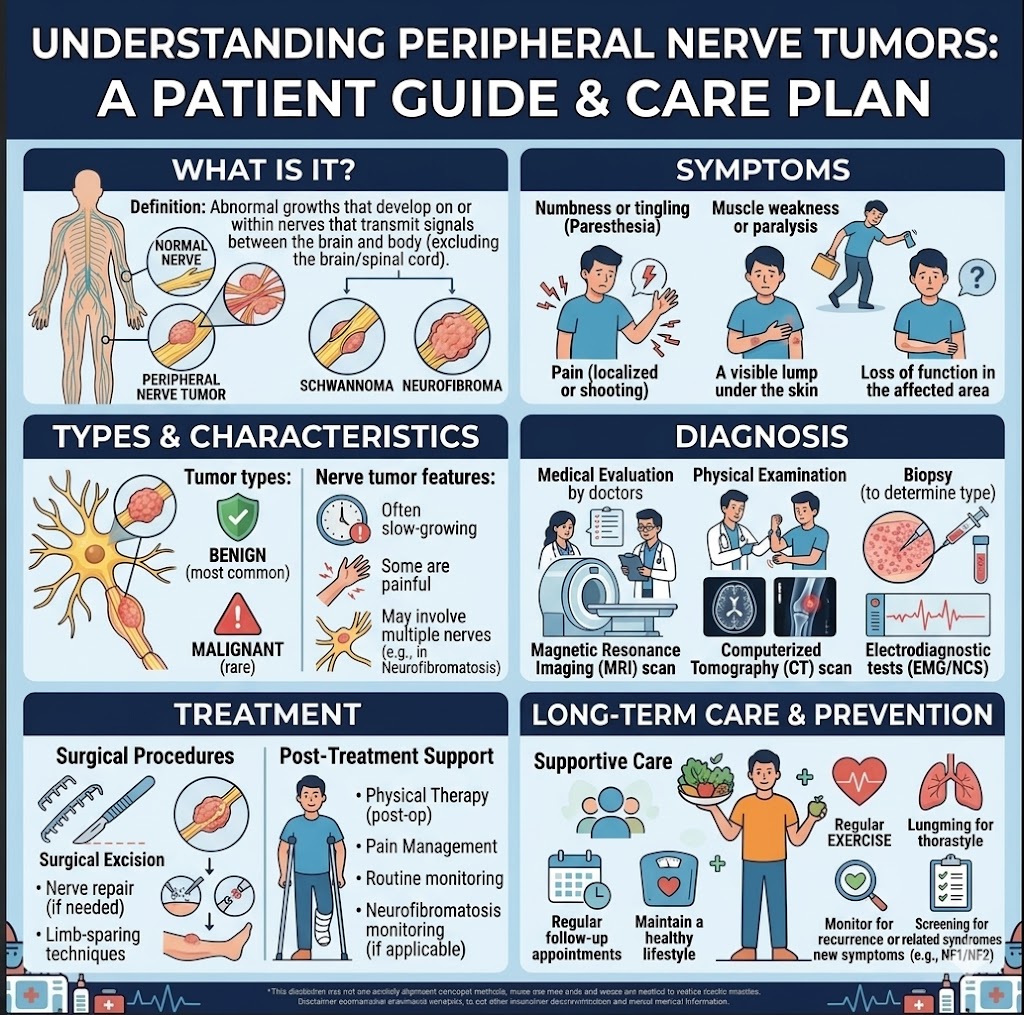
Peripheral nerve tumors are unusual growths that can develop in or around any nerve in your body. Nerves are like electrical cables, sending vital signals from your brain to control everything from walking and blinking to feeling sensations. While most of these tumors are not cancerous (benign), they can cause problems like pain, nerve damage, and difficulty using the affected body part. Treatment often involves surgery to remove the growth, but other options are considered if surgery might harm healthy nerves. Some tumors grow within the nerve itself (intraneural), while others press on nerves from the outside (extraneural).
Understanding the Condition
Peripheral Nerve Tumors: Understanding Growths on Your Nerves
Understanding the Condition
Common Symptoms
Lump or Swelling: A noticeable bump or swelling that can be felt under the skin, often in the area of the affected nerve.
Pain, Tingling, or Numbness: Sensations of discomfort, a 'pins and needles' feeling, or a loss of sensation in the area supplied by the affected nerve.
Weakness or Loss of Function: Difficulty moving a body part, muscle weakness, or a complete inability to use muscles in the affected region.
Dizziness or Loss of Balance: If the tumor affects nerves related to balance, individuals may experience unsteadiness or vertigo.
Consultation Guide
Which Specialist to Meet
If you suspect you have a peripheral nerve tumor, you should consult with a neurologist, who specializes in nervous system disorders. They may refer you to a neurosurgeon or an orthopedic surgeon, depending on the tumor's location and type. If the tumor is cancerous, an oncologist will be involved.
Preparations Before Your Visit
Before your appointment, make a list of all your symptoms, including when they started, how often they occur, and how severe they are. Note down your complete medical history, including any past conditions, medications you take, allergies, and previous surgeries. Gather information about your family's medical history, especially if there's a history of nerve disorders. Prepare a list of questions you want to ask your doctor. Bringing any previous medical records, such as imaging scans or test results, can also be helpful.
Book a doctor visit near me
Pain Management Medications: These include over-the-counter pain relievers or prescription medications specifically for nerve pain (neuropathic pain) to help manage symptoms caused by the tumor or after treatment. (Duration: As needed, or long-term for chronic pain management.)
Regular Medical Check-ups: Individuals with known risk factors, such as certain genetic syndromes or a history of radiation exposure, should undergo regular check-ups to monitor for any new growths or changes in existing symptoms.
Long-Term Management and Support
Ongoing Neurological Evaluations: Periodic assessments of nerve function are important to track any changes, address new symptoms, and ensure optimal neurological health over time.
Rehabilitation Programs: For those with lingering functional impairments or weakness, continued physical or occupational therapy can help maintain and improve quality of life and independence.
Consultation Guide
Peripheral nerve tumors are unusual growths that can develop in or around any nerve in your body. Nerves are like electrical cables, sending vital signals from your brain to control everything from walking and blinking to feeling sensations. While most of these tumors are not cancerous (benign), they can cause problems like pain, nerve damage, and difficulty using the affected body part. Treatment often involves surgery to remove the growth, but other options are considered if surgery might harm healthy nerves. Some tumors grow within the nerve itself (intraneural), while others press on nerves from the outside (extraneural).
Diagnostic Procedures
CT Scan (Computerized Tomography Scan)
A CT scan uses special X-ray equipment and computer processing to create detailed cross-sectional images, or 'slices,' of bones, blood vessels, and soft tissues inside your body. These images provide more detail than standard X-rays, helping doctors identify the location and size of a tumor.
What to Expect
You will lie on a motorized table that slides into a large, donut-shaped machine. The table will move slowly through the scanner as it takes images. You might hear humming or clicking sounds. You may be asked to hold your breath for short periods. Sometimes, a special dye (contrast material) is injected into a vein to help highlight certain structures; you might feel a brief warm sensation or a metallic taste. The procedure typically takes between 15 to 60 minutes.
Electromyography (EMG) and Nerve Conduction Study (NCS)
This diagnostic procedure assesses the health of your muscles and the nerve cells that control them (motor neurons). It can reveal if there's a problem with nerve function, muscle function, or how signals are transmitted between nerves and muscles.
What to Expect
The EMG typically involves two parts. For the **Nerve Conduction Study (NCS)**, electrode stickers (surface electrodes) are placed on your skin over certain nerves. Mild electrical pulses are then delivered to these nerves to measure how quickly and strongly signals travel along them. You may feel a brief, mild tingling or shock sensation. For the **Needle EMG**, a thin needle electrode is inserted directly into specific muscles. This electrode records the electrical activity of your muscles, both when they are at rest and when you gently contract them. You might feel a brief sting or discomfort when the needle is inserted. The electrical signals are translated into graphs, sounds, or numerical values for interpretation. The entire procedure usually takes 30 to 90 minutes.
Consistent Follow-up Care: Regular appointments with your healthcare team are crucial to monitor for any recurrence of tumors or the development of new ones. This often includes periodic imaging tests like MRI or CT scans.
Treatment Options
Surgical Procedures
Tumor Removal Surgery: This is the primary treatment for most peripheral nerve tumors. A surgeon carefully removes the tumor, striving to preserve the surrounding healthy nerve tissue. Advanced microsurgical techniques are often used to minimize nerve damage. (Duration: Duration varies based on tumor size and location, typically several hours for complex cases.)
Procedures (Non-Surgical)
Radiation Therapy: This treatment uses high-energy beams, such as X-rays or protons, to damage the genetic material within tumor cells, preventing them from growing and dividing. Modern techniques precisely target the tumor while minimizing harm to healthy tissues. It can be delivered externally from a machine or internally via a small implant near the tumor. (Duration: Often involves daily sessions over several weeks.)
Stereotactic Radiosurgery (SRS): A highly specialized form of radiation therapy that delivers extremely focused, high-dose radiation beams to the tumor. It's not traditional surgery and involves no incision. SRS uses 3D imaging to pinpoint the tumor, causing its cells to shrink and die. (Duration: Typically completed in a single session for brain and spine tumors, or 3 to 5 sessions for tumors in other body areas.)
Chemotherapy: A drug treatment that uses potent chemicals to kill rapidly growing cells. While mainly used for cancer, it may be considered for certain types of peripheral nerve tumors, especially if they are malignant or cannot be surgically removed. (Duration: Administered in cycles, usually over several months.)
Medications
Physical and Occupational Therapy: These therapies help individuals regain strength, improve mobility, and restore function in affected areas, especially after surgery or if nerve damage has occurred. (Duration: Varies from weeks to months, depending on recovery needs and goals.)
Pain Management Strategies: If chronic pain persists, working with a pain specialist can help develop effective strategies, including medication, nerve blocks, or other therapies, to manage discomfort.
Support Groups and Counseling: Connecting with others facing similar health challenges or seeking professional counseling can provide emotional support and coping mechanisms for living with a chronic condition.
Prevention & Long-Term Wellbeing
Prevention and Early Detection
Genetic Counseling and Screening: If you have a family history of conditions like neurofibromatosis or schwannomatosis, genetic counseling can assess your risk and guide screening protocols for early detection of tumors.
Tags & Topics
Notice an error or need an update?
Help us keep medical information accurate. Report incorrect info or suggest an edit.


