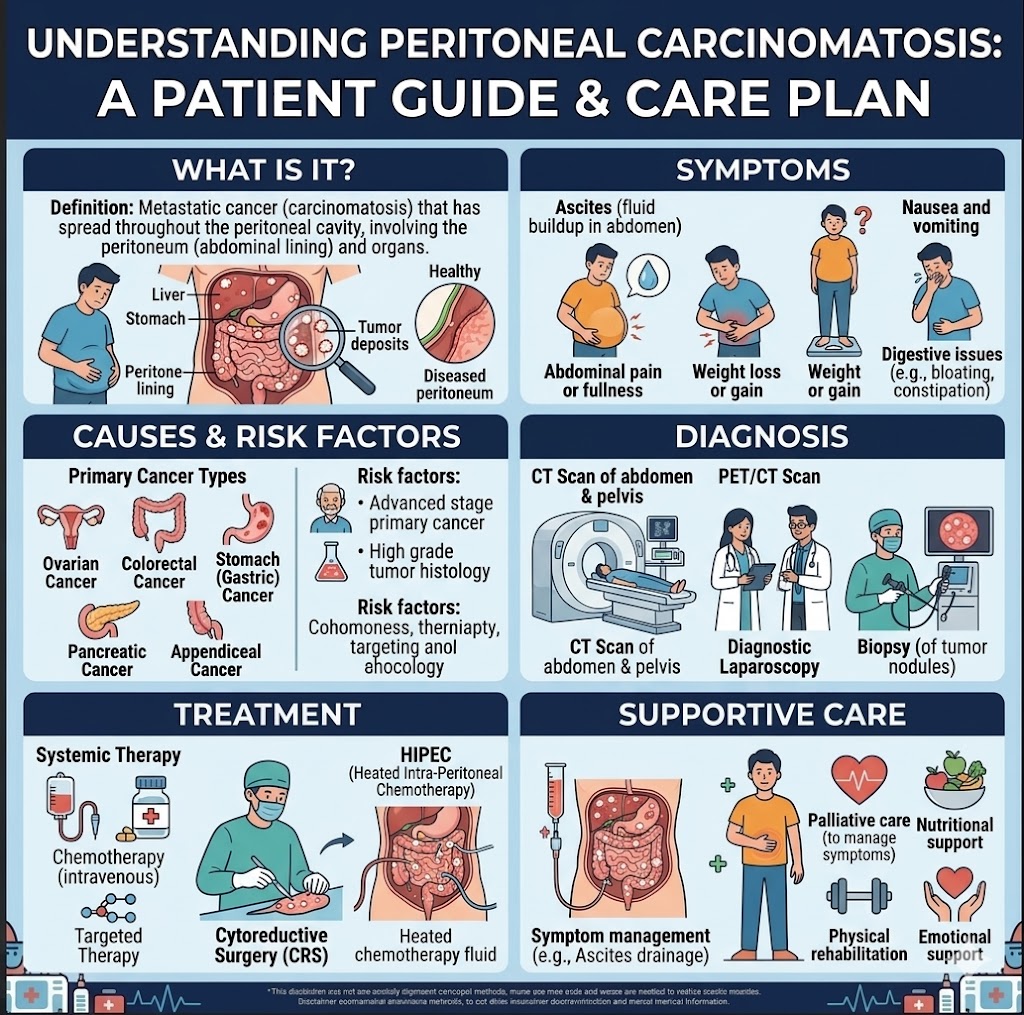
Peritoneal carcinomatosis is a serious condition where cancer spreads to the peritoneum, the thin lining of the abdomen. This usually happens when cancer originating in other organs, such as the colon, stomach, or ovaries, reaches an advanced stage. The condition can lead to symptoms like abdominal pain, swelling, bowel blockages, and loss of appetite. Treatments include chemotherapy, surgery, and specialized heated chemotherapy applied directly to the abdomen, which can improve outlook for some individuals.
Understanding the Condition
Peritoneal Carcinomatosis: Cancer Spread to the Abdominal Lining
Understanding the Condition
Peritoneal carcinomatosis is a serious condition where cancer spreads to the peritoneum, the thin lining of the abdomen. This usually happens when cancer originating in other organs, such as the colon, stomach, or ovaries, reaches an advanced stage. The condition can lead to symptoms like abdominal pain, swelling, bowel blockages, and loss of appetite. Treatments include chemotherapy, surgery, and specialized heated chemotherapy applied directly to the abdomen, which can improve outlook for some individuals.
Common Symptoms
Abdominal Swelling or Bloating: This is the most common symptom, caused by fluid buildup, known as ascites, in the belly. You might feel like you're gaining weight in your abdomen despite no changes in diet or exercise.
Abdominal Pain or Discomfort: Often described as a vague cramping sensation or a feeling of pressure in the abdomen.
Loss of Appetite: You might feel full very quickly, even after eating only small amounts of food.
Nausea and Vomiting: These symptoms are often connected to issues with your bowels caused by pressure from the spreading cancer cells.
You should consult with an oncologist (a doctor specializing in cancer), potentially a surgical oncologist (if surgery is an option), and a palliative care specialist for symptom management and quality of life support.
Preparations Before Your Visit
Before your visit, gather your full medical history, a detailed list of all your symptoms and when they started, a list of all current medications and supplements, and any questions you have for the doctor.
Book a doctor visit near me
Palliative Care: Specialized medical care focused on providing relief from the symptoms, pain, and stress of a serious illness. It aims to improve quality of life for both the patient and their family, regardless of the stage of the disease or other treatments being received. (Duration: Ongoing, as needed, throughout the course of the illness.)
Long-Term Monitoring & Symptom Management
Regular Follow-ups and Imaging: Ongoing surveillance with scans (like CT or PET) to monitor for disease recurrence or progression.
Fluid Management (for Ascites): Procedures to drain accumulated fluid from the abdomen as needed, to relieve discomfort and improve breathing.
Bowel and Urinary Symptom Management: Strategies to manage constipation, diarrhea, or blockages, which may include dietary changes, medications, or, in severe cases, surgical interventions.
Pain and Symptom Control: Utilizing medications and other therapies to manage pain, nausea, fatigue, and other symptoms to enhance quality of life.
Emotional and Psychological Support: Accessing counseling, support groups, or spiritual care to cope with the emotional challenges of living with a serious illness.
Diagnostic Procedures
Bowel Changes: This can include constipation or diarrhea. In some cases, a blockage can occur, making it difficult for food or gas to pass through your intestines.
Bleeding: Peritoneal carcinomatosis may sometimes lead to bleeding, which can be observed rectally or vaginally.
Consultation Guide
Which Specialist to Meet
CT Scan (Computerized Tomography Scan)
A CT scan uses specialized X-ray equipment and a computer to create detailed cross-sectional images ('slices') of bones, blood vessels, and soft tissues inside your body. It provides more detailed views than standard X-rays and is used to diagnose diseases, injuries, and plan treatments.
What to Expect
You will lie on a narrow table that slides into a large, doughnut-shaped machine. You may be asked to hold your breath briefly at certain times. Sometimes, a contrast dye is given orally or injected into a vein to make certain structures show up more clearly. The process is generally painless and takes a few minutes to half an hour depending on the area being scanned.
PET Scan (Positron Emission Tomography Scan)
A PET scan is an imaging test that helps reveal how well your tissues and organs are functioning at a metabolic level. It uses a small amount of a radioactive tracer, often injected into your bloodstream, which collects in areas of the body with higher metabolic activity. Cancer cells typically have higher metabolic rates and appear as bright spots on PET scans, often helping to detect disease before it's visible on other scans. PET scans are frequently combined with CT or MRI scans (PET-CT or PET-MRI) for better interpretation.
What to Expect
A small amount of a radioactive tracer will be injected, usually into a vein in your arm or hand. You will then wait for about 30-60 minutes for the tracer to distribute throughout your body. After this, you will lie on a narrow table that slides into a large scanner. You'll need to remain very still during the scan, which typically takes about 30 minutes. The procedure is painless, though some people may feel a slight pinch during the injection.
Minimally Invasive Surgery: Surgical techniques (like laparoscopy or robotic surgery) that use smaller incisions, specialized instruments, and cameras to perform operations. This often results in less pain, shorter hospital stays, and fewer complications compared to open surgery. It may be used for diagnosis, staging, or in specific cases of localized disease. (Duration: Varies greatly depending on the extent and purpose of the surgery, typically a single procedure with a shorter recovery than open surgery.)
Treatment Options
Surgical Procedures
Cytoreductive Surgery (CRS): A major surgical procedure where surgeons meticulously remove all visible tumors and cancerous tissue from the peritoneum and any affected organs within the abdomen. (Duration: Typically a single, extensive surgery, followed by a recovery period of several weeks to months.)
Medications & Therapies
Systemic Chemotherapy: Uses powerful drugs, given orally or intravenously, to kill fast-growing cancer cells throughout the body. These drugs target rapidly dividing cells, including cancer cells. (Duration: Typically given in cycles over several months, with treatment duration varying based on the type and stage of cancer, and patient response.)
Hyperthermic Intraperitoneal Chemotherapy (HIPEC): Often performed immediately after cytoreductive surgery. Heated chemotherapy solution is circulated directly within the abdominal cavity for a short period. The heat enhances the medicine's ability to penetrate tissues and kill any remaining microscopic cancer cells, while limiting its absorption into the bloodstream to reduce systemic side effects. (Duration: Administered once, immediately following cytoreductive surgery, typically lasting 60-120 minutes during the operation.)
Early Detection and Treatment of Primary Cancer: Regular screenings and prompt treatment of primary cancers (e.g., colon, ovarian, stomach cancer) can reduce the risk of cancer spreading to the peritoneum.
Managing Advanced Cancers: Close monitoring and aggressive treatment of advanced cancers, especially those with certain cell types or lymph node involvement, can help prevent peritoneal spread.
Prevention & Long-Term Wellbeing
Unintended Weight Loss: Losing weight without making any changes to your diet or physical activity.
Fatigue: Feeling extremely tired and lacking energy, even after resting sufficiently.
Prevention of Spread
Nutritional Support: Working with dietitians to ensure adequate nutrient intake, especially if digestion or appetite is affected, possibly involving supplements or specialized feeding methods.
Tags & Topics
Notice an error or need an update?
Help us keep medical information accurate. Report incorrect info or suggest an edit.


