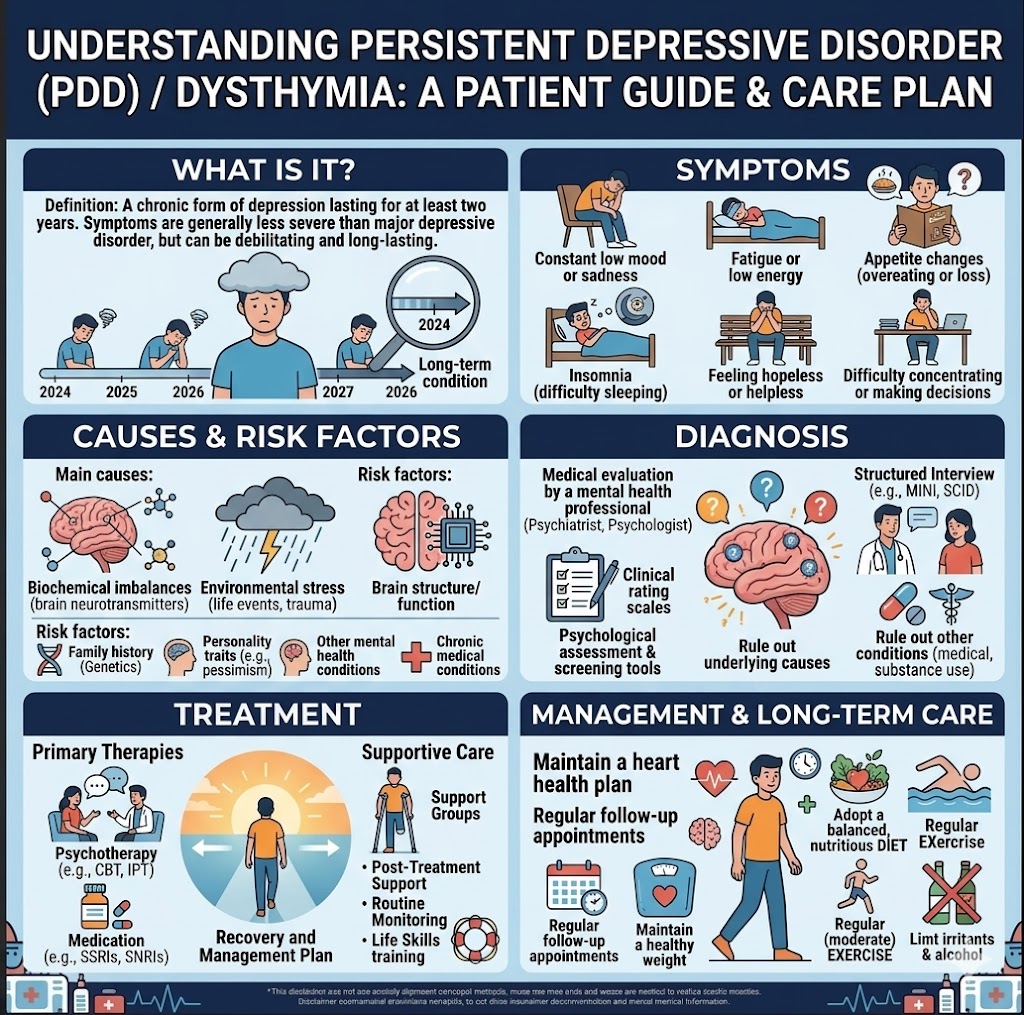
Persistent Depressive Disorder (PDD), also known as dysthymia, is a continuous, long-lasting form of depression. Unlike major depression which involves distinct episodes, PDD means experiencing a low, sad, or empty mood for years, often two years or more for adults. People with PDD may feel a constant lack of interest in daily activities, struggle with low self-esteem, and have trouble getting things done. These feelings can significantly interfere with relationships, work, school, and everyday life. While symptoms may vary in intensity, they rarely disappear for more than a couple of months. PDD can sometimes precede or occur alongside episodes of major depression, and treatment often involves a combination of talk therapy and medication.
Understanding the Condition
Persistent Depressive Disorder: Understanding Long-Term Sadness
Understanding the Condition
Persistent Depressive Disorder (PDD), also known as dysthymia, is a continuous, long-lasting form of depression. Unlike major depression which involves distinct episodes, PDD means experiencing a low, sad, or empty mood for years, often two years or more for adults. People with PDD may feel a constant lack of interest in daily activities, struggle with low self-esteem, and have trouble getting things done. These feelings can significantly interfere with relationships, work, school, and everyday life. While symptoms may vary in intensity, they rarely disappear for more than a couple of months. PDD can sometimes precede or occur alongside episodes of major depression, and treatment often involves a combination of talk therapy and medication.
Common Symptoms
Persistent Sadness: Feeling sad, empty, or 'down' most of the time, for at least two years in adults or one year in children and adolescents.
Loss of Interest: Reduced pleasure or interest in nearly all daily activities, hobbies, or social interactions.
Tiredness and Low Energy: Feeling fatigued or lacking energy even after sufficient rest, making tasks feel overwhelming.
Low Self-Esteem: Persistent feelings of low self-worth, self-criticism, or believing one is incapable or a failure.
Difficulty Concentrating: Trouble focusing, paying attention, or making decisions, impacting work or school performance.
Poor Productivity: Struggling to complete tasks effectively and on time, leading to feelings of frustration.
Irritability: Becoming easily annoyed, impatient, or angry with others or circumstances.
Social Withdrawal: Avoiding social activities and interactions, leading to isolation.
Guilt and Worry: Frequent feelings of guilt, rumination over past events, or excessive worry.
Appetite Changes: Noticeable changes in eating habits, either a poor appetite or overeating.
Sleep Problems: Difficulty falling or staying asleep (insomnia) or sleeping too much (hypersomnia).
Hopelessness: A pervasive sense of despair, pessimism, or a feeling that things will not get better.
Consultation Guide
Which Specialist to Meet
You may start by speaking with your primary care doctor. They can assess your symptoms and, if appropriate, refer you to a mental health specialist such as a psychiatrist (a medical doctor specializing in mental health who can prescribe medication) or a psychologist or licensed therapist (who provide talk therapy).
Preparations Before Your Visit
Before your visit, make a list of your symptoms, including when they started, how often they occur, and how severe they are. Note any significant life stressors or recent changes. Also, list any medications, supplements, or herbal remedies you are currently taking, and write down any questions you have for your doctor.
Book a doctor visit near me
The diagnosis of Persistent Depressive Disorder (PDD) is primarily made through a thorough clinical evaluation by a mental health professional. This assessment involves an in-depth discussion about your symptoms, medical history, family history, and lifestyle, as there are no specific lab tests or imaging scans to diagnose PDD. The professional will compare your experiences against established diagnostic criteria to confirm the condition.
During the assessment, you will have a conversation with a psychiatrist, psychologist, or other trained mental health provider. They will ask detailed questions about your mood, energy levels, sleep patterns, appetite, concentration, and how long you've been feeling this way. They will also explore your personal and family history of mental health conditions, significant life events, and any medications you are taking. This is an opportunity to openly share your feelings and experiences to help the professional understand your condition. You might also be asked to complete questionnaires to further evaluate your symptoms.
Psychotherapy (Talk Therapy): A broader term for talking with a mental health professional to understand and address your specific issues. It helps you develop healthy coping skills and learn how your thoughts, emotions, and behaviors influence your mood. (Duration: Can range from short-term to long-term, depending on individual needs and the severity of symptoms, potentially lasting several months to a year or more.)
Antidepressant Medications: These medications work by balancing naturally occurring brain chemicals (neurotransmitters) that play a role in mood. They can help reduce the severity of depressive symptoms. (Duration: Often prescribed for long-term use, even after symptoms improve, to prevent relapse. Duration is determined by your doctor based on your response and risk of recurrence.)
Medication and Therapy: For many individuals, combining antidepressant medication with talk therapy is the most effective approach to treating Persistent Depressive Disorder, offering greater symptom relief and improved long-term outcomes than either treatment alone. (Duration: The duration of combined treatment varies widely, often involving several months to years, with ongoing adjustments based on progress.)
Seek Early Treatment: If you notice persistent symptoms of sadness, low energy, or loss of interest, seek professional help promptly. Early intervention can prevent symptoms from worsening or becoming chronic.
Adhere to Treatment Plan: Consistently follow your prescribed medication regimen and attend therapy sessions, even when you start feeling better, to prevent symptom relapse.
Regular Monitoring: Maintain regular check-ups with your mental health provider to monitor your symptoms, adjust treatment as needed, and ensure sustained recovery.
Develop Coping Strategies: Continuously practice coping skills learned in therapy to manage daily stressors and potential triggers, fostering long-term emotional stability.
Diagnostic Procedures
Comprehensive Psychiatric Assessment
What to Expect
Treatment Options
Therapies
Cognitive Behavioral Therapy (CBT): CBT helps you identify and change negative thinking patterns and behaviors that contribute to depression. It teaches coping strategies and problem-solving skills to manage challenging situations. (Duration: Typically involves fewer sessions than other therapies, often structured over several weeks to months, with practice exercises between sessions.)
Medications
Prevention & Long-Term Wellbeing
Lifestyle Adjustments
Self-Care Practices: Engaging in regular physical activity, maintaining a healthy diet, ensuring adequate sleep, and avoiding excessive alcohol or recreational drug use can significantly support mental well-being. (Duration: Ongoing and integrated into daily life for long-term benefit.)
Prevention
Manage Stress: Develop healthy stress-coping mechanisms, such as mindfulness, meditation, or hobbies, to build resilience and reduce the impact of stressful life events.
Build Social Connections: Maintain strong relationships with family and friends. Reach out for support during challenging times to avoid isolation.
Boost Self-Esteem: Engage in activities that give you a sense of accomplishment or pleasure. Practice self-compassion and challenge negative self-talk.
Tags & Topics
Notice an error or need an update?
Help us keep medical information accurate. Report incorrect info or suggest an edit.


