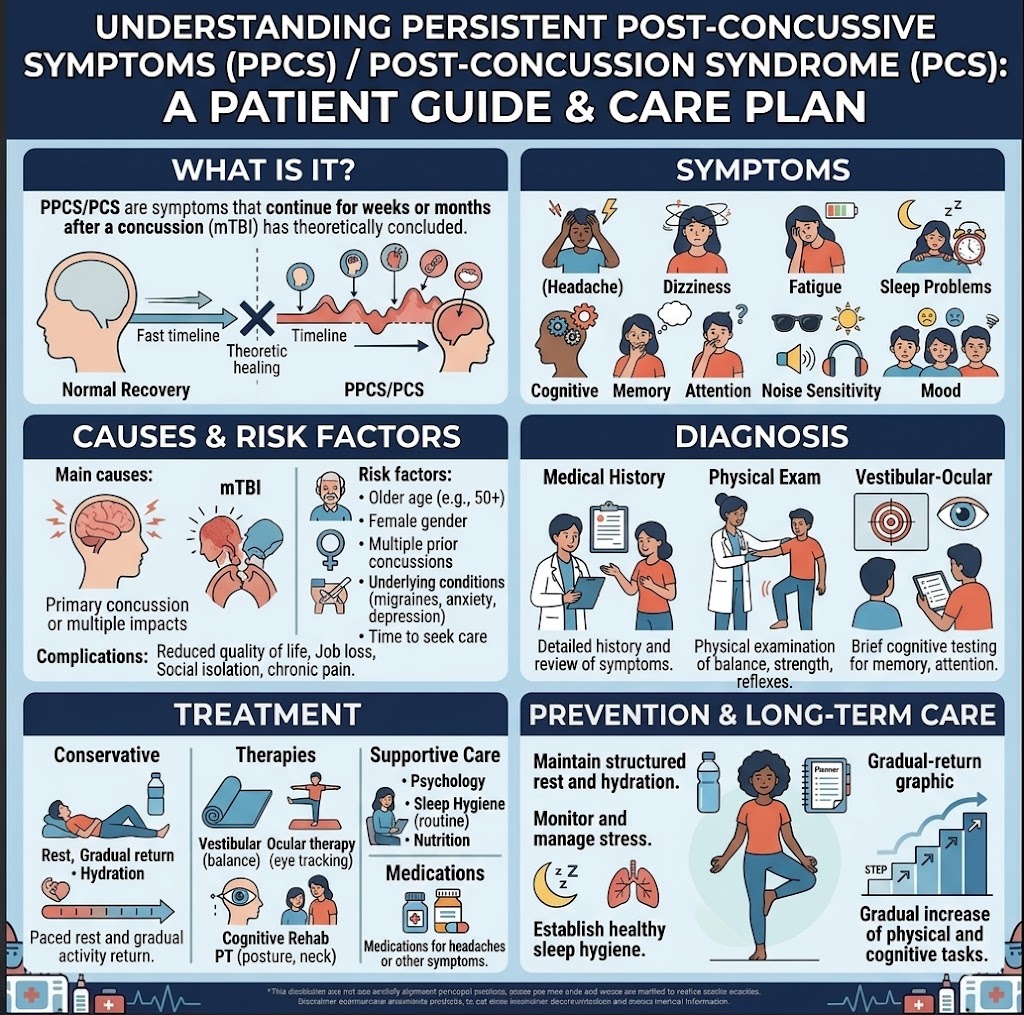
Post-concussion syndrome (PCS), also known as persistent post-concussive symptoms, refers to a collection of symptoms following a mild traumatic brain injury (concussion) that typically last longer than three months. Concussions result from head trauma such as falls, car accidents, or contact sports injuries, and do not always involve loss of consciousness. Symptoms often appear within 7 to 10 days post-injury and, while usually resolving within months, can persist for a year or more. The severity of the initial injury doesn't necessarily predict the risk of developing PCS. Treatment primarily focuses on managing symptoms, improving daily functioning, and enhancing overall quality of life.
Understanding the Condition
Understanding Post-Concussion Syndrome (PCS)
Understanding the Condition
Post-concussion syndrome (PCS), also known as persistent post-concussive symptoms, refers to a collection of symptoms following a mild traumatic brain injury (concussion) that typically last longer than three months. Concussions result from head trauma such as falls, car accidents, or contact sports injuries, and do not always involve loss of consciousness. Symptoms often appear within 7 to 10 days post-injury and, while usually resolving within months, can persist for a year or more. The severity of the initial injury doesn't necessarily predict the risk of developing PCS. Treatment primarily focuses on managing symptoms, improving daily functioning, and enhancing overall quality of life.
Common Symptoms
Headaches: Often feel like migraines, or sometimes tension headaches which may be related to a neck injury occurring with the head trauma.
Dizziness: A sensation of spinning, unsteadiness, or feeling faint.
Trouble with Concentration: Difficulty focusing on tasks or maintaining attention.
Memory Problems: Challenges remembering new information or recalling past events.
Irritability: Increased frustration or a short temper.
Depression: Feelings of sadness, hopelessness, or loss of interest in activities.
Sleep Disturbances: Difficulty falling asleep (insomnia) or sleeping excessively.
Ringing in the Ears (Tinnitus): Perceiving sounds like ringing, buzzing, or hissing when no external sound is present.
Blurry Vision: Lack of sharpness of eyesight, making objects appear out of focus.
Before your visit, keep a detailed diary of your symptoms, noting their type, severity, triggers, and impact on daily life. Compile your complete medical history, including any prior head injuries, headaches, or anxiety. Prepare a list of questions to ask your healthcare provider. This information helps in accurately diagnosing your condition and developing a personalized treatment plan.
Book a doctor visit near me
A healthcare professional, often a neurologist, will discuss your medical history and current symptoms. The examination involves a series of tests to assess your mental status (e.g., memory, alertness), cranial nerve function (e.g., vision, facial movement), motor skills (e.g., strength, coordination, balance), sensory perception (e.g., touch, pain), and reflexes. The duration of the exam varies, from a few minutes to over an hour, based on your symptoms and the complexity of the assessment.
Symptom-Specific Medications: Medications are prescribed to alleviate specific persistent symptoms such as headaches, dizziness, nausea, sleep disturbances, or mood changes like anxiety and depression. These are tailored to the individual's particular needs and symptom profile. (Duration: Duration varies; may be short-term for acute symptom relief, or longer for ongoing management of chronic symptoms or mood disorders.)
Cognitive Behavioral Therapy (CBT): CBT is a focused talk therapy that helps individuals recognize and modify unhelpful thought patterns and behaviors contributing to their symptoms. It equips patients with practical skills to manage stress, anxiety, depression, and improve sleep related to PCS. (Duration: Typically involves a structured series of sessions, often 8 to 20, usually completed over several weeks to a few months.)
Psychotherapy (Talk Therapy): This broader form of therapy involves speaking with a mental health professional to explore how thoughts, feelings, and behaviors influence well-being. It helps develop healthy coping mechanisms for life's challenges, including the emotional and psychological impacts of PCS. (Duration: Highly variable, ranging from short-term counseling (a few sessions) to longer-term therapy (months to years), depending on individual needs and therapeutic goals.)
Home Remedies & Support
Rest and Gradual Activity Resumption: Ensuring adequate physical and cognitive rest is vital, especially in the initial phase. Activities should be reintroduced slowly and progressively, avoiding any exertion that exacerbates symptoms. This allows the brain time to recover. (Duration: Ongoing during the recovery period, which can span weeks to several months.)
Identify and Avoid Triggers: Learning to recognize and steer clear of environmental or situational factors that worsen PCS symptoms, such as excessive screen time, loud noises, bright lights, or stressful environments. This helps minimize symptom flare-ups. (Duration: Continuous, as part of long-term symptom management.)
Consistent Medical Follow-up: Regular appointments with your healthcare team are essential for monitoring symptom changes, adjusting treatment plans as needed, and addressing any new concerns to support ongoing recovery and well-being.
Adopt Healthy Lifestyle Habits: Maintain a balanced diet, engage in light, regular exercise as tolerated, and prioritize consistent, sufficient sleep. Avoid substances like alcohol and recreational drugs, which can worsen PCS symptoms and hinder recovery.
Practice Stress Management Techniques: Incorporate relaxation strategies such as mindfulness, deep breathing exercises, or gentle yoga into your routine. Managing stress effectively can significantly help in controlling PCS symptoms, which can be exacerbated by stress.
Utilize Support Networks: Connecting with support groups or seeking individual counseling can provide valuable emotional support and practical strategies for coping with the challenges associated with living with Post-Concussion Syndrome.
Consultation Guide
Noise and Light Sensitivity: Discomfort or pain caused by normal levels of sound or light.
Nausea or Vomiting: Feeling sick to your stomach or actually throwing up.
Consultation Guide
Which Specialist to Meet
Initially, consult your primary care physician. They may refer you to specialists such as a neurologist for nervous system evaluation, a neuropsychologist for cognitive and behavioral assessments, a physical therapist for balance and dizziness, an occupational therapist for daily functioning, or a mental health professional (psychologist, psychiatrist) for mood and cognitive support.
Preparations Before Your Visit
A neurological exam, or neuro exam, evaluates the overall health and function of your nervous system, which encompasses the brain, spinal cord, nerves, and muscles. It helps clinicians identify potential nervous system disorders and determine their causes.
Create a Safer Home Environment: Reduce fall hazards by removing small rugs, improving lighting in all areas, installing handrails on staircases, and utilizing safety gates for young children. Older adults should discuss medications that may cause dizziness or affect balance with their healthcare provider to mitigate fall risks.
Diagnostic Procedures
CT Scan (Computerized Tomography Scan)
A CT scan utilizes specialized X-ray technology and computer processing to generate detailed cross-sectional images of the body's internal structures, including bones, blood vessels, and soft tissues. This imaging technique offers more comprehensive detail than conventional X-rays, aiding in the diagnosis of injuries or underlying conditions.
What to Expect
You will lie still on a motorized table that slides into a large, circular scanner. You may hear various operational sounds and might be asked to hold your breath briefly. In some instances, a contrast material may be given intravenously to enhance the visibility of certain structures. The procedure is typically non-invasive and lasts between 10 to 30 minutes.
Neurological Examination
What to Expect
Treatment Options
Medications
Prevention & Long-Term Wellbeing
Prevention
Always Use Seat Belts: Ensure you and all passengers are buckled up in any motor vehicle. Children must be secured in appropriate safety seats for their age and size in the back seat, transitioning from rear-facing, to forward-facing, then to booster seats, and finally to regular seat belts when fit is correct (typically 9-12 years old). All children under 13 should ride in the back seat.
Wear Protective Helmets: Wear a helmet during activities with a high risk of head injury, including biking, roller-skating, skateboarding, motorcycling, skiing, snowboarding, and contact sports such as football, baseball, or horseback riding.
Undergo Regular Eye Examinations: Annual eye exams are particularly important for older adults, as vision impairments can significantly increase the risk of falls. Ensure your glasses or contact lens prescriptions are current.
Tags & Topics
Notice an error or need an update?
Help us keep medical information accurate. Report incorrect info or suggest an edit.


