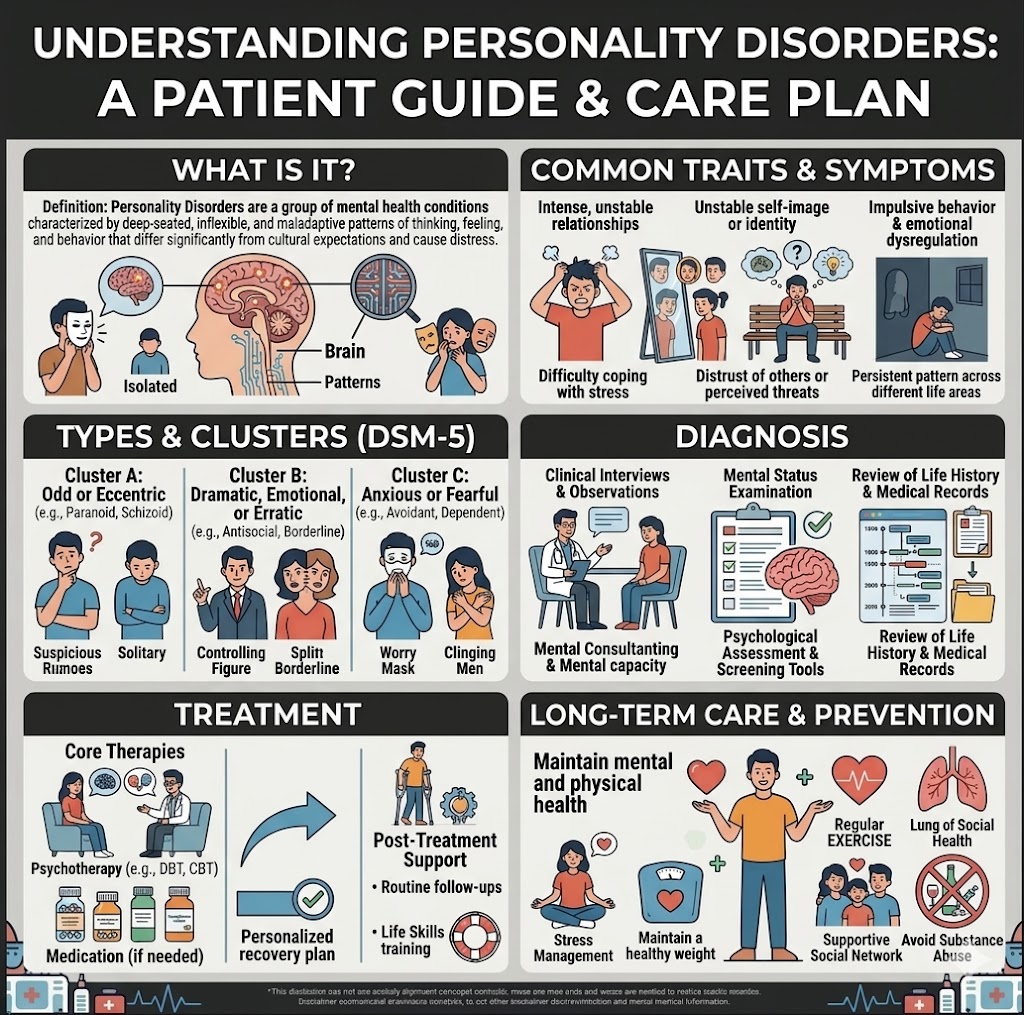
Personality disorders are mental health conditions characterized by long-standing, unhealthy patterns of thinking, feeling, and behaving that significantly differ from societal expectations. These patterns can make it difficult for individuals to understand emotions, cope with stress, and relate to others, leading to serious problems in relationships, work, school, and overall quality of life. Unlike typical personality traits that allow for flexible adaptation to changing environments, personality disorders involve rigid and maladaptive traits. They are believed to develop from a complex interplay of genetic predispositions and environmental factors, such as childhood experiences and life events.
Understanding the Condition
Common Symptoms
Difficulty Understanding Emotions: Struggling to recognize, interpret, and manage one's own feelings and the emotions of others, which can lead to misunderstandings and strained relationships.
Poor Stress Tolerance: Having a hard time coping with distressing situations or challenging life events, sometimes leading to unhealthy coping mechanisms like substance misuse.
Impulsive Behavior: Acting on urges without considering potential consequences, which can lead to risky decisions or unpredictable actions.
Problems with Relationships: Experiencing persistent difficulties in forming and maintaining stable, healthy relationships with family, friends, or romantic partners.
Lack of Self-Awareness: Often not recognizing that one's own thoughts and behaviors are causing problems, frequently believing that others are responsible for difficulties encountered.
Suspicion and Distrust: Consistently lacking trust in others, being suspicious of their motives and actions, and often believing that others intend harm without clear reasons.
Doubts About Loyalty: Frequent questioning of the loyalty and trustworthiness of friends, family, or partners.
Reluctance to Confide: Hesitating to share personal information with others due to a strong fear that the information will be used against them.
Misinterpreting Intentions: Perceiving innocent remarks or non-threatening situations as personal insults, attacks, or threats.
Persistent Anger or Hostility: Reacting with anger or hostility to perceived slights or insults, often without proportional justification.
Holding Grudges: Having a long-lasting tendency to harbor resentment or anger over past perceived wrongs, making it difficult to forgive.
Symptom-Targeted Medications: While there are no specific medications to cure personality disorders, certain prescription medicines can help manage associated symptoms such as anxiety, depression, mood swings, or impulsivity. These medications are often used in conjunction with psychotherapy to provide comprehensive support. (Duration: Varies widely, from short-term use to ongoing management, and is determined by a prescribing medical doctor based on symptom response and individual needs.)
Home Remedies & Self-Care
Lifestyle Modifications: Engaging in daily practices that support overall mental and physical health. This includes maintaining a balanced diet, ensuring regular physical activity, prioritizing consistent and sufficient sleep, and avoiding excessive use of alcohol or illicit substances that can worsen symptoms. (Duration: Ongoing, lifelong commitment to promote sustained wellbeing.)
Consistent Therapy Engagement: Regular attendance and active participation in psychotherapy sessions are vital for developing healthier coping mechanisms, understanding underlying patterns, and managing symptoms effectively over the long term.
Medication Adherence (If Prescribed): If medications are prescribed to manage co-occurring conditions like depression or anxiety, taking them consistently as directed by a healthcare provider is essential for symptom stability.
Consultation Guide
Unwarranted Jealousy: Frequently suspecting a spouse or partner of infidelity without any factual basis or reasonable cause.
Consultation Guide
Which Specialist to Meet
Diagnostic Procedures
Personality Disorders: Understanding, Diagnosis, and Management
Understanding the Condition
Personality disorders are mental health conditions characterized by long-standing, unhealthy patterns of thinking, feeling, and behaving that significantly differ from societal expectations. These patterns can make it difficult for individuals to understand emotions, cope with stress, and relate to others, leading to serious problems in relationships, work, school, and overall quality of life. Unlike typical personality traits that allow for flexible adaptation to changing environments, personality disorders involve rigid and maladaptive traits. They are believed to develop from a complex interplay of genetic predispositions and environmental factors, such as childhood experiences and life events.
To address concerns about personality disorders, you should consult with a mental health professional such as a psychiatrist, psychologist, or licensed clinical social worker. These specialists are trained to diagnose and treat complex mental health conditions.
Preparations Before Your Visit
Before your visit, it's helpful to reflect on your thoughts, feelings, behaviors, and any patterns you've noticed in your relationships or reactions to stress. Consider how these issues have impacted your daily life, work, school, and social activities. You might also prepare a list of specific questions you have. Being open and honest about your experiences is crucial for an accurate assessment.
Book a doctor visit near me
Psychological Evaluation
A comprehensive assessment performed by a mental health professional to identify patterns of thinking, feeling, and behaving. This evaluation helps determine if an individual meets the diagnostic criteria for a personality disorder and to differentiate it from other mental health conditions.
What to Expect
During a psychological evaluation, you will typically meet with a psychiatrist or psychologist for a series of interviews. The professional will ask detailed questions about your personal history, family background, relationships, work or school experiences, and how you perceive yourself and others. You may also be asked to complete questionnaires or psychological tests. This process helps the professional gather a full picture of your mental health and identify any enduring patterns that align with diagnostic criteria. The sessions are confidential and designed to create a safe space for open discussion.
Treatment Options
Therapies
Psychotherapy (Talk Therapy): This is a broad term for various therapeutic approaches where you work with a mental health provider to understand your issues and develop healthier coping skills. It helps you explore how your thoughts, emotions, and behaviors affect your life, learn to manage challenging situations, and improve relationships. Depending on the specific type, it can help process past experiences and build self-awareness. (Duration: Can range from several months to a few years, depending on individual needs and the complexity of the condition.)
Cognitive Behavioral Therapy (CBT): A structured form of talk therapy that helps identify and change unhelpful thinking patterns and behaviors. CBT teaches practical coping strategies to manage specific challenges like stress, intense emotions, and impulsive actions. It focuses on the present and aims to equip you with tools to respond to situations in healthier ways. (Duration: Typically short-term, often involving 12 to 20 sessions, but can be longer based on individual progress and goals.)
Medications
Regular Follow-ups: Scheduling consistent appointments with mental health professionals allows for ongoing assessment, timely adjustments to treatment plans, and continuous support to maintain progress and address new challenges.
Applying Coping Skills: Actively implementing the coping skills and strategies learned in therapy into daily life helps reinforce positive behavioral patterns and improves responses to stressors and interpersonal difficulties.
Prevention & Long-Term Wellbeing
Prevention and Long-Term Wellbeing
Early Intervention: Seeking professional help for mental health concerns or difficult childhood experiences, such as trauma or unstable home environments, can potentially mitigate the development or severity of personality disorders later in life.
Healthy Lifestyle Choices: Maintaining a balanced diet, engaging in regular physical exercise, ensuring adequate sleep, and avoiding substance misuse significantly contribute to mood regulation, stress reduction, and overall mental stability.
Stress Management Techniques: Learning and regularly practicing relaxation techniques such as mindfulness meditation, deep breathing exercises, or yoga can help regulate emotions, reduce impulsivity, and improve stress tolerance.
Building Support Systems: Cultivating and nurturing healthy relationships with trusted family members, friends, or joining support groups provides emotional validation, reduces feelings of isolation, and offers a crucial network during challenging times.
Tags & Topics
Notice an error or need an update?
Help us keep medical information accurate. Report incorrect info or suggest an edit.


