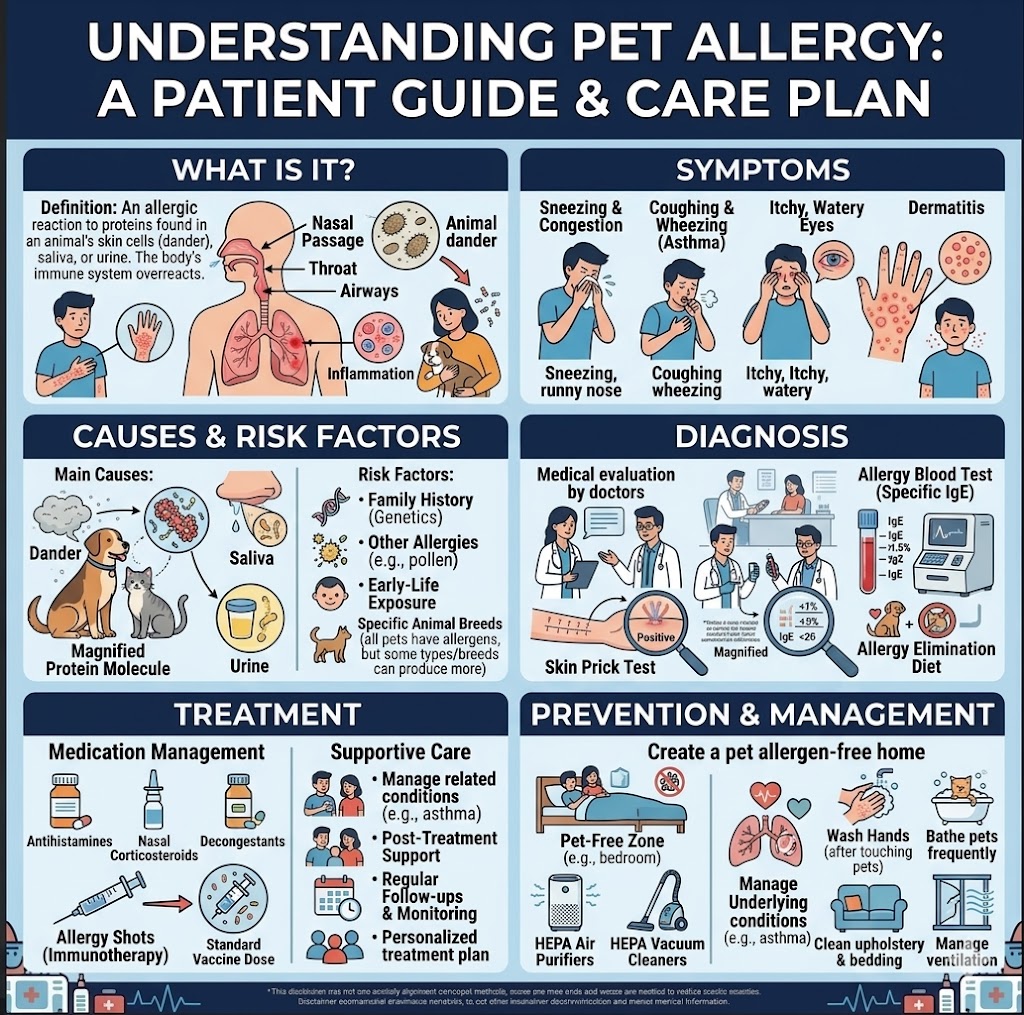
Pet allergy is an immune system reaction to harmless proteins found in an animal's skin flakes (dander), saliva, or urine. While any furry animal can cause allergies, cats and dogs are the most common triggers. Your immune system mistakenly identifies these animal proteins as harmful invaders and produces protective substances (antibodies), leading to allergic symptoms. Exposure to dander, which consists of microscopic dead skin cells shed by animals, is the most frequent cause of these reactions.
Understanding the Condition
Understanding Pet Allergies
Understanding the Condition
Pet allergy is an immune system reaction to harmless proteins found in an animal's skin flakes (dander), saliva, or urine. While any furry animal can cause allergies, cats and dogs are the most common triggers. Your immune system mistakenly identifies these animal proteins as harmful invaders and produces protective substances (antibodies), leading to allergic symptoms. Exposure to dander, which consists of microscopic dead skin cells shed by animals, is the most frequent cause of these reactions.
Common Symptoms
Common Allergic Reactions: These are similar to hay fever symptoms and can appear within minutes of exposure. They include sneezing, a runny or stuffy nose, itchy, red or watery eyes, and an itchy nose, throat, or roof of the mouth.
Asthma-Related Symptoms: For some individuals, pet allergies can worsen or trigger asthma. Symptoms may include wheezing (a whistling sound when breathing out), shortness of breath, chest tightness or pain, and trouble sleeping due to breathing difficulties, often triggered by a respiratory infection.
Skin Symptoms (Allergic Dermatitis): Direct contact with an allergen-causing pet can lead to skin reactions. This immune system response causes skin swelling and irritation, manifesting as hives (red, itchy bumps), eczema (itchy patches of skin), or an itchy rash.
Consultation Guide
Which Specialist to Meet
Before your visit, keep a symptom diary noting triggers and severity. Avoid antihistamine medications for several days before your appointment, as they can affect test results. Prepare a list of questions for your doctor. Seek emergency care immediately if wheezing or shortness of breath worsens rapidly.
Book a doctor visit near me
This common and quick test involves exposing your skin to tiny amounts of suspected allergens to observe for a reaction. It helps confirm if a specific substance you touch or breathe causes your symptoms. The results, combined with your medical history, guide treatment planning. Skin tests are generally safe for all ages, including infants, but may not be suitable if you have certain skin conditions, take specific medications, or have a history of severe allergic reactions.
Nasal Corticosteroids: Prescription nasal sprays that reduce inflammation in your nasal passages, significantly improving allergy symptoms. (Duration: Daily)
Leukotriene Modifiers: Oral medications that block the action of certain immune system chemicals that cause allergy symptoms, including asthma. (Duration: Daily)
Monitor Symptoms: Track symptom severity and triggers, reporting changes to your doctor.
Emergency Preparedness: Understand severe reaction signs and when to seek immediate medical attention.
Consultation Guide
A healthcare professional will draw a sample of blood, usually from a vein in your arm, which might cause a brief pinch or sting. This blood sample is then sent to a laboratory for analysis to detect and quantify antibodies specific to various allergens. Results typically take several days to a week.
Diagnostic Procedures
Start by consulting your primary care provider, who can then refer you to an allergist/immunologist, a specialist in diagnosing and treating allergies and asthma.
Preparations Before Your Visit
What to Expect
During a skin prick or scratch test, a healthcare professional applies a small drop of a purified allergen extract to your skin, typically on the forearm or back, and then lightly pricks or scratches the surface. You might feel a brief, mild prick. After about 15-20 minutes, the site is checked for a localized reaction, such as a raised, red, itchy bump (similar to a mosquito bite), which indicates an allergy.
Blood Tests (In Vitro Immunoglobulin E Antibody Tests)
These tests measure the amount of specific allergy-related antibodies (immunoglobulin E or IgE) in your blood. They are particularly useful when skin tests are not recommended due to certain medical conditions, medications, or a risk of severe reaction. Blood tests are reliable for diagnosing allergies to airborne substances like pet dander.
What to Expect
Treatment Options
Medications
Oral Antihistamines: These medications help relieve itching, sneezing, and runny nose by blocking a chemical involved in allergic reactions. (Duration: As needed or daily)
Decongestants: Available as oral medications or nasal sprays, these reduce nasal stuffiness. Nasal spray forms should only be used for a few days to avoid rebound congestion. (Duration: Short-term as needed)
Allergy Shots: A long-term treatment that involves a series of injections containing tiny, increasing amounts of the allergen. This gradually desensitizes your immune system, teaching it not to overreact to the allergen over time. (Duration: 3 to 5 years)
Adhere to Treatment Plan: Consistently follow prescribed medication regimens and complete full immunotherapy courses.
Prevention & Long-Term Wellbeing
Home Remedies & Lifestyle Adjustments
Avoidance or Limiting Exposure: The most effective strategy involves minimizing contact with the pet and its dander. This includes creating pet-free zones in your home, especially your bedroom, and using air purifiers. (Duration: Ongoing)
Prevention
Create Pet-Free Zones: Designate areas, especially bedrooms, as completely pet-free to reduce allergen exposure.
Regular Cleaning: Vacuum with HEPA filters, dust surfaces, and wash bedding/curtains frequently to remove dander.
Improve Air Quality: Utilize HEPA air purifiers and HVAC filters to capture airborne allergens.
Pet Grooming: Have a non-allergic person regularly bathe and brush pets to minimize dander shedding.
Personal Hygiene: Wash hands thoroughly after touching pets, and avoid touching your face before washing.
Long-Term Management
Tags & Topics
Notice an error or need an update?
Help us keep medical information accurate. Report incorrect info or suggest an edit.


