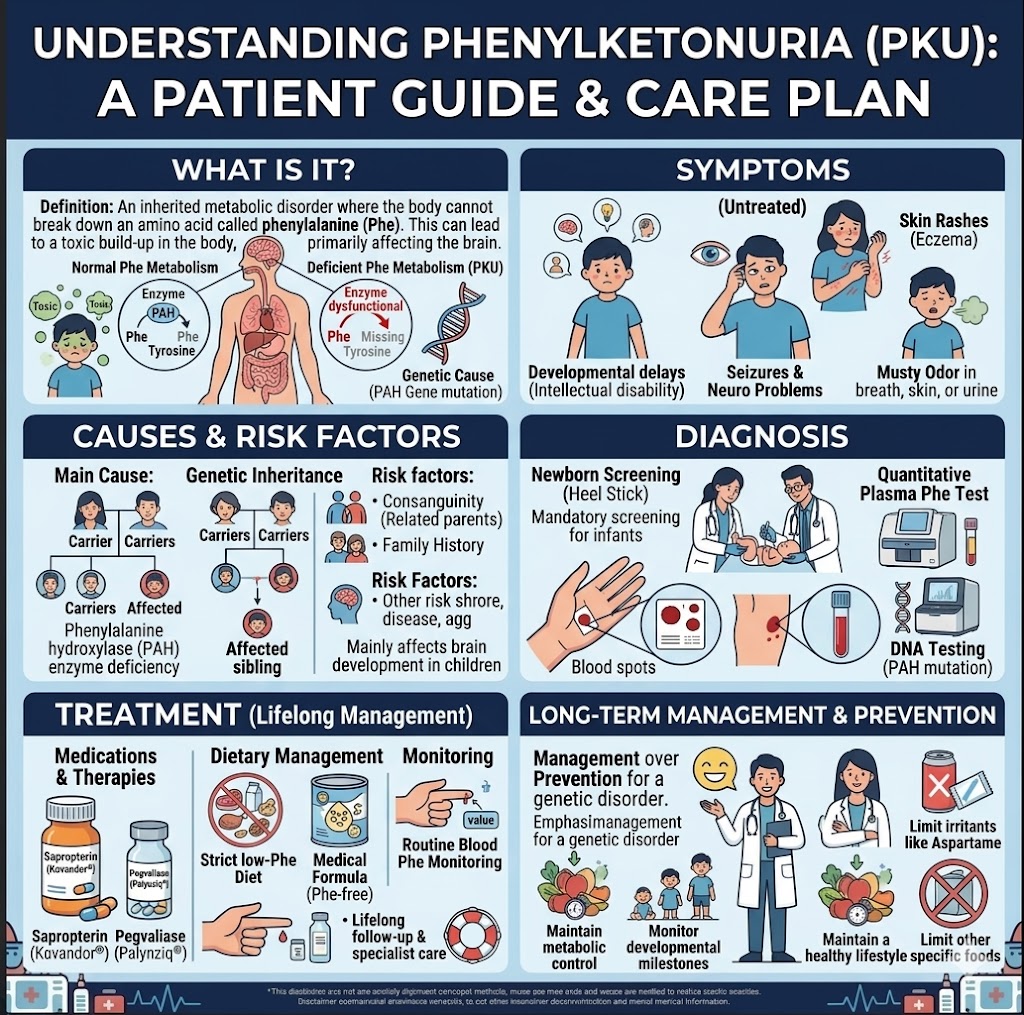
PKU (pronounced fen-ul-key-toe-NU-ree-uh) is a rare, inherited condition that means your body cannot properly process a common building block of protein called phenylalanine. This problem happens because of a change in a specific gene, leading to a shortage or absence of an enzyme needed to break down phenylalanine. Without this enzyme, phenylalanine builds up in the body when someone with PKU eats protein-rich foods or an artificial sweetener called aspartame. This buildup can become dangerous, leading to serious health issues, especially affecting the brain. Early detection through newborn screening, common in many countries including the United States, and lifelong dietary management are crucial to prevent these severe complications. While there's no cure, effective management allows people with PKU to lead healthy lives.
Understanding the Condition
Phenylketonuria (PKU)
Understanding the Condition
Common Symptoms
Before your visit, gather any available medical records, including newborn screening results. Compile a detailed family medical history, noting any relatives with inherited conditions. Make a list of all current symptoms or concerns. Prepare a list of questions you want to ask the healthcare provider to ensure you get all the information you need.
Book a doctor visit near me
This is a routine test performed on almost all babies shortly after birth. A small blood sample is taken, usually from the baby's heel, to check for a variety of serious conditions, including PKU. It's designed to detect PKU before symptoms appear, allowing for early treatment.
Consultation Guide
PKU (pronounced fen-ul-key-toe-NU-ree-uh) is a rare, inherited condition that means your body cannot properly process a common building block of protein called phenylalanine. This problem happens because of a change in a specific gene, leading to a shortage or absence of an enzyme needed to break down phenylalanine. Without this enzyme, phenylalanine builds up in the body when someone with PKU eats protein-rich foods or an artificial sweetener called aspartame. This buildup can become dangerous, leading to serious health issues, especially affecting the brain. Early detection through newborn screening, common in many countries including the United States, and lifelong dietary management are crucial to prevent these severe complications. While there's no cure, effective management allows people with PKU to lead healthy lives.
Musty Odor: A distinctive musty smell in breath, skin, or urine, caused by high phenylalanine levels.
Nervous System Problems: Issues affecting the brain and nerves, potentially including seizures and tremors.
Skin Rashes: Conditions like eczema, where the skin becomes inflamed, itchy, and red.
Lighter Skin, Hair, and Eyes: Often lighter in color compared to other family members, as phenylalanine is needed to make melanin, the pigment responsible for color.
Small Head Size (Microcephaly): An unusually small head circumference.
Hyperactivity: Being unusually active and restless.
Intellectual Disability: Difficulties with thinking, understanding, and communicating, which can be severe if untreated.
Delayed Development: Slower progress in reaching typical developmental milestones (e.g., walking, talking).
Behavioral and Emotional Challenges: Problems with behavior, emotions, and social interactions.
Mental Health Issues: Increased risk of developing mental health disorders.
Consultation Guide
Which Specialist to Meet
A healthcare professional will gently prick your baby's heel to collect a few drops of blood onto a special filter paper. This is a quick procedure that may cause a momentary cry. The blood sample is then sent to a laboratory for analysis. Results are typically available within a few days to a couple of weeks, and your pediatrician will inform you if follow-up is needed.
A small blood sample will be drawn, typically from a vein in the arm for older children and adults, or via a heel prick for infants. The procedure is quick, similar to routine blood tests, and may cause slight discomfort or a brief stinging sensation. The sample is then analyzed to determine the phenylalanine concentration.
Diagnostic Procedures
What to Expect
Blood Phenylalanine Level Testing
This test measures the amount of phenylalanine in the blood. It's used for initial diagnosis if newborn screening suggests PKU, and it's also crucial for ongoing monitoring in individuals diagnosed with PKU to ensure their dietary management is effective.
What to Expect
Genetic testing involves analyzing a sample of your DNA to look for changes (mutations) in the PAH gene, which is responsible for PKU. This test confirms the diagnosis of PKU and can help determine its severity. It's also used for carrier screening in family members or for reproductive planning.
What to Expect
A sample for genetic testing is usually collected through a simple blood draw or by swabbing the inside of your cheek. These methods carry very little physical risk. For prenatal testing, such as amniocentesis or chorionic villus sampling, a small sample of amniotic fluid or placental tissue is collected, which carries a small risk of pregnancy loss. The collected sample is sent to a specialized laboratory for DNA analysis. Results can take several weeks, and a genetic counselor can help interpret them.
Regular Blood Phenylalanine Monitoring: Lifelong, regular blood tests are crucial to monitor phenylalanine levels and adjust the diet or medication as needed. This ensures levels remain within the safe target range to prevent complications.
Treatment Options
Low-Phenylalanine Diet: This is the cornerstone of PKU treatment, followed for life. It strictly limits foods high in protein to control phenylalanine intake. Foods typically restricted include milk, cheese, eggs, meat, fish, nuts, beans, and certain grains like bread and pasta. Artificial sweeteners containing aspartame must also be avoided. The diet requires careful planning and monitoring by a dietitian. (Duration: Lifelong)
Medications
Enzyme-Boosting Therapy: For some individuals with PKU, specific medications are available that can help the body's existing, but partially functional, enzyme work more effectively to break down phenylalanine. This can allow some patients to tolerate a higher amount of phenylalanine in their diet. (Duration: Lifelong, as prescribed by a specialist and with ongoing monitoring)
Education and Adherence: Continuous education for individuals with PKU and their families about the condition, dietary restrictions, and treatment adherence is paramount for successful long-term management.
Support Groups: Connecting with support groups for individuals and families affected by PKU can provide emotional support, practical advice, and a sense of community.
Prevention & Long-Term Wellbeing
If you suspect PKU or have received a positive newborn screen, you should consult with a medical geneticist, a metabolic specialist (an endocrinologist specializing in metabolic disorders), a pediatrician (for children), and a registered dietitian who specializes in metabolic conditions. Genetic counselors can also provide valuable information about inheritance patterns and family planning.
Preparations Before Your Visit
Home Remedies/Dietary Management
Phenylalanine-Free Medical Formulas: Infants with PKU receive special phenylalanine-free formulas. Children and adults often supplement their diet with these formulas, which provide essential proteins and nutrients without phenylalanine, ensuring adequate nutrition while maintaining low blood phenylalanine levels. (Duration: Lifelong)
Prevention
Pre-Pregnancy Planning for Women with PKU: Women with PKU who are considering pregnancy must strictly adhere to a low-phenylalanine diet before conception and throughout pregnancy. High phenylalanine levels in the mother's blood can seriously harm the developing baby, leading to severe birth defects and developmental problems. Nutritional supplements designed for PKU patients ensure adequate protein and nutrient intake during this critical time. Consultation with a healthcare provider and a metabolic dietitian is essential.
Genetic Counseling: If you have PKU, a close family member with PKU, or already have a child with PKU, genetic counseling is highly recommended before planning a pregnancy. A geneticist or genetic counselor can explain how PKU is inherited, assess your risk of having a child with the condition, and help you make informed family planning decisions.
Long-Term Monitoring
Regular Medical Check-ups: Ongoing visits with a metabolic specialist, dietitian, and other healthcare professionals are vital to manage PKU effectively, address any emerging health issues, and ensure proper growth and development, especially in children.
Support and Education
Tags & Topics
Notice an error or need an update?
Help us keep medical information accurate. Report incorrect info or suggest an edit.


