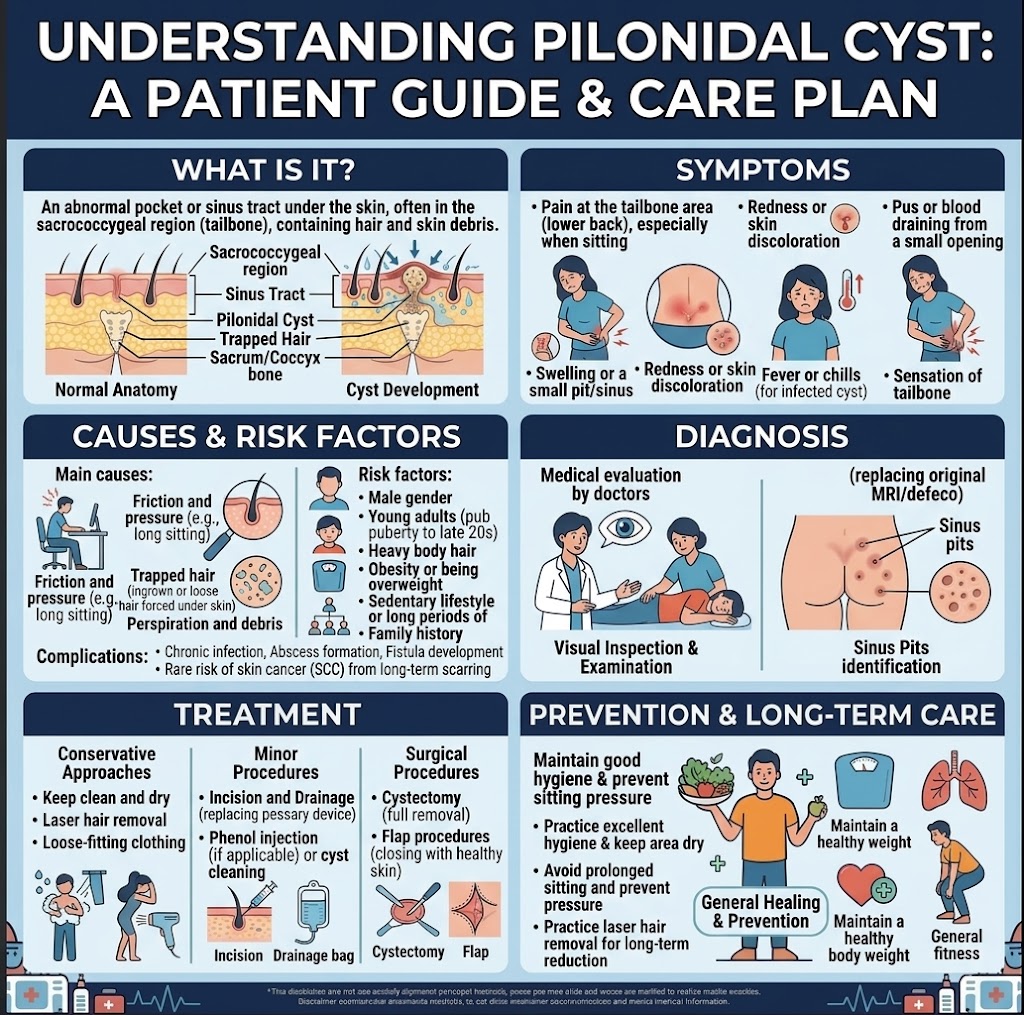
A pilonidal (pronounced 'pie-low-NIE-dul') cyst is a small, unusual pocket or tunnel in the skin, typically found near the tailbone at the top of the buttocks. It often contains hair and skin debris. These cysts usually form when loose hair punctures the skin and becomes embedded. If infected, a pilonidal cyst can be very painful, causing swelling and pus. Treatment options range from simple drainage to surgery. While most common in young adult males and those who sit for extended periods, these cysts can recur.
Understanding the Condition
Pilonidal Cyst: Understanding and Managing the Condition
Understanding the Condition
Common Symptoms
No Symptoms (initially): A pilonidal cyst may cause no noticeable symptoms until it becomes infected.
Pain and Swelling: The skin around the cyst becomes swollen, tender, and very painful, especially with sitting or during movement.
Redness and Inflammation: The affected area will appear red and inflamed, indicating an active infection.
Pus or Blood Discharge: An infected cyst may leak pus or blood from a small opening in the skin.
Unpleasant Odor: Draining pus from an infected cyst often produces a foul smell.
Small Pit or Hole: A small pit or opening might be visible near the top of the buttocks crease, which is often where the hair initially entered the skin.
Consultation Guide
Which Specialist to Meet
Initially, you should consult your primary care doctor or general practitioner. Depending on the severity and recurrence of the cyst, they may refer you to a general surgeon for surgical options or a dermatologist for skin-related concerns.
Preparations Before Your Visit
Before your appointment, make a note of your symptoms, including when they started, their severity, and what seems to make them better or worse. List any previous treatments you've tried. Be prepared to discuss your medical history and any medications you are currently taking. Avoid applying any creams, ointments, or dressings to the area before your visit, as this can obscure the area for examination. Prepare a list of questions you have for your doctor.
Book a doctor visit near me
You will be asked about your symptoms and medical history. The doctor will then visually inspect and gently touch the area around your tailbone. This is usually a quick process. If the cyst is infected, you might experience some mild discomfort or pain during the examination when the area is pressed.
Imaging Studies (e.g., Ultrasound or MRI)
Monitor for Recurrence: Even after treatment, pilonidal cysts can recur. Be vigilant for any new symptoms such as pain, swelling, redness, or discharge in the treated area and report them to your doctor promptly.
Consultation Guide
Incision and Drainage (Lancing): This common in-office procedure involves making a small cut into the cyst to allow pus and fluid to drain. This provides immediate relief from pain and pressure caused by an abscess. (Duration: The procedure typically takes 15-30 minutes. The wound is usually left open to heal, which can take several weeks.)
Long-Term Monitoring and Risk Factors
Understand Risk Factors: Pilonidal cysts are more common in young adult males, those who are overweight, have an inactive lifestyle, sit for long periods, or have thick, stiff body hair. Being aware of these factors can help in prevention and early detection.
Rare Complication Awareness: In very rare, long-standing cases of chronically recurring and untreated pilonidal cysts, there is a slightly increased risk of developing a serious type of skin cancer called squamous cell carcinoma. Regular medical follow-up is important for chronic cases.
Diagnostic Procedures
A pilonidal cyst is typically diagnosed through a thorough physical examination of the affected area. The doctor will look for characteristic signs such as a small opening (pit), swelling, redness, tenderness, or any discharge (pus or blood) near the tailbone.
What to Expect
In specific situations, if the diagnosis is unclear, or if there's a concern about the extent of the infection, deeper involvement, or a complex recurring cyst, imaging tests like an ultrasound or MRI might be recommended. An ultrasound uses sound waves, while an MRI uses magnets and radio waves to create detailed images of the tissues.
What to Expect
For an ultrasound, a special gel will be applied to the skin over the affected area, and a small handheld device (transducer) will be moved across it. You will feel some pressure, but it is generally painless and takes about 15-30 minutes. For an MRI, you will lie on a movable table that slides into a large, tunnel-shaped machine. The machine can be noisy, so you might be offered earplugs. You must remain very still during the scan, which typically lasts 30-60 minutes. While painless, some people may feel a sense of confinement in the machine.
Treatment Options
Medications
Oral Antibiotics: If the pilonidal cyst becomes infected, antibiotics are prescribed to fight the bacterial infection and reduce inflammation. These will not cure the cyst but treat the infection. (Duration: Typically 7-14 days, as prescribed by your doctor.)
Pain Relievers: Over-the-counter pain medications can help manage discomfort, tenderness, and inflammation associated with an infected cyst. (Duration: As needed for pain relief.)
Cystectomy (Wide Excision): This involves surgically removing the entire cyst, along with any surrounding unhealthy tissue. The wound may be left open to heal from the inside out (open healing) or closed with stitches (primary closure), depending on the cyst's size and infection status. (Duration: The surgery usually takes 30-60 minutes. Healing time can range from several weeks to months, especially with open healing.)
Marsupialization: In this technique, the cyst is opened, drained, and its edges are then stitched to the surrounding skin, creating a shallow pouch. This allows the wound to heal gradually while remaining open, reducing the chance of recurrence. (Duration: Surgery typically lasts 30-60 minutes. Complete healing usually takes 4-6 weeks.)
Flap Procedures: For larger, recurring, or more complex pilonidal cysts, a more involved surgical approach may be used. This involves removing the cyst and reconstructing the area using healthy tissue (a 'flap') from a nearby part of the body to cover the wound, often changing the natural crease of the buttocks to reduce recurrence. (Duration: More complex surgery, healing can take several weeks to months, requiring careful post-operative care.)
Prevention & Long-Term Wellbeing
Home Remedies and Lifestyle Adjustments
Warm Compresses: Applying a warm, moist cloth to the affected area can help reduce pain and swelling, and may encourage superficial drainage of the cyst. (Duration: 15-20 minutes, several times a day as needed.)
Good Hygiene: Regularly washing the area around the tailbone with mild soap and water helps keep it clean and free of loose hairs and debris, which can prevent further irritation and potential infection. (Duration: Ongoing, daily practice.)
Prevention
Maintain Excellent Hygiene: Regularly wash the area around your tailbone with mild soap and water. Keeping the area clean and dry helps prevent the accumulation of loose hairs and skin debris that can lead to cyst formation.
Manage Body Hair: For individuals prone to pilonidal cysts, regularly shaving or using hair removal creams in the affected area can help reduce the presence of loose hairs that may puncture the skin. Discuss this option with your doctor.
Avoid Prolonged Sitting: If your job or lifestyle involves sitting for long periods, take frequent breaks to stand up, walk around, and shift your weight to reduce pressure and friction on the tailbone.
Achieve and Maintain a Healthy Weight: Being overweight can increase friction and pressure in the tailbone area, contributing to the risk of pilonidal cysts. Maintaining a healthy weight can significantly reduce this risk.
Wear Loose Clothing: Opt for loose-fitting clothing, especially underwear, to minimize friction and irritation in the buttocks and tailbone region.
Tags & Topics
Notice an error or need an update?
Help us keep medical information accurate. Report incorrect info or suggest an edit.


