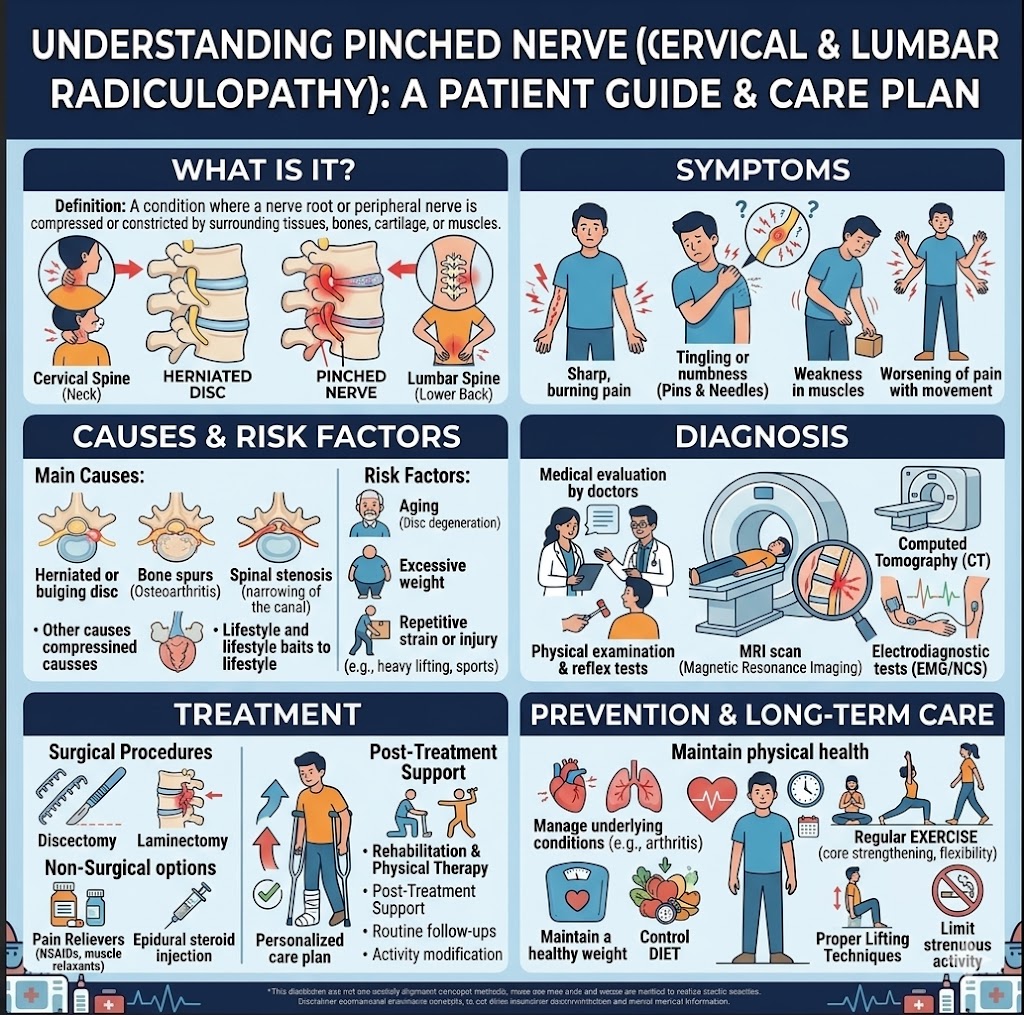
A pinched nerve occurs when surrounding tissues—such as bones, cartilage, muscles, or tendons—apply too much pressure (compression) on a nerve. This pressure disrupts the nerve's normal signaling, resulting in pain, tingling, numbness, or muscle weakness. Pinched nerves can happen in various parts of the body, such as the neck, lower spine (causing radiating leg pain), or wrist (resulting in carpal tunnel syndrome). With rest and conservative treatments, most people fully recover within a few weeks.
Understanding the Condition
Understanding a Pinched Nerve: Symptoms, Diagnostics, and Recovery
Understanding the Condition
Common Symptoms
Numbness: A loss of sensation or reduced feeling in the specific area of the body supplied by the compressed nerve.
Radiating Pain: A sharp, aching, or burning pain that travels outward from the site of compression (such as pain shooting down the back of your leg from a pinched lower-back nerve).
Paresthesia: A frequent tingling or 'pins and needles' sensation in the affected limb or extremity.
Muscle Weakness: Loss of strength or difficulty moving the muscles controlled by the affected nerve.
Limb 'Falling Asleep': A frequent sensation that your hand or foot has completely lost feeling, which is often more intense and noticeable while sleeping.
Consultation Guide
Which Specialist to Meet
You should start by consulting your primary care physician. Depending on your symptoms, they may refer you to a Neurologist (a specialist in nervous system disorders), an Orthopedic Specialist (musculoskeletal system doctor), or a Physical Medicine and Rehabilitation doctor (physiatrist).
Preparations Before Your Visit
Before your appointment, document your symptoms, noting when they began and what activities make them better or worse. Write down your medical history, any repetitive physical tasks you do at work or during hobbies, and prepare a list of questions to ask your doctor.
Book a doctor visit near me
Prescription Medications: Strength-regulated anti-inflammatory medications, muscle relaxants, or nerve-specific pain relievers prescribed by your healthcare provider to control severe symptoms. (Duration: A few days to several weeks as determined by your doctor.)
Diagnostic Procedures
Neurological Examination
A non-invasive clinical evaluation used to check how well your brain, spinal cord, nerves, and muscles are communicating.
What to Expect
The doctor will test your reflexes using a soft rubber hammer, evaluate your muscle strength by asking you to push against resistance, and check your physical sensations by lightly touching your skin with various soft or pointed tools.
Electromyography (EMG)
A diagnostic procedure that assesses the health of your muscles and the motor nerve cells that control them.
What to Expect
During a needle EMG, a tiny, thin needle electrode is inserted directly into the target muscle to record its electrical activity; you may feel minor, temporary discomfort or a pinching sensation. It is usually combined with a nerve conduction study, where small sticker electrodes are placed on your skin to deliver very mild electrical pulses, measuring the speed and strength of signals passing between points.
Treatment Options
A pinched nerve occurs when surrounding tissues—such as bones, cartilage, muscles, or tendons—apply too much pressure (compression) on a nerve. This pressure disrupts the nerve's normal signaling, resulting in pain, tingling, numbness, or muscle weakness. Pinched nerves can happen in various parts of the body, such as the neck, lower spine (causing radiating leg pain), or wrist (resulting in carpal tunnel syndrome). With rest and conservative treatments, most people fully recover within a few weeks.
Home Care and Therapies
Activity Modification and Rest: Avoiding activities that aggravate the compressed nerve, allowing local swelling and tissue inflammation to subside. (Duration: Typically 1 to 2 weeks.)
Physical Therapy: A structured program of stretching and strengthening exercises designed to reinforce supporting muscles and relieve pressure on compressed nerves. (Duration: Usually 4 to 8 weeks, with ongoing home maintenance.)
Over-the-Counter Pain Relief: Non-prescription medications to reduce swelling and alleviate mild-to-moderate discomfort. (Duration: Up to 10 consecutive days unless otherwise directed by a physician.)
Diskectomy: A surgical procedure to remove the damaged or bulging portion of a herniated disk in the spine that is actively pressing on a nerve root. This is often performed using minimally invasive techniques with small incisions. (Duration: The surgery takes 1 to 2 hours; overall physical recovery ranges from 4 to 12 weeks.)
Prevention & Long-Term Wellbeing
Prevention Strategies
Maintain Good Posture: Avoid crossing your legs for long periods, keep your spine aligned while sitting, and position computer monitors at eye level to prevent neck strain.
Integrate Frequent Breaks: During repetitive tasks—such as typing, writing, or assembly line work—take a 5-minute break every hour to stretch your hands, wrists, and shoulders.
Long-Term Wellbeing
Strength and Flexibility Exercise: Perform regular core-strengthening and flexibility exercises, like yoga or low-impact conditioning, to keep supporting muscles robust and supple.
Weight Management: Maintain a healthy body weight to minimize structural stress and excess compression forces on your spine and joints.
Tags & Topics
Notice an error or need an update?
Help us keep medical information accurate. Report incorrect info or suggest an edit.


