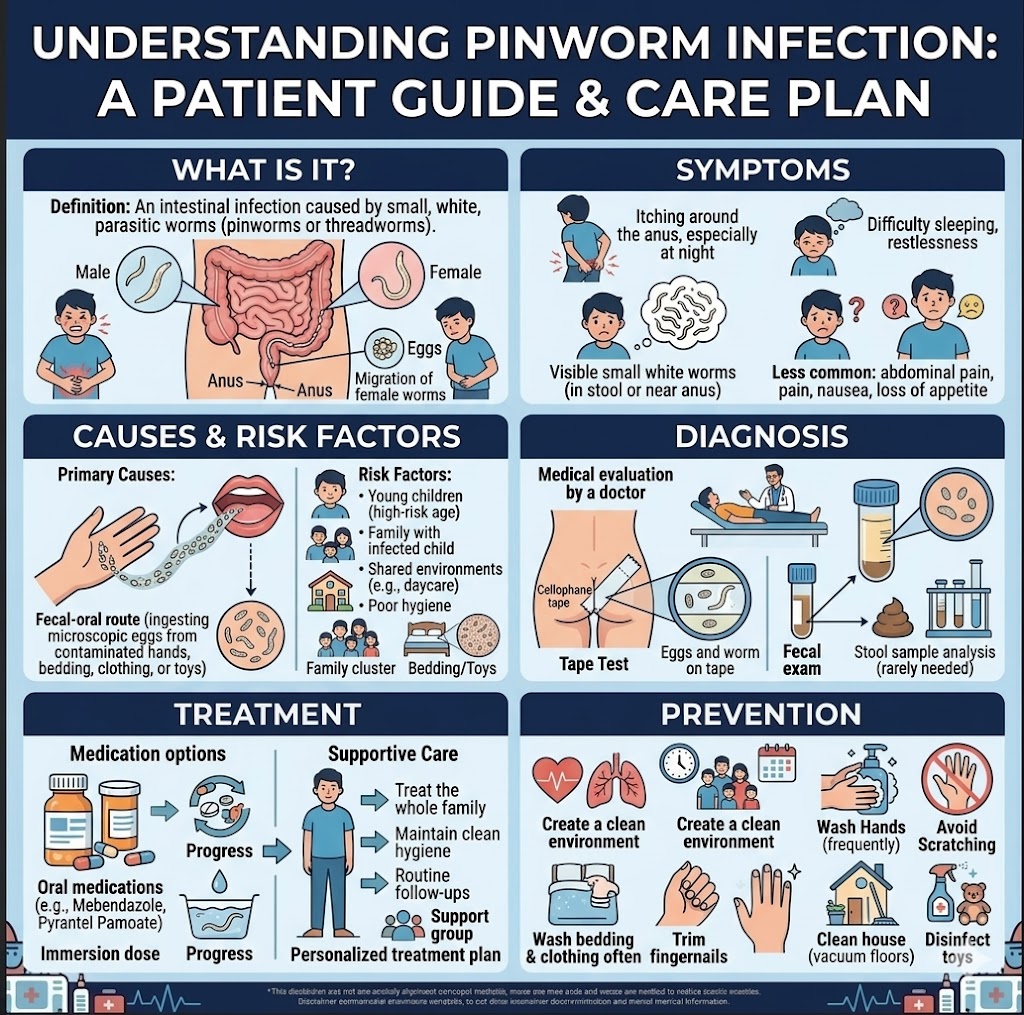
Pinworm infection is a common condition caused by tiny, white, thread-like worms, about 1/4 to 1/2 inch (6 to 13 millimeters) long, that live in the human intestines. The infection spreads when microscopic pinworm eggs, too small to see, are accidentally swallowed or inhaled. It is most frequently seen in young children, particularly those in school or preschool environments. While many people experience no symptoms, the most common signs include anal itching, especially at night, and restless sleep.
Understanding the Condition
Pinworm Infection: What You Need to Know
Understanding the Condition
Pinworm infection is a common condition caused by tiny, white, thread-like worms, about 1/4 to 1/2 inch (6 to 13 millimeters) long, that live in the human intestines. The infection spreads when microscopic pinworm eggs, too small to see, are accidentally swallowed or inhaled. It is most frequently seen in young children, particularly those in school or preschool environments. While many people experience no symptoms, the most common signs include anal itching, especially at night, and restless sleep.
Common Symptoms
Anal Itching: An irritating itch around the anus, which often becomes worse at night. This happens when the female pinworms move to the skin folds around the anus to lay their eggs.
Restless Sleep: Difficulty sleeping due to the discomfort and itching, leading to irritability and fatigue.
Other Potential Symptoms: Less common symptoms can include irritability, loss of appetite, and weight loss. However, it's important to note that many individuals with pinworm infection have no noticeable symptoms at all.
Consultation Guide
Which Specialist to Meet
Before your visit, it's helpful to note down any symptoms, when they occur, and how often. If you suspect pinworms, your doctor may ask you to perform a simple test at home. Do not bathe or wipe the anal area before performing this test, as it could wash away the eggs needed for diagnosis. The doctor will provide specific instructions if needed.
Book a doctor visit near me
Anti-parasitic Oral Medication: These medicines are specifically designed to kill pinworms in the intestines. It's often recommended that all members of the household be treated simultaneously, even if they show no symptoms, to prevent reinfection and stop the spread of eggs. (Duration: Typically involves a single dose of medication, followed by a second dose two weeks later. This two-dose approach helps ensure that any new worms that hatch from remaining eggs are also eliminated.)
Supportive Home Measures
Symptom Awareness: Monitor for recurring symptoms, especially anal itching at night, and seek medical advice promptly if they reappear.
Educate Children: Teach children about the importance of handwashing and not putting their fingers in their mouths to prevent the spread of eggs.
Consultation Guide
You will typically be asked to perform this test first thing in the morning, immediately after waking up and *before* showering, bathing, or having a bowel movement. This timing is crucial because female pinworms usually lay their eggs around the anus during the night. For the tape test, you or your caregiver will firmly press a strip of clear adhesive tape (which your doctor may provide, or a standard transparent tape) against the skin folds around the anus for a few seconds. This tape is then carefully removed and stuck to a glass slide or placed in a container provided by the doctor. For a paddle test, a specialized paddle with an adhesive surface is used in a similar manner. The slide or paddle is then brought to the clinic for microscopic examination to identify any pinworm eggs. It might be necessary to repeat the test on several consecutive mornings to increase the chance of finding eggs, as worms do not lay eggs every night.
Diagnostic Procedures
A general practitioner (family doctor) or a pediatrician for children can diagnose and treat pinworm infections.
Preparations Before Your Visit
Pinworm Tape Test (or Paddle Test)
This is the primary method for diagnosing a pinworm infection. It involves collecting microscopic eggs from the skin around the anus using a piece of clear adhesive tape or a special paddle slide. The collected sample is then examined under a microscope.
What to Expect
Consistent Family Treatment: If one family member is diagnosed, ensure all household members are treated as recommended by a healthcare professional to break the cycle of infection and prevent recurrence.
Treatment Options
Medications
Thorough Cleaning: Washing all bedding, pajamas, and underwear of the infected person and household members in hot water (at least 130°F or 55°C) and drying them on a hot setting helps kill any lingering eggs. This should be done frequently during the treatment period to minimize re-exposure. (Duration: As advised)
Daily Morning Showers/Baths: Taking a shower or bath every morning helps to wash away any pinworm eggs that may have been laid on the skin around the anus overnight. (Duration: As advised)
Prevention & Long-Term Wellbeing
Prevention
Strict Hand Hygiene: Wash hands thoroughly and often with soap and water for at least 20 seconds, especially after using the toilet, changing diapers, and before eating or preparing food. Encourage children to do the same.
Proper Nail Care: Keep fingernails trimmed short and clean. Pinworm eggs can easily get lodged under long fingernails and be transferred to the mouth.
Avoid Scratching: Discourage scratching the anal area, as this can transfer eggs from the skin to the fingers and then to other surfaces or the mouth, leading to re-infection or spread.
Regular Laundry of Bedding and Clothing: Wash bedding, pajamas, and underwear frequently in hot water to eliminate eggs that may have been shed.
Environmental Cleaning: Regularly vacuum carpets and mop floors, and wipe down common surfaces (e.g., toilet seats, doorknobs, toys) to remove any scattered eggs.
Long-Term Wellbeing
Tags & Topics
Notice an error or need an update?
Help us keep medical information accurate. Report incorrect info or suggest an edit.


