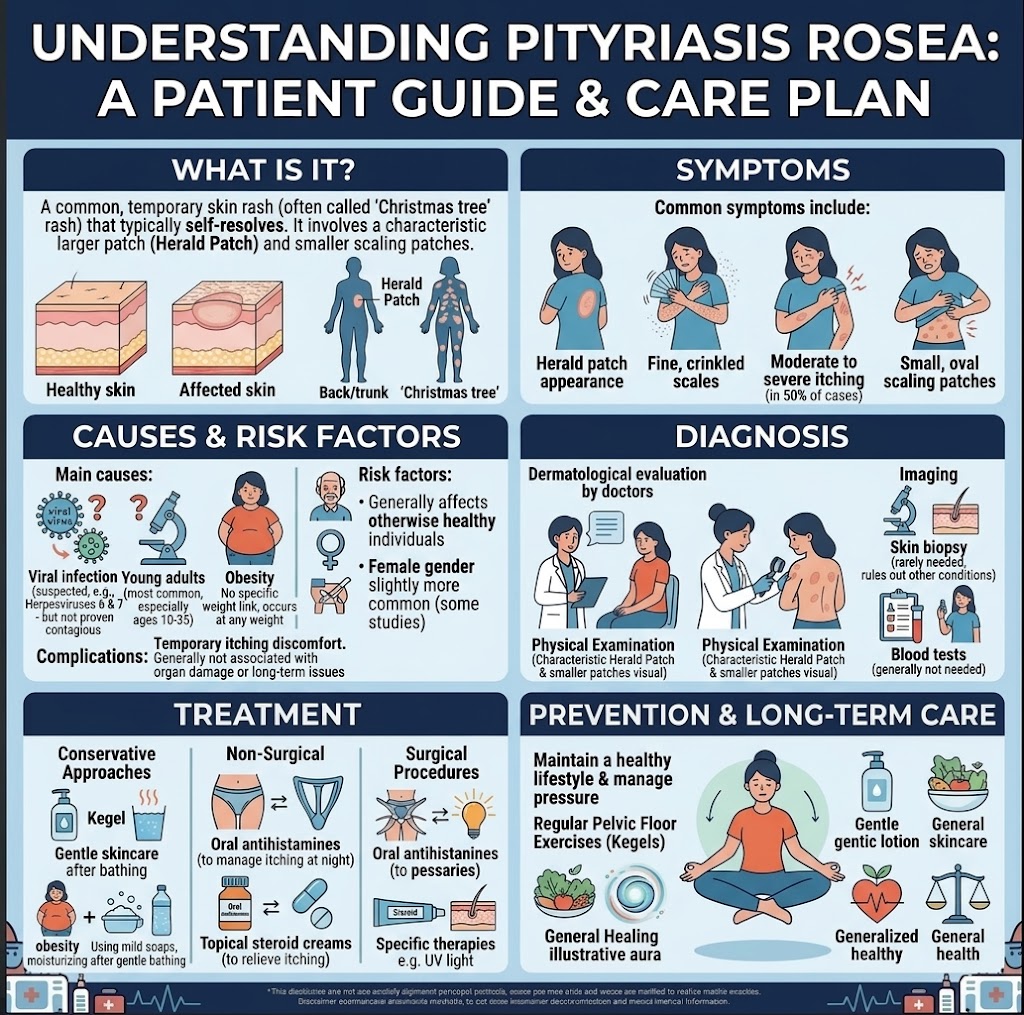
Pityriasis rosea (pronounced pit-ih-RIE-uh-sis roh-ZEE-uh) is a common, mild skin condition characterized by a distinctive rash. It typically begins with a single, larger oval spot, known as the "herald patch," often found on the torso, face, or back. Days or weeks later, smaller spots may emerge, spreading across the body in a pattern often compared to drooping pine-tree branches. While the rash can be itchy, it is not contagious and usually clears up on its own within 10 weeks without leaving scars. It commonly affects individuals between 10 and 35 years old but can occur at any age.
Understanding the Condition
Pityriasis Rosea: A Non-Medical Guide
Understanding the Condition
Pityriasis rosea (pronounced pit-ih-RIE-uh-sis roh-ZEE-uh) is a common, mild skin condition characterized by a distinctive rash. It typically begins with a single, larger oval spot, known as the "herald patch," often found on the torso, face, or back. Days or weeks later, smaller spots may emerge, spreading across the body in a pattern often compared to drooping pine-tree branches. While the rash can be itchy, it is not contagious and usually clears up on its own within 10 weeks without leaving scars. It commonly affects individuals between 10 and 35 years old but can occur at any age.
Common Symptoms
Herald Patch: The initial sign is usually a single, oval-shaped spot, slightly raised and scaly, which can appear on the face, chest, abdomen, or back. This "herald patch" can measure up to 4 inches (10 centimeters) across.
Widespread Rash: Several days to a few weeks after the herald patch appears, smaller, scaly bumps or spots develop. These typically spread across the trunk and limbs, often forming a pattern that resembles drooping branches of a pine tree.
Early Symptoms: Before the herald patch emerges, some people may experience mild flu-like symptoms such as headache, fatigue, a low-grade fever, or a sore throat.
Consultation Guide
Which Specialist to Meet
You should initially consult with your primary care provider or family doctor. If the diagnosis is uncertain, or if your symptoms are severe or persistent, your doctor may refer you to a dermatologist, a specialist in skin conditions.
Preparations Before Your Visit
Before your appointment, it's helpful to:* Document your symptoms, noting when they started, their progression, and any discomfort like itching.* Compile a list of all current medications, including over-the-counter drugs, supplements, and herbal remedies.* Be prepared to discuss your general health history and any family history of skin conditions.* Avoid applying any creams, lotions, or makeup to the rash before your visit, as this can make examination and diagnosis more challenging.
Book a doctor visit near me
Topical Creams and Lotions: Over-the-counter or prescription creams containing corticosteroids or other soothing ingredients can be applied to reduce itching and inflammation. (Duration: Applied as directed, usually once or twice daily, until symptoms improve (several weeks))
Oral Antihistamines: For significant itching, oral antihistamines can help relieve discomfort by reducing allergic reactions. (Duration: Taken as prescribed, typically for a few days to a few weeks)
Light Therapy (Phototherapy): In cases of widespread or persistent rash, controlled exposure to specific types of ultraviolet (UV) light, often administered in a medical setting, can help to clear the rash and reduce itching. (Duration: Multiple sessions, typically 2-3 times a week, over several weeks, under the guidance of a dermatologist)
Monitoring and Reassurance: Pityriasis rosea is generally a benign condition that resolves completely without scarring within 10 weeks. Recurrence is uncommon. However, if the rash persists beyond three months, worsens significantly, or you develop new concerning symptoms, it's important to revisit your healthcare provider to re-evaluate the diagnosis.
Skin Protection During Healing: While the rash is active and as it fades, protect the affected skin from excessive sun exposure. Sunburn can potentially worsen the appearance of the rash or lead to temporary discoloration (darker or lighter spots) after the rash has cleared. Use broad-spectrum sunscreen and wear protective clothing when outdoors.
Consultation Guide
Itching: The rash can cause mild to moderate itching, which may be more bothersome in some individuals.
Understanding Potential Triggers: The precise cause of pityriasis rosea is not fully understood, but it is believed by some to be triggered by certain viral infections, distinct from the herpes virus that causes cold sores. There are no definitive preventive measures. However, awareness that certain medications (like specific antifungals, acne treatments, stomach acid reducers, and some sedatives or arthritis drugs) have been rarely linked to an increased risk can be discussed with your doctor if you have concerns.
Managing Emotional Impact: A visible rash can sometimes affect self-esteem or cause distress. Remember that this condition is temporary and harmless. If you find yourself struggling with the emotional impact, speaking with your doctor or seeking support from others can be beneficial.
Diagnostic Procedures
A skin biopsy is a procedure where a small sample of skin is removed from your body. This sample is then sent to a laboratory to be examined under a microscope by a pathologist. This helps confirm the diagnosis of pityriasis rosea or rule out other skin conditions that might look similar.
What to Expect
Preparation: The area of skin chosen for the biopsy will be cleaned thoroughly. A local anesthetic will be injected into the skin around the site, causing a brief stinging or burning sensation, similar to a dental injection. This will numb the area completely, so you should not feel pain during the biopsy.Procedure:* Shave Biopsy: For superficial lesions, a small scalpel or razor blade is used to gently scrape off the outermost layer of the skin. This typically does not require stitches.* Punch Biopsy: A special round, cookie-cutter-like tool is used to remove a small, deeper cylindrical piece of skin. Depending on the size of the sample, one or two stitches may be needed to close the small wound.* Excisional Biopsy: In some cases, a scalpel is used to cut out the entire area of concern along with a small margin of surrounding healthy skin. This type of biopsy always requires stitches to close the wound.Afterward: A bandage will be applied to the biopsy site. Your healthcare provider will give you specific instructions on how to care for the wound, which usually involves keeping it clean and dry. You might experience minor soreness or bruising for a few days.
Treatment Options
Home Remedies & Self-Care
Gentle Skin Care: Use mild, fragrance-free soaps and moisturizers. Avoid hot showers; lukewarm water is better. Oatmeal baths or cool compresses can help soothe itchy skin. Wear loose-fitting, breathable clothing to minimize irritation. (Duration: As needed, throughout the rash's duration (typically 6-10 weeks))
Medications
Prevention & Long-Term Wellbeing
Prevention
Tags & Topics
Notice an error or need an update?
Help us keep medical information accurate. Report incorrect info or suggest an edit.


