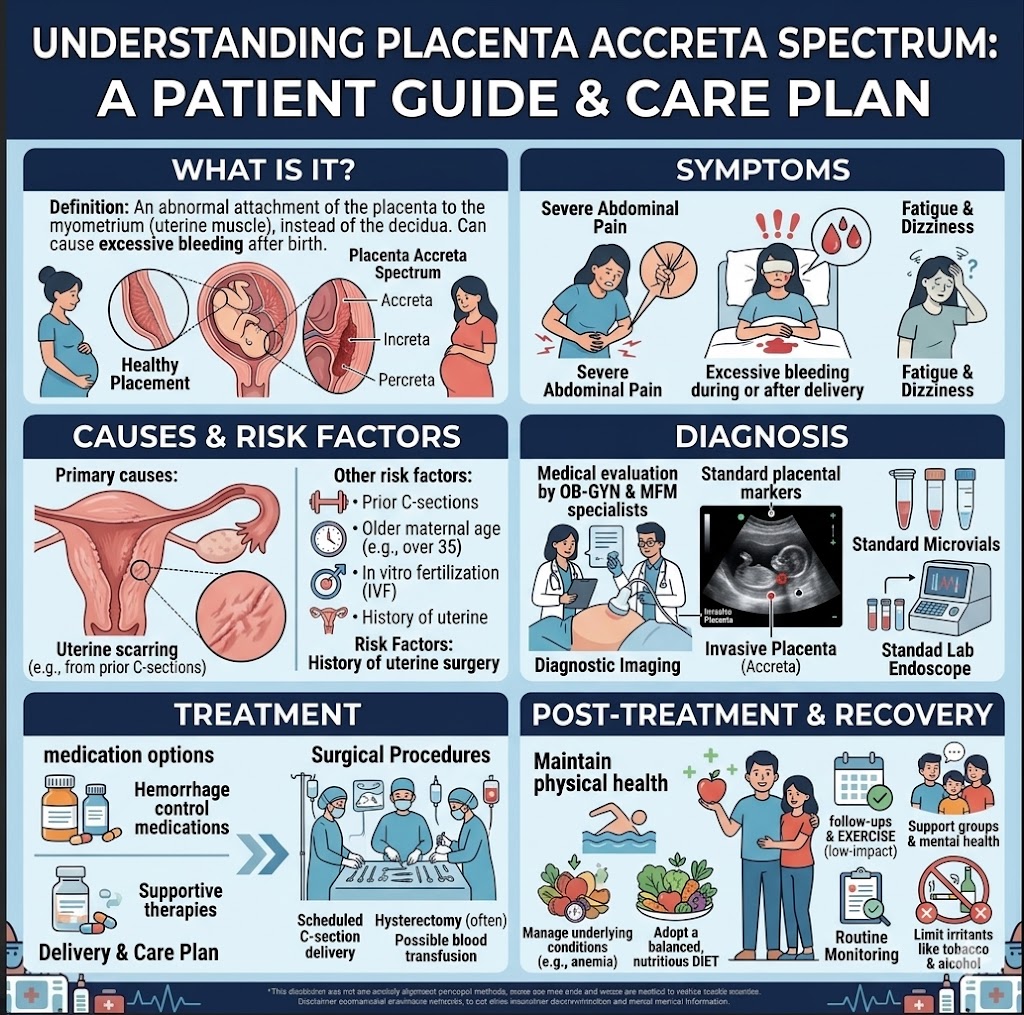
Placenta accreta is a serious pregnancy condition where the placenta grows too deeply into the wall of the uterus. Normally, the placenta detaches from the uterine wall shortly after childbirth. However, with placenta accreta, part or all of the placenta remains firmly attached, which can lead to severe and life-threatening blood loss after delivery. In more severe forms, the placenta can invade the muscles of the uterus (placenta increta) or even grow through the entire uterine wall (placenta percreta). This condition is considered a high-risk pregnancy complication and often requires an early C-section delivery followed by the surgical removal of the uterus (hysterectomy) to prevent dangerous bleeding.
Understanding the Condition
Understanding Placenta Accreta: A Guide for Expectant Parents
Understanding the Condition
Placenta accreta is a serious pregnancy condition where the placenta grows too deeply into the wall of the uterus. Normally, the placenta detaches from the uterine wall shortly after childbirth. However, with placenta accreta, part or all of the placenta remains firmly attached, which can lead to severe and life-threatening blood loss after delivery. In more severe forms, the placenta can invade the muscles of the uterus (placenta increta) or even grow through the entire uterine wall (placenta percreta). This condition is considered a high-risk pregnancy complication and often requires an early C-section delivery followed by the surgical removal of the uterus (hysterectomy) to prevent dangerous bleeding.
Common Symptoms
Often No Symptoms: Placenta accreta frequently does not cause any noticeable signs or symptoms during pregnancy.
Vaginal Bleeding in Third Trimester: In some cases, women with placenta accreta may experience vaginal bleeding during the last three months of pregnancy.
Consultation Guide
Which Specialist to Meet
An obstetrician-gynecologist, especially one specializing in high-risk pregnancies (a maternal-fetal medicine specialist), is the primary doctor to consult. They manage pregnancies with potential complications.
Preparations Before Your Visit
Before your visit, gather your full medical history, including details of any previous pregnancies, C-sections, or other uterine surgeries. List any symptoms you've experienced, even mild ones like spotting. Prepare a list of questions about your condition, treatment options, potential risks, and recovery.
Book a doctor visit near me
Consultation Guide
Amniocentesis is a procedure performed during pregnancy where a small amount of amniotic fluid, which surrounds and protects your baby, is taken from the uterus for testing. This fluid contains the baby's cells and chemicals that can provide information about your baby's health, particularly for genetic conditions, certain birth defects, or to assess fetal lung maturity. It's usually considered when there are specific concerns or risk factors.
Planned Cesarean Section (C-section) and Hysterectomy: For pregnancies complicated by placenta accreta, doctors often plan an early C-section delivery to carefully manage the baby's birth. Immediately following the C-section, a hysterectomy (surgical removal of the uterus) is usually performed because the placenta cannot safely detach from the uterine wall without causing severe, life-threatening bleeding. This combined surgical procedure is the most common and effective way to manage placenta accreta and prevent dangerous complications. The hysterectomy can be a partial one (removing the uterus and leaving the cervix) or a total one (removing both the uterus and cervix); sometimes, the ovaries and fallopian tubes may also be removed. (Duration: This is a one-time surgical procedure. Recovery typically involves several days in the hospital for monitoring and initial healing, followed by several weeks of recovery at home.)
Early Risk Assessment: If you have known risk factors such as previous C-sections, other uterine surgeries, or a placenta previa diagnosis, discuss these with your doctor early in pregnancy. This allows for closer monitoring and timely diagnosis of placenta accreta through specialized ultrasounds.
Careful Management of Prior Deliveries: While C-sections are sometimes medically necessary, if you have had a C-section and are planning future pregnancies, discuss the risks and benefits of vaginal birth versus C-section with your doctor, as multiple C-sections increase the risk of placenta accreta.
Regular Prenatal Care: Attending all scheduled prenatal appointments is crucial. Regular check-ups allow your doctor to monitor your pregnancy closely and detect any complications, including placenta accreta, as early as possible through routine screenings.
Diagnostic Procedures
An ultrasound is a common imaging test that uses sound waves to create pictures of your baby and reproductive organs. It is frequently used during pregnancy to monitor the baby's growth and position, and it can also help doctors see how the placenta is positioned and how deeply it might be growing into the uterine wall.
What to Expect
You'll lie on an examination table, and a gel will be applied to your abdomen. A small handheld device called a transducer will be moved across your belly. You might feel a slight pressure, but the procedure is generally painless. The images are displayed on a monitor, and the procedure typically takes about 20-30 minutes.
What to Expect
An ultrasound will first be performed to locate your baby and the placenta and to find a safe spot for the needle. Your abdomen will be cleaned with an antiseptic solution. Guided by the ultrasound images, a thin, hollow needle will be carefully inserted through your abdomen and uterine wall to collect a small fluid sample. You might feel a brief sting or pressure as the needle is inserted. The procedure typically takes about 10-15 minutes for the fluid collection, followed by a period of rest.
Treatment Options
Surgical Procedures
Long-Term Wellbeing After Treatment
Emotional Support: Experiencing a high-risk pregnancy, an emergency or complex delivery, and major surgery can be emotionally challenging. Seek support from family, friends, support groups, or a mental health professional to process your experience and feelings.
Family Planning Counseling: Understand that a hysterectomy means you can no longer become pregnant. If you had planned for more children, discuss family planning options such as adoption or surrogacy with your healthcare provider or a fertility specialist.
Ongoing Health Monitoring: Maintain regular check-ups with your primary care provider and gynecologist to monitor your overall health, address any long-term effects of surgery, and discuss hormone therapy if your ovaries were also removed during the hysterectomy.
Prevention & Long-Term Wellbeing
Prevention & Risk Management
Post-Surgical Recovery: Follow all post-operative instructions carefully, including activity restrictions, wound care, and pain management, to ensure proper healing after a C-section and hysterectomy. Attend all follow-up appointments with your surgeon.
Tags & Topics
Notice an error or need an update?
Help us keep medical information accurate. Report incorrect info or suggest an edit.


