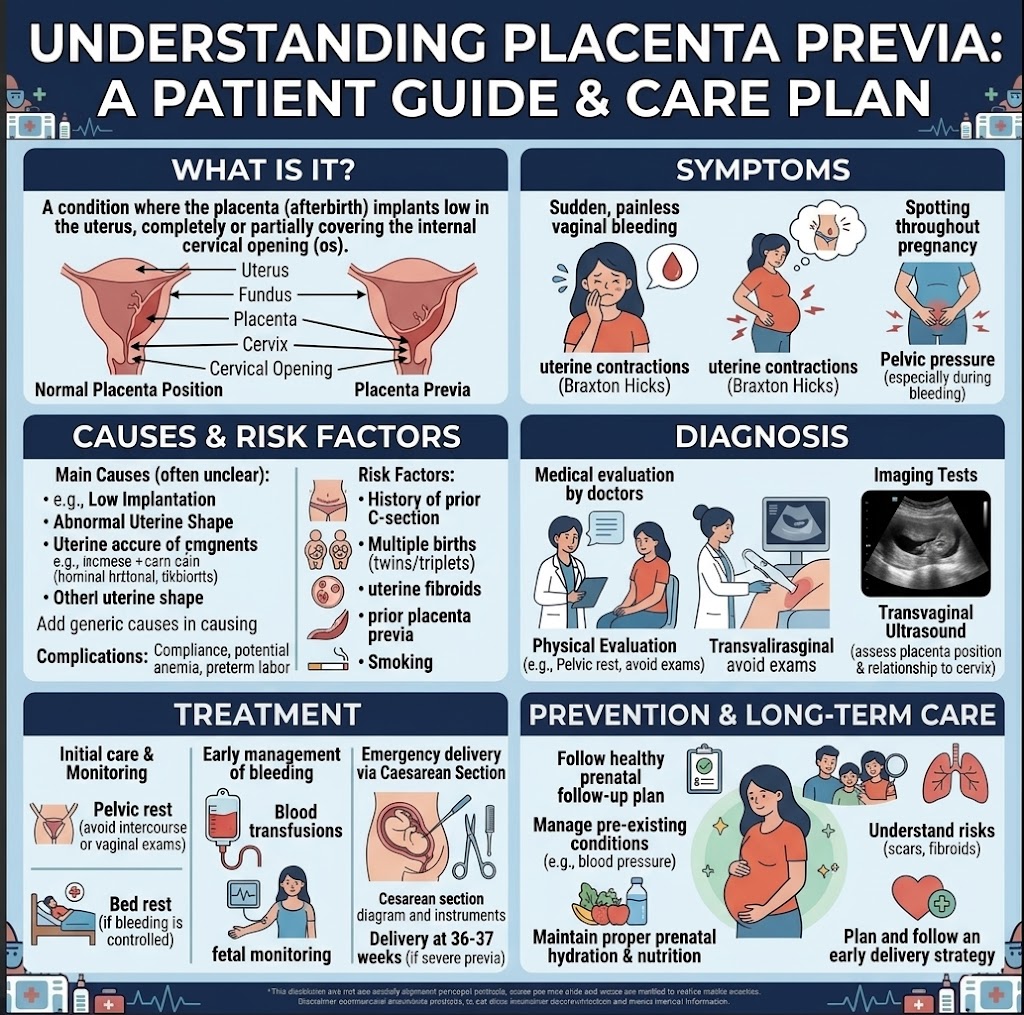
Placenta previa (pronounced pluh-SEN-tuh PREH-vee-uh) is a pregnancy condition where the organ that nourishes your baby (the placenta) attaches low in the uterus, partially or completely covering the opening to the birth canal (the cervix). Normally, the placenta attaches higher up, either at the top or side of the uterus. This incorrect placement of the placenta in placenta previa can lead to significant bleeding in the mother before, during, or after the baby's birth. The placenta plays a vital role by providing oxygen and nutrients to the baby and removing waste products through the umbilical cord.
Understanding the Condition
Placenta Previa: Understanding a Pregnancy Condition
Understanding the Condition
Placenta previa (pronounced pluh-SEN-tuh PREH-vee-uh) is a pregnancy condition where the organ that nourishes your baby (the placenta) attaches low in the uterus, partially or completely covering the opening to the birth canal (the cervix). Normally, the placenta attaches higher up, either at the top or side of the uterus. This incorrect placement of the placenta in placenta previa can lead to significant bleeding in the mother before, during, or after the baby's birth. The placenta plays a vital role by providing oxygen and nutrients to the baby and removing waste products through the umbilical cord.
Common Symptoms
Before your visit, be prepared to describe the exact details of any bleeding you've experienced, including its color, amount, how often it occurs, and if anything seems to trigger it. It's also helpful to note any other symptoms. Your doctor will need your complete medical history and a list of all current medications, including over-the-counter drugs and supplements. If the bleeding is severe, seek emergency medical care right away.
Book a doctor visit near me
Adherence to Medical Advice: Strictly follow all instructions from your healthcare team, including attending all scheduled appointments, undergoing recommended scans, and reporting any bleeding or concerning symptoms immediately. This proactive approach is key to managing the condition and ensuring the best possible outcome.
Emotional Support: Dealing with a high-risk pregnancy can be stressful. Seek emotional support from family, friends, support groups, or mental health professionals to help manage anxiety and stress during this time. Open communication with your medical team about your concerns is also very important.
Consultation Guide
Painless Vaginal Bleeding: The most common sign of placenta previa is bright red vaginal bleeding, which typically occurs without pain, after 20 weeks of pregnancy. This bleeding can vary from light spotting to a sudden, heavy gush of blood. Sometimes, the bleeding may be accompanied by mild uterine contractions that cause discomfort. Certain activities, such as sexual intercourse or a medical examination, can also trigger bleeding. For some individuals, bleeding may not start until labor begins, while for others, heavy bleeding can occur without any clear trigger.
Consultation Guide
Which Specialist to Meet
If you experience any vaginal bleeding during your second or third trimester of pregnancy, it is crucial to contact your healthcare provider immediately. You will likely need to consult with an obstetrician (a doctor specializing in pregnancy and childbirth) or a maternal-fetal medicine specialist (an obstetrician with extra training in high-risk pregnancies).
Preparations Before Your Visit
Cesarean Section (C-section): If placenta previa persists and the placenta continues to cover the cervix, a planned cesarean section (C-section) will be necessary for a safe delivery. This surgical procedure involves delivering the baby through incisions made in the mother's abdomen and uterus, avoiding passage through the birth canal which would cause severe bleeding. (Duration: One-time procedure for delivery, typically scheduled near term or earlier if complications arise)
Emergency Medical Care for Severe Bleeding: In cases of severe, uncontrolled bleeding, immediate hospitalization is required. This involves close monitoring, intravenous fluids to maintain hydration, potential blood transfusions, and, if the bleeding cannot be stopped or poses a threat to mother or baby, an emergency C-section, even if the baby is premature. (Duration: As long as necessary to stabilize the mother and baby)
Unknown Cause: The exact cause of placenta previa is currently unknown, meaning there are no direct preventative measures available to completely avoid this condition. However, identifying risk factors (like previous C-sections or multiple pregnancies) can help in early screening and management.
Long-Term Monitoring and Support
Post-Delivery Care and Future Planning: After delivery, discuss any long-term health implications, future pregnancy risks, and contraception options with your doctor. Understanding your individual risk factors can help in planning for future pregnancies, if applicable.
Diagnostic Procedures
Ultrasound Scan (Sonography)
An ultrasound uses safe, low-power sound waves to create live images of structures inside your body. It is the primary and most effective way doctors diagnose placenta previa, as it clearly shows the placenta's position in relation to the cervix. While powerful, ultrasound waves don't travel well through air or bone, so some areas of the body might be harder to visualize.
What to Expect
For most abdominal ultrasounds, a technician will apply a special gel to your lower abdomen and move a small handheld device (transducer) over the area. This device sends out sound waves and records the echoes to form images. You may be asked to have a full bladder for certain abdominal scans to improve image clarity. Sometimes, a transvaginal ultrasound might be performed, where a smaller, lubricated transducer is gently inserted into the vagina for a clearer, closer view of the cervix and placenta. This internal scan is often more accurate for diagnosing placenta previa. The procedure is generally painless and takes about 20-30 minutes. You should wear loose, comfortable clothing, and you may be asked to remove jewelry.
Prevention & Long-Term Wellbeing
Monitoring and Lifestyle Adjustments
Close Medical Monitoring: Your doctor will closely monitor your condition with regular check-ups and follow-up ultrasounds to assess the placenta's position. Sometimes, as the uterus grows, the placenta appears to 'move away' from the cervix (a phenomenon called placental migration), resolving the previa on its own. (Duration: Throughout pregnancy until delivery)
Activity Restrictions: To prevent bleeding, you may be advised to avoid strenuous activities, heavy lifting, sexual intercourse, and douching. Bed rest might be recommended in some cases. (Duration: Until placenta previa resolves or until delivery)
Blood Transfusion: If significant blood loss occurs, a blood transfusion may be necessary. This procedure involves receiving donated blood or specific blood components (like red blood cells) through a narrow tube placed into a vein to replace lost blood and maintain stable vital signs. (Duration: As needed during pregnancy or delivery)
Prevention
Tags & Topics
Notice an error or need an update?
Help us keep medical information accurate. Report incorrect info or suggest an edit.


