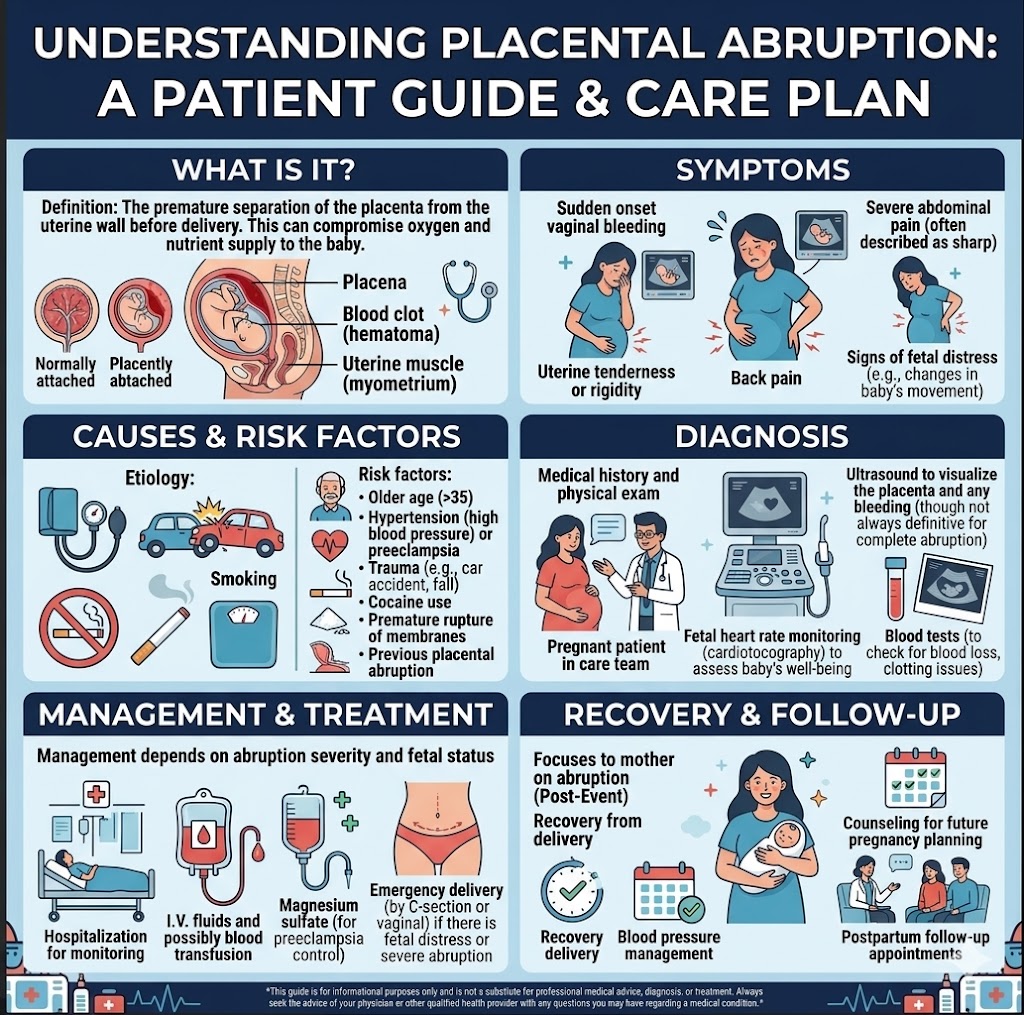
Placental abruption is a serious but uncommon condition during pregnancy where the placenta separates from the inner wall of the uterus too soon, before the baby is born. The placenta is an organ that develops during pregnancy to provide your baby with oxygen and nutrients. When it detaches, it can reduce or block the baby's supply of vital oxygen and nutrients, and can also cause heavy bleeding in the mother. This condition often occurs suddenly, typically in the last three months of pregnancy, and can pose risks to both mother and baby if not treated promptly.
Understanding the Condition
Placental Abruption: Understanding a Serious Pregnancy Complication
Understanding the Condition
Common Symptoms
Sudden Abdominal Pain: Severe and often sudden pain in the abdomen.
Sudden Back Pain: Acute pain experienced in the back, often accompanying abdominal pain.
Vaginal Bleeding: Bleeding from the vagina, which can range from light spotting to heavy flow. Importantly, the amount of visible bleeding doesn't always reflect the severity of the abruption, as blood can sometimes be trapped inside the uterus.
Uterine Tenderness or Rigidity: Your belly may feel firm, hard, or tender to the touch, indicating tension in the uterus.
Changes in Baby's Movement: Your baby might move less frequently or you might notice a sudden decrease in fetal activity.
Slow-Developing Symptoms: In some less common cases, the separation can happen slowly over time, leading to light, intermittent bleeding, slower baby growth, or lower-than-normal amniotic fluid levels.
Consultation Guide
Which Specialist to Meet
If you experience any signs or symptoms of placental abruption, you should seek emergency medical care immediately. You will typically be seen by an Obstetrician (OB/GYN), who specializes in pregnancy and childbirth. For complex or high-risk cases, a Maternal-Fetal Medicine specialist (a doctor specializing in high-risk pregnancies) may also be involved.
Preparations Before Your Visit
Since placental abruption is often an emergency, the immediate focus will be on your and your baby's health. Be prepared to provide your medical history, current symptoms, and any medications you are taking. Try to remain calm and follow the healthcare team's instructions.
Book a doctor visit near me
Consultation Guide
Placental abruption is a serious but uncommon condition during pregnancy where the placenta separates from the inner wall of the uterus too soon, before the baby is born. The placenta is an organ that develops during pregnancy to provide your baby with oxygen and nutrients. When it detaches, it can reduce or block the baby's supply of vital oxygen and nutrients, and can also cause heavy bleeding in the mother. This condition often occurs suddenly, typically in the last three months of pregnancy, and can pose risks to both mother and baby if not treated promptly.
Avoid Smoking and Illicit Drugs: Smoking and the use of certain drugs are known risk factors for placental abruption and many other pregnancy complications. Avoiding these substances is crucial for a healthy pregnancy.
Protect Against Abdominal Trauma: Take precautions to prevent falls and injuries to your abdomen. Always wear your seatbelt correctly while driving, avoid activities with a high risk of injury, and address any concerns about domestic violence promptly.
Post-Delivery Monitoring for Mother: After delivery, the mother will be closely monitored for continued bleeding, signs of infection, anemia, and other potential complications arising from the abruption.
Neonatal Monitoring for Baby: If the baby was born prematurely or experienced distress due to the abruption, they will receive specialized care and monitoring in the neonatal intensive care unit (NICU) as needed.
Future Pregnancy Counseling: If you have experienced placental abruption, discuss the risks of recurrence in future pregnancies with your doctor. They can help you understand these risks and develop a tailored management plan for subsequent pregnancies.
Diagnostic Procedures
Clinical Examination and Monitoring
Your doctor will perform a physical exam, check your vital signs (blood pressure, heart rate), and assess your abdomen for tenderness or rigidity. They will also monitor your baby's heart rate and activity to check for signs of distress.
What to Expect
You will have your blood pressure, pulse, and temperature checked. The doctor will gently feel your abdomen to check the size and firmness of your uterus. Continuous monitoring of your baby's heart rate will be done using a belt placed around your belly, allowing the healthcare team to observe the baby's well-being and response to contractions.
Blood tests are performed to assess your overall health, check for anemia (due to blood loss), and evaluate your blood's clotting ability. These tests help the medical team understand the extent of bleeding and prepare for potential blood transfusions.
What to Expect
A healthcare professional will draw a small sample of blood, usually from a vein in your arm. You might feel a brief sting or pinch. The procedure is quick, typically taking only a few minutes.
Ultrasound (Sonography)
Ultrasound uses sound waves to create images of the baby, placenta, and uterus. While it can sometimes show the area of placental separation, it may not always clearly detect the abruption, especially if the blood clot is small or thin. However, it's crucial for checking your baby's condition, growth, and the amount of amniotic fluid.
What to Expect
For an abdominal ultrasound, a clear gel is applied to your belly, and a handheld device (transducer) is moved across your skin. You might feel a cool sensation from the gel and gentle pressure from the transducer. In some cases, a small, lubricated transducer may be gently inserted into the vagina (transvaginal ultrasound) for a clearer view. You may be asked to have a full bladder for certain types of abdominal ultrasounds. The procedure is generally painless and takes 20 to 60 minutes.
Treatment Options
Medical Management and Monitoring
Close Hospital Observation: For mild cases of placental abruption where both mother and baby are stable and the pregnancy is not yet at term, close monitoring in the hospital is often initiated. This includes continuous assessment of the mother's vital signs and the baby's heart rate and movements. (Duration: Ongoing, potentially days to weeks, until the abruption resolves or delivery becomes necessary.)
Intravenous (IV) Fluids and Blood Products: If the mother has experienced significant blood loss, IV fluids are administered to restore fluid balance, and blood transfusions may be necessary to replace lost blood and prevent anemia. (Duration: Administered as needed throughout hospitalization, typically over several hours to days.)
Medications
Corticosteroids: If early delivery is anticipated and the baby is premature, medications to help speed up the development of the baby's lungs may be given to reduce the risk of respiratory problems after birth. (Duration: Usually given in one or two doses over 24-48 hours.)
Vaginal Delivery: If the placental abruption is mild, the mother and baby are stable, and the pregnancy is near term or labor has already begun, a vaginal delivery may be considered. The medical team will closely monitor both mother and baby during labor. (Duration: Labor can last several hours to over a day.)
Cesarean Section (C-section): A C-section is a surgical procedure where the baby is delivered through incisions made in the mother's abdomen and uterus. It is often the preferred and safest option for placental abruption if the abruption is severe, the mother or baby is unstable, or if there is significant fetal distress requiring immediate delivery. (Duration: The surgery typically takes 45-60 minutes, followed by a hospital stay of several days for recovery.)
Prevention & Long-Term Wellbeing
Prevention
Regular Prenatal Care: Attending all scheduled prenatal appointments allows your doctor to monitor your health and pregnancy, identify and manage potential risks, and provide timely guidance.
Manage Chronic Conditions: Work closely with your healthcare provider to effectively manage any existing health conditions, such as high blood pressure (hypertension) or diabetes, as these can increase the risk of placental abruption.
Tags & Topics
Notice an error or need an update?
Help us keep medical information accurate. Report incorrect info or suggest an edit.


