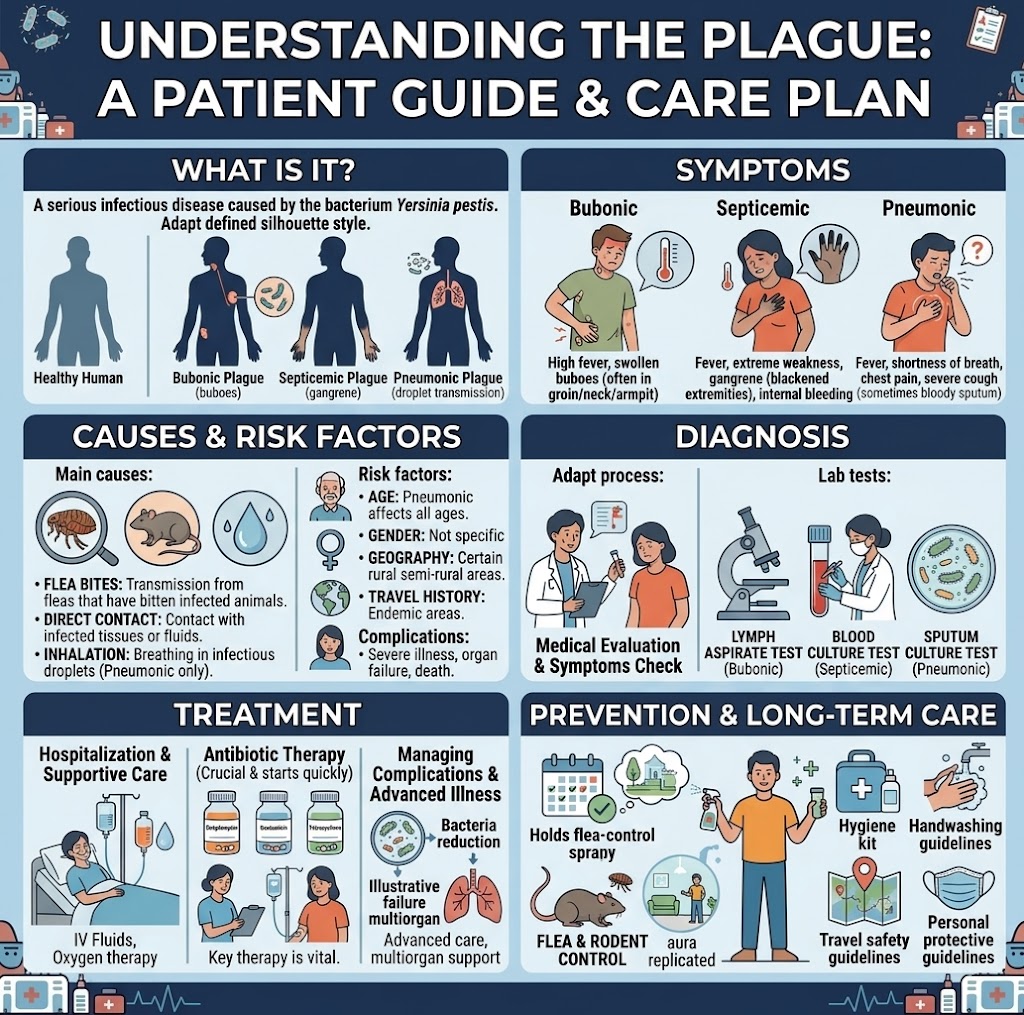
Plague is a rare but severe bacterial infection caused by the germ Yersinia pestis. This bacterium primarily circulates among small wild rodents and their fleas. Humans most commonly contract the disease through flea bites, direct contact with infected animal tissues, or by inhaling infectious respiratory droplets. Although plague is highly dangerous and historically devastating, it is highly treatable today with rapid, modern medical intervention.
Understanding the Condition
Understanding Plague: Types, Symptoms, Diagnostics, and Treatments
Understanding the Condition
Common Symptoms
Septicemic Plague: This occurs when the bacteria multiply directly in the bloodstream. Symptoms include extreme weakness, abdominal pain, fever, chills, and internal bleeding. It can cause blood clots that cut off circulation to the fingers, toes, and nose, leading to tissue death (gangrene) and blackening of the skin.
Pneumonic Plague: The most severe and contagious form, which infects the lungs. It causes rapidly progressing pneumonia with symptoms such as high fever, shortness of breath, chest pain, and a cough producing watery or bloody mucus. It can spread easily from person to person through airborne respiratory droplets.
Consultation Guide
Which Specialist to Meet
Before your visit, quickly write down your symptoms, their start times, any recent travel history (specifically rural western United States or international areas like Madagascar), and any contact you have had with wild rodents, outdoor pets, or dead animals.
Book a doctor visit near me
Intravenous Antibiotics: Strong prescription antibiotics administered directly into a vein to destroy the plague bacteria. Treatment must begin immediately upon suspicion of infection, often before laboratory results are finalized. (Duration: Typically administered for 10 to 14 days, depending on symptom severity.)
Post-Exposure Preventative Antibiotics: Oral preventative antibiotics prescribed to individuals who have had close contact with a pneumonic plague patient or who have been exposed to infected fleas. (Duration: Generally taken daily for 7 days following the last known exposure.)
Therapies and Supportive Care
Intravenous Fluid and Electrolyte Support: Continuous administration of fluids through an IV line to prevent dehydration, maintain blood pressure, and support organ function. (Duration: Typically given for the duration of the hospital stay, which ranges from 7 to 10 days.)
Supplemental Oxygen and Respiratory Support: Oxygen therapy delivered via a nasal tube or face mask. For severe pneumonic plague, mechanical ventilation may be used to help the patient breathe. (Duration: Used continuously until lung function recovers, which may take several days to weeks.)
Consultation Guide
Plague is a rare but severe bacterial infection caused by the germ Yersinia pestis. This bacterium primarily circulates among small wild rodents and their fleas. Humans most commonly contract the disease through flea bites, direct contact with infected animal tissues, or by inhaling infectious respiratory droplets. Although plague is highly dangerous and historically devastating, it is highly treatable today with rapid, modern medical intervention.
Bubonic Plague: The most common form, characterized by the sudden onset of fever, chills, headache, and body aches. It causes extremely painful, swollen, and tender lymph nodes called 'buboes,' typically in the groin, armpit, or neck. These swellings can range from the size of a marble to an egg.
You should seek immediate emergency medical care or consult an Infectious Disease Specialist if you suspect exposure. Because plague progresses rapidly, immediate evaluation at an emergency department is critical.
Preparations Before Your Visit
Surgical Debridement and Wound Care: The surgical removal of dead, blackened skin and tissue (gangrene) caused by septicemic plague to prevent secondary infections and promote wound healing. (Duration: Usually performed as a single or staged procedure once the patient is stable, followed by weeks of specialized wound care.)
Diagnostic Procedures
Lymph Node Aspirate (Fluid Culture)
A diagnostic procedure used to extract fluid from a swollen lymph node (bubo) to identify the presence of Yersinia pestis.
What to Expect
A healthcare provider will clean the skin over the swollen lymph node and insert a thin, sterile needle into the bubo. You will feel a brief pinch and pressure as a small amount of fluid is drawn into a syringe. The procedure takes only a few minutes, and the fluid is immediately sent to a laboratory for analysis.
A laboratory test to detect the plague bacteria circulating within your bloodstream, which is essential for diagnosing septicemic plague.
What to Expect
A nurse will tie an elastic band around your arm to locate a vein, sanitize the area, and insert a small needle to draw blood into sterile vials. You will feel a quick, sharp sting. The blood samples are placed in special laboratory conditions to monitor for bacterial growth over several days.
Sputum and Airway Fluid Culture
A test designed to collect mucus or fluid from your respiratory tract to diagnose pneumonic plague.
What to Expect
If you have a productive cough, you will be asked to cough deeply and spit the mucus (sputum) into a sterile collection cup. If you cannot cough up a sample, a healthcare provider may perform a gentle suctioning procedure or bronchoscopy, inserting a thin, flexible tube down your airway to collect fluid. Local numbing sprays are used during a bronchoscopy to minimize throat discomfort.
Treatment Options
Medications
Prevention & Long-Term Wellbeing
Prevention and Protection
Rodent-Proof Your Property: Eliminate potential rodent habitats around your home by removing brush piles, rock walls, firewood stacks, and cluttered debris. Keep pet food in secure, rodent-proof containers.
Apply Flea Control to Pets: Treat your cats and dogs regularly with veterinarian-approved flea-control products. Avoid letting outdoor pets sleep in your bed to prevent flea transfers.
Use Insect Repellent: Apply EPA-registered insect repellents containing DEET, picaridin, or oil of lemon eucalyptus to your skin and clothing when camping, hiking, or working outdoors in plague-endemic areas.
Wear Protective Gear with Wildlife: Always wear thick, non-porous gloves when handling wild animals, hunting, or skinning game to avoid direct skin contact with potentially infected tissues.
Tags & Topics
Notice an error or need an update?
Help us keep medical information accurate. Report incorrect info or suggest an edit.


