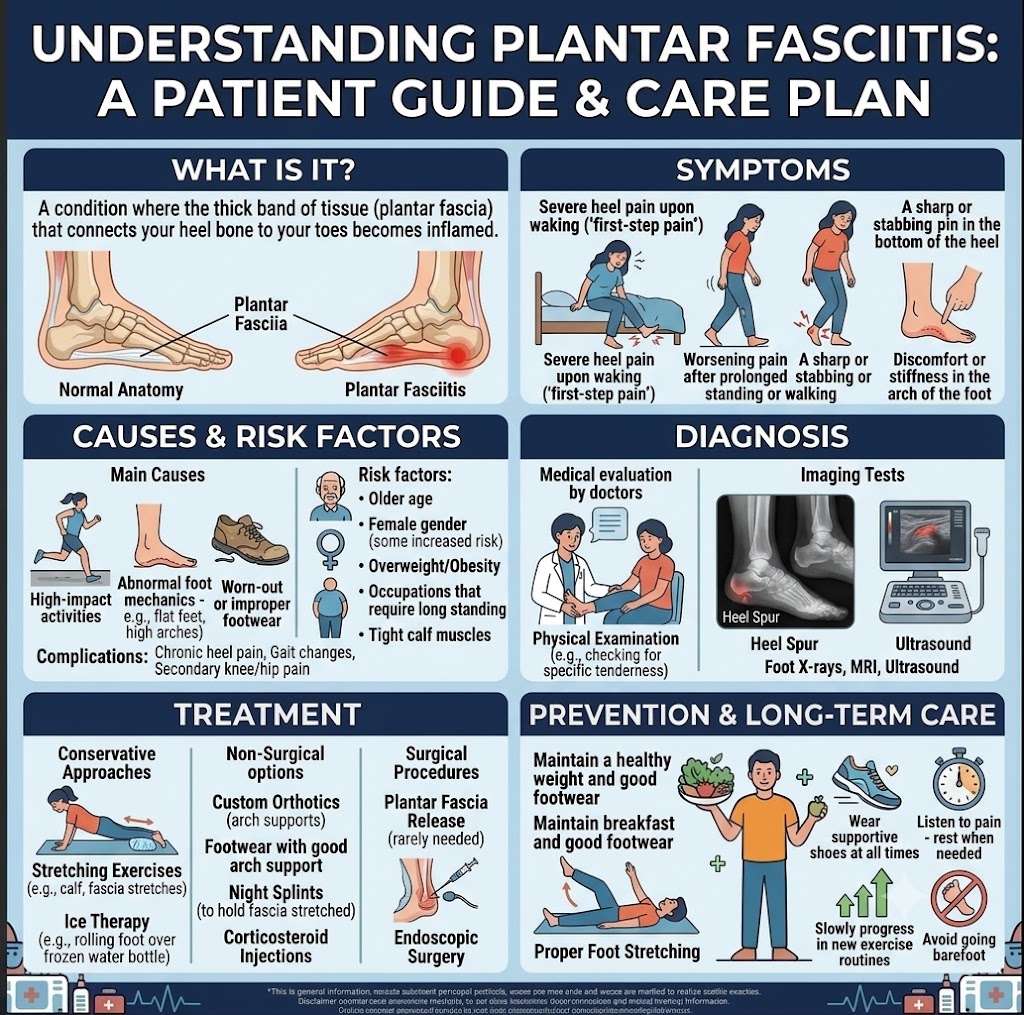
Plantar fasciitis is a common cause of heel pain, involving irritation and tiny tears in the plantar fascia – a thick band of tissue running along the bottom of your foot. This tissue connects your heel bone to your toes and helps support your foot's arch, acting as a shock absorber. The condition typically causes a sharp, stabbing pain, especially with the first steps after waking up or after periods of rest. While the exact cause isn't always clear, it often arises from repetitive stress and tension on the fascia. Ignoring the pain can lead to chronic discomfort and may cause you to alter your walk, potentially leading to issues in your foot, knee, hip, or back.
Understanding the Condition
Plantar Fasciitis: Understanding and Managing Heel Pain
Understanding the Condition
Common Symptoms
Heel Pain: Experience a sharp, stabbing pain on the bottom of your foot, close to the heel. This pain is typically most severe with your first few steps in the morning or after prolonged sitting. It might lessen as you move around but can return after long periods of standing.
Consultation Guide
Which Specialist to Meet
You can start by discussing your symptoms with your primary care physician. They may refer you to a specialist such as an orthopedist (a doctor specializing in bone and joint conditions), a podiatrist (a foot and ankle specialist), or a physical therapist.
Preparations Before Your Visit
Before your appointment, make a note of your symptoms, including when they started, what makes them worse or better, and any activities that trigger the pain. Be prepared to share your medical history, current medications, and any recent injuries. It's also helpful to bring the types of shoes you commonly wear.
Book a doctor visit near me
Consultation Guide
Plantar fasciitis is a common cause of heel pain, involving irritation and tiny tears in the plantar fascia – a thick band of tissue running along the bottom of your foot. This tissue connects your heel bone to your toes and helps support your foot's arch, acting as a shock absorber. The condition typically causes a sharp, stabbing pain, especially with the first steps after waking up or after periods of rest. While the exact cause isn't always clear, it often arises from repetitive stress and tension on the fascia. Ignoring the pain can lead to chronic discomfort and may cause you to alter your walk, potentially leading to issues in your foot, knee, hip, or back.
An X-ray is a quick and painless imaging test that creates pictures of the bones inside your body. While an X-ray cannot diagnose plantar fasciitis itself, it is often used to rule out other conditions that can cause similar heel pain, such as a stress fracture or arthritis, and to check for heel spurs (bone growths), which are sometimes present but usually not the cause of pain.
Diagnostic Procedures
Your doctor will carefully examine your foot, looking for tenderness along the bottom of your heel, particularly where the plantar fascia connects. They will also assess your foot's flexibility, strength, and arch structure, and observe how you stand and walk.
What to Expect
During the physical exam, you will likely be asked to sit or lie down while the doctor gently presses on different areas of your foot and heel. They may ask you to flex your foot or stand on your toes. This part of the examination is usually not painful, though some tender spots might be uncomfortable.
What to Expect
You will be asked to lie down, sit, or stand in specific positions on an X-ray table, and a technologist will help position your foot. You'll need to stay very still for a few moments as the X-ray machine takes images. The process is quick and completely painless. You may be asked to remove any metal objects or jewelry from the area being scanned.
Treatment Options
Home Remedies and Self-Care
Rest and Activity Modification: Reducing or avoiding activities that worsen your heel pain, especially high-impact exercises. Rest allows the inflamed tissue to heal. (Duration: Typically weeks to months, depending on severity.)
Ice Application: Applying an ice pack or rolling your foot over a frozen water bottle for about 15-20 minutes, several times a day, to reduce pain and swelling. (Duration: As needed, during painful flare-ups.)
Stretching Exercises: Regularly stretching your plantar fascia, Achilles tendon, and calf muscles can improve flexibility and reduce tension. Examples include wall stretches and towel stretches. (Duration: Daily, often for several months.)
Supportive Footwear and Orthotics: Wearing shoes with good arch support and cushioning, or using over-the-counter or custom-made shoe inserts (orthotics) to properly support your foot arch and reduce stress on the fascia. (Duration: Long-term, as part of daily routine.)
Medications
Pain Relievers: Over-the-counter options, such as anti-inflammatory pain relievers, can help reduce pain and inflammation. Stronger prescription medications may be considered in some cases. (Duration: Short-term relief, as directed by a doctor.)
Therapies
Physical Therapy: A physical therapist can guide you through specific exercises, stretches, and techniques to strengthen foot and calf muscles, improve flexibility, and correct walking patterns. (Duration: Typically 6-12 weeks or longer, with regular sessions and home exercises.)
Night Splints: Wearing a special splint while sleeping that holds your foot in a slightly flexed position, keeping the plantar fascia and Achilles tendon stretched overnight to reduce morning pain. (Duration: Usually worn nightly for several weeks to months.)
Injections: In some cases, a doctor may inject a substance, such as a corticosteroid, directly into the damaged area to reduce inflammation and pain. Other types of injections, like those using natural healing factors from your own blood, may also be considered. (Duration: Temporary relief, typically lasts weeks to months. Injections are generally limited due to potential side effects.)
Extracorporeal Shockwave Therapy (ESWT): This non-invasive procedure uses high-energy sound waves directed at the heel to stimulate healing in the plantar fascia. (Duration: Typically 3-5 sessions, over several weeks.)
Surgical Procedures
Plantar Fascia Release Surgery: In rare cases, when conservative treatments have failed after 6-12 months, surgery may be considered to partially detach the plantar fascia from the heel bone to relieve tension. This is usually a last resort. (Duration: A single procedure, followed by a recovery period of several weeks to months for full healing.)
Prevention & Long-Term Wellbeing
Prevention and Long-Term Wellbeing
Maintain a Healthy Weight: Excess body weight places significant additional stress on your plantar fascia. Losing weight can greatly reduce this strain and prevent recurrence.
Choose Supportive Footwear: Always wear shoes with good arch support, adequate cushioning, and a slightly elevated heel. Avoid walking barefoot on hard surfaces or wearing worn-out shoes, especially during physical activities.
Practice Regular Stretching and Strengthening: Incorporate daily stretches for your calves, Achilles tendon, and plantar fascia. Strengthening exercises for your foot and ankle muscles also contribute to better foot mechanics and resilience.
Gradually Increase Activity Levels: If you're a runner or engage in activities that stress your feet, gradually increase your intensity and duration. Avoid sudden increases in training mileage or vigorous activity.
Listen to Your Body: Pay attention to early signs of foot discomfort. Addressing pain promptly can prevent the condition from worsening and becoming chronic.
Tags & Topics
Notice an error or need an update?
Help us keep medical information accurate. Report incorrect info or suggest an edit.


