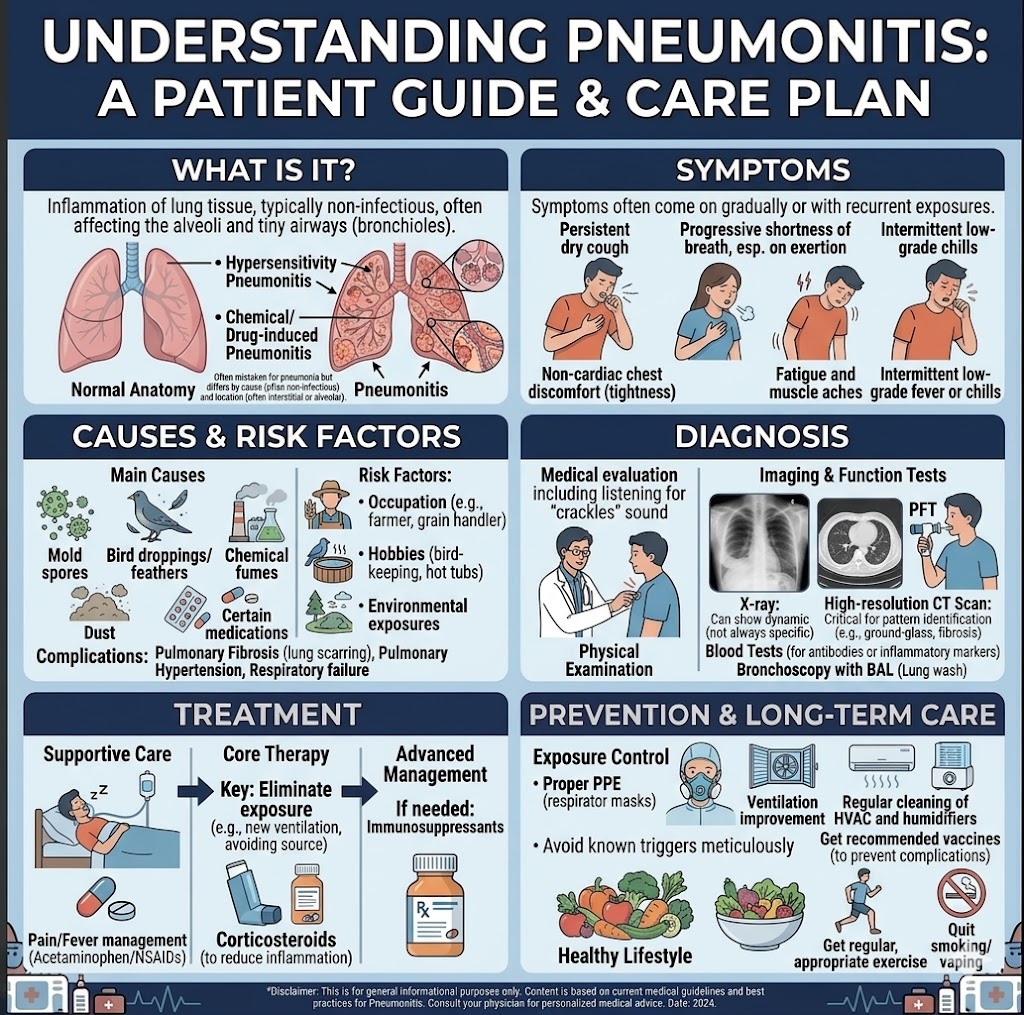
Pneumonitis (noo-moe-NIE-tis) is inflammation of lung tissue not caused by infection. It's an overreaction of your immune system to irritants like airborne particles from work, home, hobbies, certain cancer treatments, or medicines. Key symptoms include trouble breathing and a dry cough. Treatment focuses on avoiding irritants and reducing lung inflammation.
Understanding the Condition
Pneumonitis: Understanding Lung Inflammation
Understanding the Condition
Pneumonitis (noo-moe-NIE-tis) is inflammation of lung tissue not caused by infection. It's an overreaction of your immune system to irritants like airborne particles from work, home, hobbies, certain cancer treatments, or medicines. Key symptoms include trouble breathing and a dry cough. Treatment focuses on avoiding irritants and reducing lung inflammation.
Common Symptoms
Trouble Breathing: Difficulty catching your breath or feeling short of breath.
Dry Cough: A cough that usually does not bring up any mucus or phlegm.
Extreme Tiredness (Fatigue): Persistent and overwhelming feelings of exhaustion.
Loss of Appetite: Reduced desire to eat, leading to decreased food intake.
Joint and Muscle Pain: Aches and discomfort in various joints and muscles throughout the body.
Weight Loss: Unexplained decrease in body weight over time.
Consultation Guide
Which Specialist to Meet
Prepare a detailed list of your symptoms, medical history, all medications you're taking, and any potential irritant exposures at home, work, or hobbies. Also, write down any questions you have for your doctor.
Book a doctor visit near me
Regular Medical Follow-ups: Schedule consistent appointments with your lung specialist to monitor your lung function, assess symptom changes, and adjust your treatment plan as needed.
Diagnostic Procedures
Start by consulting your primary care doctor; they may refer you to a lung specialist (pulmonologist) for expert diagnosis and treatment.
Preparations Before Your Visit
This common imaging test uses a small amount of radiation to create pictures of your heart, lungs, blood vessels, airways, and the bones of your chest and spine. It can reveal issues like fluid in or around your lungs, a collapsed lung, or unusual masses.
What to Expect
You will typically stand or sit in front of an X-ray plate. You might be asked to hold your breath briefly while the image is taken. The procedure is quick, generally painless, and usually takes only a few minutes.
CT Scan (Computed Tomography Scan)
A CT scan uses specialized X-ray equipment and computer processing to create detailed cross-sectional images, or 'slices,' of your bones, blood vessels, and soft tissues inside the body. These images provide more detail than a standard X-ray and are used to diagnose disease or injury and to help plan treatments.
What to Expect
You will lie on a motorized table that slides into a large, doughnut-shaped machine. You'll need to lie still during the scan, which may involve some clicking or whirring noises. In some cases, a contrast dye may be given through an injection to make certain structures more visible. The scan usually takes 15-30 minutes.
Spirometry is a simple lung function test that measures how much air you can breathe in and out, and how quickly you can empty your lungs. It helps doctors diagnose conditions like asthma and chronic obstructive pulmonary disease (COPD), and monitor the effectiveness of treatments for chronic lung conditions.
What to Expect
You will be asked to sit and breathe forcefully into a mouthpiece connected to a machine called a spirometer. This is repeated a few times. The test requires some physical effort, and you might feel briefly short of breath or dizzy afterward. Your doctor may advise avoiding certain inhaled medications before the test.
This procedure allows a lung specialist (pulmonologist) to look directly inside your lungs' airways. A thin, flexible tube with a camera and light (bronchoscope) is inserted through your nose or mouth, down your throat, and into your lungs. It can be used to visually inspect the airways, take samples of mucus or tissue (biopsy), or remove foreign objects.
What to Expect
Treatment Options
You will typically receive medication to help you relax (sedation) and a local anesthetic to numb your throat and airways. The doctor will gently guide the bronchoscope into your lungs. You may feel some pressure or coughing during the procedure. It usually takes 30-60 minutes, and you will be monitored afterward until the effects of sedation wear off.
Medications
Anti-inflammatory Medications: These medicines, often corticosteroids, are prescribed to quickly reduce the swelling and irritation in your lung tissue. (Duration: Typically short-term for acute cases, but may be used for longer periods, sometimes tapering off slowly, for persistent or severe inflammation.)
Immune-Suppressing Medications: If initial anti-inflammatory treatments are insufficient or for long-term management of chronic pneumonitis, medications that calm the immune system's overreaction may be prescribed. (Duration: Often long-term, requiring careful monitoring by a specialist.)
Therapies
Oxygen Therapy: If you experience significant trouble breathing and your oxygen levels are low, supplemental oxygen may be provided to help you breathe more comfortably and ensure adequate oxygen supply to your body. (Duration: Can be short-term during acute flare-ups or long-term for chronic breathing difficulties.)
Pulmonary Rehabilitation: This is a supervised program that includes exercise training, education about lung disease, and breathing techniques to improve lung function, stamina, and overall quality of life. (Duration: Programs typically last several weeks to a few months, with ongoing home exercises recommended.)
Adherence to Treatment: Strictly follow your prescribed medication regimen and other therapeutic recommendations to control inflammation and prevent lung damage.
Quit Smoking: If you smoke, quitting is one of the most important steps you can take for your lung health, as smoking can worsen lung inflammation and increase the risk of complications.
Prevention & Long-Term Wellbeing
Lifestyle and Environmental Management
Avoiding Irritants: The most crucial step is to identify and completely avoid the substance causing the inflammation. This might involve changes at home, work, or in hobbies. Examples of irritants include molds (from damp hay, humidifiers, hot tubs, water-damaged areas), bird feathers, dust, droppings (from birds or other animals), certain chemicals (aerosolized mists, pesticides), and hardwood dust. (Duration: Ongoing)
Improving Air Quality: Use high-efficiency particulate air (HEPA) filters in your home or workplace, and ensure humidifiers and air conditioners are regularly cleaned to prevent mold growth. (Duration: Ongoing)
Prevention
Identify and Eliminate Triggers: Work closely with your doctor to pinpoint the specific irritants causing your pneumonitis. Once identified, diligently avoid these substances in all aspects of your life – at home, work, and during leisure activities. This might involve environmental modifications or job changes.
Use Protective Equipment: If complete avoidance of an airborne irritant isn't possible (e.g., in certain occupations), wear appropriate respiratory protection, such as specialized masks, to filter out harmful particles.
Maintain Clean Environments: Regularly clean and maintain devices like home humidifiers, hot tubs, and air conditioning units to prevent mold and bacterial growth. Address any water damage in your home promptly.
Long-Term Monitoring & Management
Healthy Lifestyle: Maintain a balanced diet, engage in regular physical activity (as advised by your doctor), and ensure adequate rest to support your immune system and overall health.
Vaccinations: Stay up-to-date with recommended vaccinations, especially the flu and pneumonia shots, to protect your lungs from infections that could complicate pneumonitis.
Understand Complications: Be aware that untreated or chronic pneumonitis can lead to irreversible lung scarring (pulmonary fibrosis), which can severely impact breathing and overall health. Early detection and consistent management are key to preventing this.
Tags & Topics
Notice an error or need an update?
Help us keep medical information accurate. Report incorrect info or suggest an edit.


