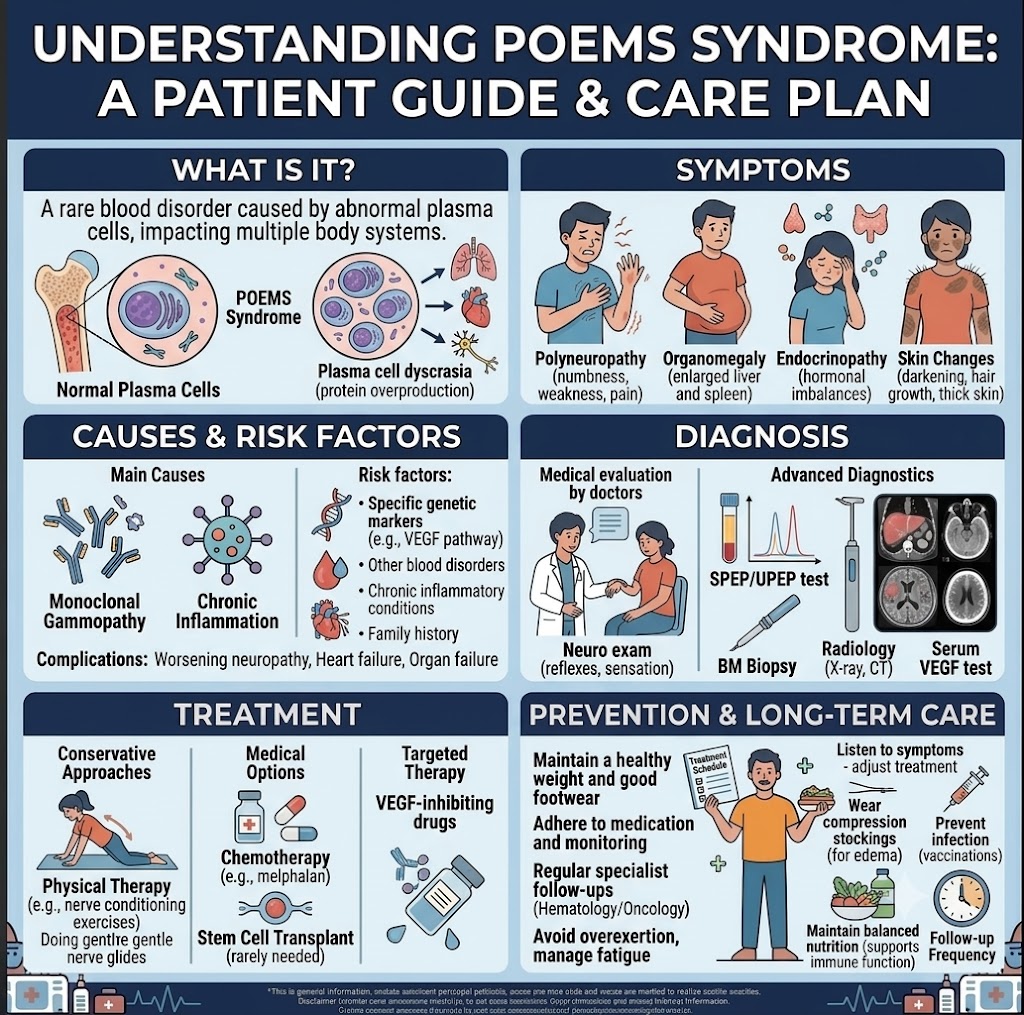
POEMS syndrome is a rare condition originating in the blood, where abnormal cells produce a harmful protein. This protein causes damage to nerves and affects various body parts, including organs, hormones, and skin. Left untreated, the syndrome can worsen rapidly and become life-threatening. Early diagnosis is crucial. While there is no cure, available treatments can significantly improve symptoms and have led to a much better outlook for individuals with the condition.
Understanding the Condition
POEMS Syndrome: A Rare Blood Disorder Affecting Nerves and Organs
Understanding the Condition
POEMS syndrome is a rare condition originating in the blood, where abnormal cells produce a harmful protein. This protein causes damage to nerves and affects various body parts, including organs, hormones, and skin. Left untreated, the syndrome can worsen rapidly and become life-threatening. Early diagnosis is crucial. While there is no cure, available treatments can significantly improve symptoms and have led to a much better outlook for individuals with the condition.
Common Symptoms
Polyneuropathy (Nerve Damage): This is a key symptom, causing numbness, tingling, and weakness, typically starting in the legs and sometimes spreading to the hands. It can also lead to difficulty breathing due to nerve involvement. Its presence is essential for a POEMS diagnosis.
Organomegaly (Enlarged Organs): This refers to the enlargement of organs like the spleen, liver, or lymph nodes.
Endocrinopathy and Edema (Hormone Imbalances and Swelling): Unusual hormone levels can lead to conditions such as an underactive thyroid, diabetes, sexual difficulties, persistent tiredness, and swelling in the arms and legs due to fluid buildup.
Before your visit, gather information about your medical history, including any previous diagnoses, surgeries, and family medical history. Make a detailed list of all your symptoms, noting when they started and how often they occur. Bring a list of all medications, supplements, and vitamins you are currently taking. Prepare a list of questions for your doctor to ensure all your concerns are addressed.
Book a doctor visit near me
The doctor will perform various checks, including testing your reflexes, muscle strength, sensation, balance, coordination, and mental status (such as memory and problem-solving). This is a non-invasive exam that can take a few minutes to an hour or more, depending on your symptoms.
PET Scan (Positron Emission Tomography Scan)
Long-Term Monitoring and Symptom Management
Symptom Management Therapies: Work with physical and occupational therapists to manage nerve damage (polyneuropathy), improve strength, balance, and maintain daily function. Pain management strategies will be important for comfort.
Consultation Guide
You will lie on a narrow table that slides into a large, doughnut-shaped machine. You might be asked to hold your breath briefly at certain times. For some scans, a contrast dye may be injected into a vein to highlight specific areas, which might cause a warm sensation or metallic taste.
Electromyography (EMG) and Nerve Conduction Study
These procedures assess the health of your muscles and the nerves that control them. EMG measures the electrical activity of muscles, while nerve conduction studies measure the speed and strength of signals traveling along nerves.
During an EMG, tiny needle electrodes are inserted directly into your muscles to record their electrical activity. This may cause some mild discomfort. For a nerve conduction study, small electrode stickers are placed on your skin over nerves, and mild electrical pulses are used to stimulate the nerves, causing a brief tingling sensation.
Neurological Examination
Diagnostic Procedures
Monoclonal Protein (Abnormal Blood Protein): This is an abnormal protein made by unusual plasma cells found in the bone marrow, which then enters the bloodstream. Its presence is also essential for diagnosing POEMS syndrome. This protein is often associated with bones becoming harder or thicker.
Skin Changes: These can include darker patches of skin, red spots (which might be less visible on darker skin tones), thickened skin, and increased hair growth on the face or legs.
Papilledema (Eye Swelling): Swelling behind the eyes, which can sometimes affect vision.
Extravascular Volume Overload (Fluid Buildup): This involves fluid accumulation outside of blood vessels, such as swelling in the ankles, fluid between the lungs and ribs, or fluid in the abdomen.
Sclerotic Bone Lesions (Bone Spots): These are areas of thickened bone that can be seen on X-rays. They are usually not painful.
Thrombocytosis and Erythrocytosis (High Blood Cell Counts): Higher-than-normal levels of red blood cells and platelets in the bloodstream.
Consultation Guide
Which Specialist to Meet
To manage POEMS syndrome, you might need to see several specialists, including a hematologist (a doctor specializing in blood disorders), a neurologist (for nerve-related issues), and an endocrinologist (for hormone imbalances). A team approach is often beneficial.
Preparations Before Your Visit
Complete Blood Count (CBC)
A common blood test that measures various components of your blood, including red blood cells, white blood cells, and platelets. It helps evaluate overall health and can indicate conditions like anemia or infection.
What to Expect
A healthcare professional will draw a small sample of blood, usually from a vein in your arm. The process is quick and generally involves a brief prick as the needle is inserted.
CT Scan (Computed Tomography Scan)
An imaging test that uses X-rays and computer processing to create detailed cross-sectional pictures, or 'slices,' of bones, blood vessels, and soft tissues inside the body. It provides more detail than standard X-rays.
What to Expect
What to Expect
A series of tests performed by a doctor to assess the function of your brain, spinal cord, nerves, and muscles. It helps identify issues within your nervous system.
What to Expect
An imaging test that helps reveal the metabolic or biochemical activity of tissues and organs. It uses a small amount of a radioactive tracer to detect areas of unusual activity, often combined with a CT scan (PET-CT) for better visualization.
What to Expect
A radioactive tracer will be injected, usually into a vein in your arm or hand. You'll wait about an hour for the tracer to circulate. Then, you'll lie on a narrow table that slides into a large scanner, similar to a CT machine. You must remain very still during the scan, which typically lasts about 30 minutes.
Regular Medical Follow-ups: Consistent visits with your medical team are crucial to monitor your condition, track treatment effectiveness, manage side effects, and adjust therapy as needed. This includes periodic blood tests and imaging.
Treatment Options
Medical Procedures and Therapies
Radiation Therapy: This treatment uses high-energy beams, typically X-rays, to target and destroy abnormal cells. It is often used to treat specific areas where abnormal cells are concentrated, such as bone lesions. (Duration: Duration varies, often involving daily sessions over several weeks for localized treatment.)
Chemotherapy: Chemotherapy involves medications designed to kill fast-growing cells, including the abnormal cells responsible for POEMS syndrome. These drugs can be given intravenously (into a vein) or orally. (Duration: Treatment typically involves cycles over several months, depending on the specific regimen and how the patient responds.)
Nutrition and Hydration: Maintain a balanced diet rich in nutrients to support overall health and recovery. Adequate hydration is also important, especially during and after treatments.
Gentle Exercise: Engage in light physical activity, as tolerated and approved by your doctor, to maintain muscle strength, improve circulation, and boost mood. This could include walking, stretching, or aquatic exercises.
Emotional and Psychological Support: Coping with a rare, complex condition can be challenging. Seek support from family, friends, support groups, or mental health professionals to manage stress, anxiety, and depression.
Hormone Management: Closely monitor and manage any hormone imbalances, such as thyroid issues or diabetes, with appropriate medications and lifestyle adjustments as directed by an endocrinologist.
Prevention & Long-Term Wellbeing
Stem Cell Transplant (Bone Marrow Transplant): This procedure replaces diseased or malfunctioning bone marrow with healthy blood-forming stem cells. The new stem cells then grow and produce healthy blood cells. It can be done using your own cells (autologous) or cells from a donor (allogeneic). (Duration: The process involves an intensive preparation phase (chemotherapy, lasting days to weeks), followed by the stem cell infusion (a single procedure), and then a recovery period lasting weeks to several months.)
Tags & Topics
Notice an error or need an update?
Help us keep medical information accurate. Report incorrect info or suggest an edit.


