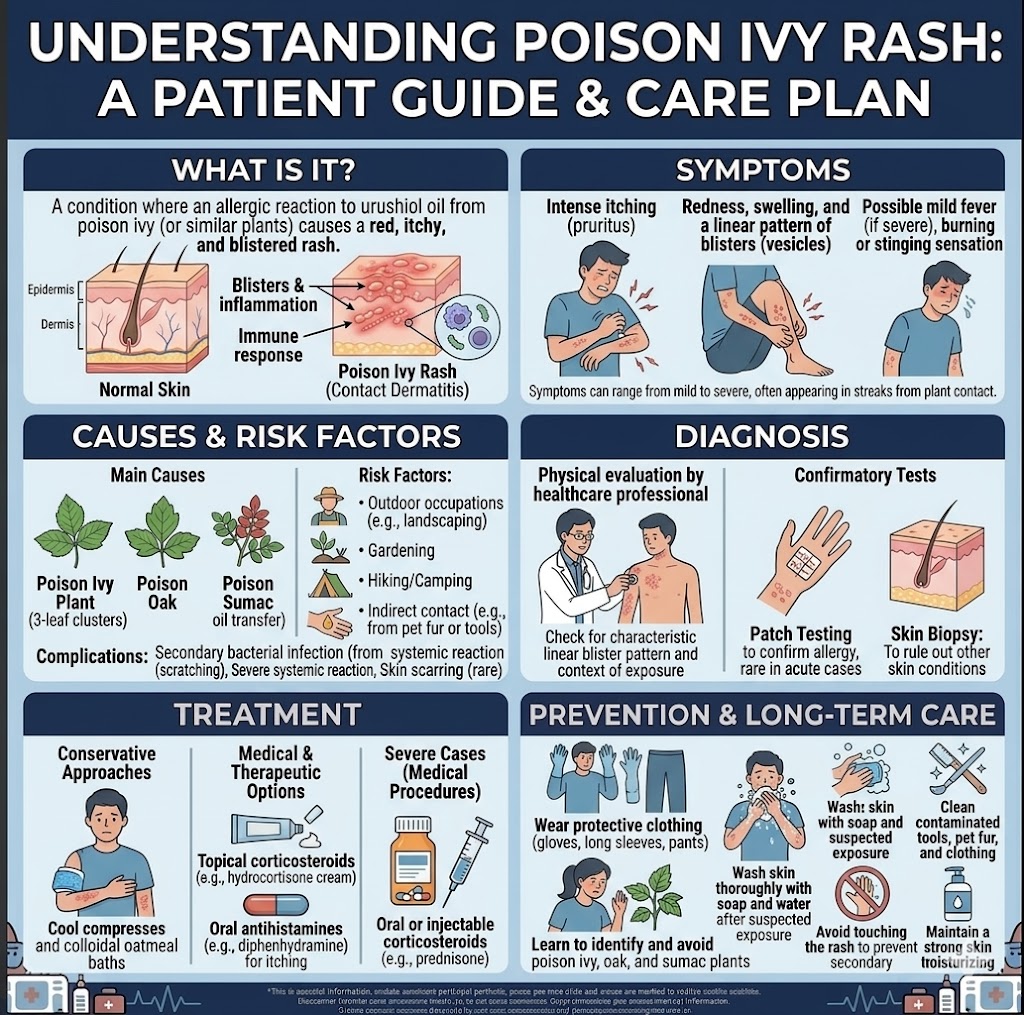
Poison ivy rash is an allergic reaction caused by contact with an oily substance called urushiol (pronounced u-ROO-she-ol). This oil is found in the leaves, stems, and roots of poison ivy, poison oak, and poison sumac plants. If you come into contact with it, washing your skin promptly can significantly reduce the chance or severity of a rash. If a rash develops, it can be very itchy and last for several weeks. Mild cases can often be managed with home remedies, but severe or widespread rashes, especially on sensitive areas, may require prescription medication.
Understanding the Condition
Common Symptoms
Redness and Swelling: The affected skin area typically becomes red and swollen, indicating an inflammatory response.
Intense Itching: A hallmark symptom, the rash can cause severe and persistent itching.
Bumps and Blisters: Small, raised bumps or fluid-filled blisters often appear. These blisters may sometimes ooze clear fluid.
Burning or Stinging Sensation: Some individuals may experience a sensation of burning or stinging on the affected skin.
Rash Pattern and Timing: The rash often appears in straight lines or streaks where the plant brushed against the skin. However, if the oil is transferred by hands or contaminated objects, the rash may be more widespread or in irregular patches. The reaction usually develops 12 to 48 hours after exposure and typically lasts for two to three weeks. The severity depends on how much oil touched the skin.
Difficulty Breathing (Emergency): If you inhale smoke from burning poison ivy, poison oak, or poison sumac, the urushiol can irritate your airways, leading to difficulty breathing. This requires immediate emergency medical attention.
When to Seek Urgent Care: Seek emergency medical attention if the rash is severe or widespread, your skin continues to swell significantly, the rash affects your eyes, mouth, or genitals, blisters are oozing pus (indicating potential infection), you develop a fever greater than 100°F (37.8°C), or the rash does not improve within a few weeks.
Consultation Guide
Which Specialist to Meet
Before your appointment, be prepared to describe when and where you believe you were exposed to the plant. Detail the onset, progression, location, and severity of your symptoms (e.g., how itchy, painful, or widespread the rash is). Inform your doctor about any home remedies or over-the-counter treatments you have already tried, and list any known allergies you have.
Book a doctor visit near me
Cool Baths: Taking cool baths with colloidal oatmeal or baking soda can help soothe the intense itching and discomfort caused by the rash. (Duration: As needed for symptom relief, typically until the rash begins to heal.)
Cool Compresses: Applying a cool, wet cloth or compress to the affected skin areas can help reduce itching and swelling. (Duration: Apply for 15-30 minutes, several times a day.)
Soothing Lotions and Creams: Over-the-counter creams containing hydrocortisone can help reduce inflammation and itching. Calamine lotion or zinc acetate cream can help dry out oozing blisters. (Duration: Apply as directed on the product, typically several times a day for the duration of the rash.)
Consultation Guide
Poison ivy rash is an allergic reaction caused by contact with an oily substance called urushiol (pronounced u-ROO-she-ol). This oil is found in the leaves, stems, and roots of poison ivy, poison oak, and poison sumac plants. If you come into contact with it, washing your skin promptly can significantly reduce the chance or severity of a rash. If a rash develops, it can be very itchy and last for several weeks. Mild cases can often be managed with home remedies, but severe or widespread rashes, especially on sensitive areas, may require prescription medication.
Remove Plants Safely: If these plants are in your yard or garden, remove them carefully. Use herbicides or pull them out by the roots while wearing heavy gloves. Never burn these plants, as the urushiol oil can be carried by the smoke and cause severe respiratory issues.
Wash Skin Promptly: If you suspect contact with the plant oil, wash your skin gently with soap and water within 30 minutes. Scrub under your fingernails. Even washing an hour or so later can still help reduce the severity of a potential rash.
Clean Contaminated Objects: Promptly wash any clothing, outdoor gear, garden tools, jewelry, shoes, and pet fur that may have come into contact with the plant oil in warm, soapy water. Urushiol can remain potent on contaminated objects for years, causing a rash much later.
Apply Barrier Creams: Consider using over-the-counter skin products designed to create a protective barrier between your skin and the urushiol oil before potential exposure.
Diagnostic Procedures
Clinical Diagnosis and Medical History
Diagnosis of poison ivy rash is primarily made by a healthcare provider through a physical examination of the skin and a detailed discussion of your recent activities and potential exposure to the plants.
What to Expect
During your visit, the doctor will visually inspect the rash, noting its appearance, pattern, and location on your body. They will ask you about when the rash started, how it has progressed, the intensity of any itching or pain, and if you've been in areas where poison ivy, oak, or sumac are known to grow. They will also inquire about any direct contact with these plants, handling contaminated objects, or if you were near burning plants. No specific laboratory tests or imaging procedures are typically needed to confirm a diagnosis of poison ivy rash.
Treatment Options
Poison Ivy Rash: Understanding, Treatment, and Prevention
Understanding the Condition
For initial assessment and treatment of a poison ivy rash, you should typically see your general practitioner or family doctor. If the rash is severe, widespread, or persistent, a dermatologist (a skin specialist) may be recommended. In cases of difficulty breathing due to smoke inhalation from burning plants, an emergency physician or pulmonologist (lung specialist) should be consulted immediately.
Preparations Before Your Visit
Prescription Medications
Oral Corticosteroids: For severe or widespread rashes, or those affecting sensitive areas like the face or genitals, your doctor may prescribe oral medications to powerfully reduce inflammation and allergic reaction. (Duration: Typically a short course, often tapering off gradually over 1 to 2 weeks to prevent recurrence.)
Oral Antihistamines: While topical antihistamines are generally avoided, oral antihistamines can help manage severe itching, especially at night to aid sleep. (Duration: As needed for itching, usually for the duration of the rash.)
Antibiotics: If the skin becomes infected from excessive scratching, leading to pus-filled blisters or other signs of bacterial infection, your doctor may prescribe antibiotics. (Duration: As prescribed, typically a course of 7-10 days to clear the bacterial infection.)
Prevention & Long-Term Wellbeing
Prevention and Long-Term Strategies
Identify and Avoid Plants: Learn to recognize poison ivy, poison oak, and poison sumac in all seasons. They often have groups of three leaves ('leaves of three, let it be'). When outdoors, stay on cleared pathways and ensure camping areas are free of these plants.
Wear Protective Clothing: When engaging in outdoor activities that might expose you to these plants, cover your skin with long-sleeved shirts, long pants, socks, boots, and heavy gloves.
Manage Pets: Prevent pets from running through wooded or overgrown areas, as the plant oil can stick to their fur and easily transfer to you when you pet them.
Tags & Topics
Notice an error or need an update?
Help us keep medical information accurate. Report incorrect info or suggest an edit.


