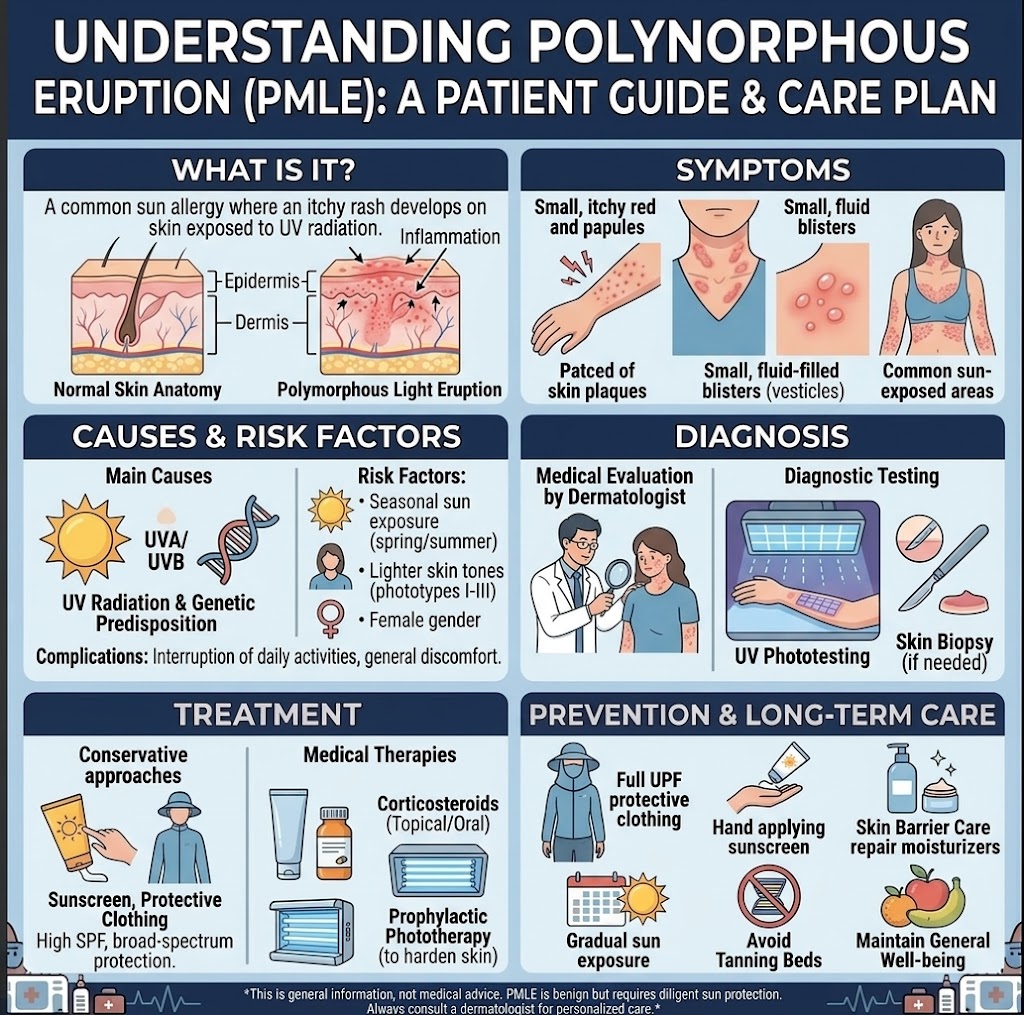
Polymorphous light eruption (PMLE) is a common skin rash that appears after sun exposure in people who are sensitive to sunlight. Often called 'sun allergy' or 'sun poisoning,' its name 'polymorphous' means the rash can take many different forms, such as tiny bumps, raised patches, or small blisters. This reaction usually occurs during spring and early summer when skin is exposed to more sunlight after being covered during winter months. While it often happens again each year, the rash typically fades on its own within 10 days without leaving scars. The first instance of PMLE commonly appears in one's teenage years or twenties.
Understanding the Condition
Polymorphous Light Eruption (PMLE): Understanding Your Sun Sensitivity
Understanding the Condition
Polymorphous light eruption (PMLE) is a common skin rash that appears after sun exposure in people who are sensitive to sunlight. Often called 'sun allergy' or 'sun poisoning,' its name 'polymorphous' means the rash can take many different forms, such as tiny bumps, raised patches, or small blisters. This reaction usually occurs during spring and early summer when skin is exposed to more sunlight after being covered during winter months. While it often happens again each year, the rash typically fades on its own within 10 days without leaving scars. The first instance of PMLE commonly appears in one's teenage years or twenties.
Common Symptoms
Rash Appearance: The rash usually appears on areas of the body that are suddenly exposed to more sunlight, such as the upper chest, front of the neck, arms, and lower legs. It typically develops 30 minutes to several hours after sun exposure.
Skin Bumps and Patches: Symptoms often include small, red bumps that may be closely packed together. These can also appear as raised, inflamed patches or tiny fluid-filled blisters.
Rare Systemic Symptoms: In rare cases, some individuals might experience other symptoms such as a mild fever or chills alongside the rash.
Consultation Guide
Which Specialist to Meet
Before your visit, it's helpful to: 1) List your symptoms, noting when they started, how long they last, and any triggers. 2) Document your sun exposure history, including recent changes in sun exposure. 3) Detail any home remedies or over-the-counter medications you've tried. 4) Provide a list of all current medications, supplements, and known allergies. 5) Inform your doctor about any other medical conditions and your family history of skin problems or sun sensitivity. 6) Prepare a list of questions for your doctor to ensure all your concerns are addressed.
Book a doctor visit near me
Sun Avoidance: Immediately seek shade and avoid further sun exposure once the rash appears to prevent worsening of symptoms. Wear protective clothing. (Duration: Until the rash subsides (typically 7-10 days).)
Cool Compresses and Baths: Applying cool, damp cloths or taking cool baths can help soothe the skin and reduce itching and inflammation. (Duration: As needed for symptom relief.)
Moisturizers and Anti-Itch Creams: Apply gentle, fragrance-free moisturizers to keep skin hydrated. Over-the-counter anti-itch creams containing ingredients like calamine or menthol can help alleviate discomfort. (Duration: As needed until symptoms resolve.)
Oral Corticosteroids: In severe or widespread cases, a short course of oral corticosteroids may be prescribed to quickly reduce inflammation and symptoms. (Duration: Usually for a very short period (e.g., 3-7 days) due to potential side effects.)
Light Therapy (Phototherapy): For individuals with recurrent or severe PMLE, controlled exposure to ultraviolet (UV) light (often UVB or PUVA) can be administered in a doctor's office. This gradually 'hardens' the skin, making it less sensitive to natural sunlight over time. (Duration: Multiple sessions over several weeks, typically starting before the spring/summer months.)
Regular Doctor Visits: If your PMLE symptoms change, worsen, or are no longer managed by previous strategies, consult your doctor for reassessment and potential adjustments to your treatment or prevention plan.
Consultation Guide
Itching: The rash is commonly accompanied by intense itching, which can range from mild to severe and cause significant discomfort.
Inflammation: Affected areas of the skin will appear red and inflamed.
Monitor Skin Reactions: Be vigilant about your skin's response to sun exposure. Understand your personal triggers and the specific amount of sun that causes a reaction for you.
Annual Preparations: Each year before the peak sun season, consider preventive measures such as gradual sun exposure or light therapy if recommended by your doctor.
Diagnostic Procedures
Initially, you should consult your primary care doctor. If the rash is persistent, severe, or difficult to diagnose, they may refer you to a dermatologist, a doctor specializing in skin conditions.
Preparations Before Your Visit
A healthcare professional will examine your rash and review your medical history, including your sun exposure habits and any previous skin reactions. This is often the first and main diagnostic step.
What to Expect
The doctor will look at the location, appearance, and characteristics of your rash. They will also ask questions about when the rash first appeared, how long it lasts, and what activities precede its appearance. Your answers help distinguish PMLE from other skin conditions.
A skin biopsy involves taking a small sample of the affected skin to be examined under a microscope in a laboratory. This helps to confirm the diagnosis of PMLE or rule out other conditions that might look similar.
What to Expect
Before the procedure, the area will be numbed with a local anesthetic, so you will feel little to no pain. What happens next depends on the type of biopsy:- **Shave Biopsy:** A scalpel or razor blade is used to gently scrape off the outermost layers of the skin. This is quick, usually doesn't require stitches, and leaves a small scab that heals over time.- **Punch Biopsy:** A small, circular tool is used to remove a deeper, cylindrical sample of skin. You might feel some pressure during the removal. Depending on the size, one or two stitches may be needed to close the wound, which will heal with a small scar.- **Excisional Biopsy:** For a larger or deeper lesion, a scalpel is used to cut out the entire irregular area along with a small margin of surrounding healthy skin. This typically requires several stitches to close the wound and may result in a more noticeable scar.
Treatment Options
Medications
Topical Corticosteroids: Creams or ointments containing corticosteroids can be prescribed to reduce inflammation, redness, and itching. (Duration: Typically applied once or twice daily for 5-10 days, or as directed by your doctor.)
Oral Antihistamines: For significant itching, oral antihistamines can be taken to provide relief. (Duration: As needed for severe itching, typically for a few days.)
Prevention & Long-Term Wellbeing
Home Remedies and Lifestyle Adjustments
Prevention
Gradual Sun Exposure: Begin sun exposure slowly in spring. Gradually increase the time spent outdoors over days or weeks to allow your skin to build tolerance, rather than sudden, intense exposure.
Sunscreen Application: Use a broad-spectrum sunscreen with a high SPF (30 or higher) that protects against both UVA and UVB rays. Apply it generously to all exposed skin 15-30 minutes before going outside and reapply every two hours, or more often if sweating or swimming.
Protective Clothing: Wear long-sleeved shirts, long pants, wide-brimmed hats, and UV-protective clothing to physically block sunlight from reaching your skin.
Seek Shade: Limit your time in direct sunlight, especially during peak hours (typically between 10 AM and 4 PM) when UV radiation is strongest.
Avoid Sudden Sun Exposure: Be particularly mindful when traveling to sunnier climates or engaging in outdoor activities that lead to prolonged, unaccustomed sun exposure.
Long-Term Wellbeing
Tags & Topics
Notice an error or need an update?
Help us keep medical information accurate. Report incorrect info or suggest an edit.


