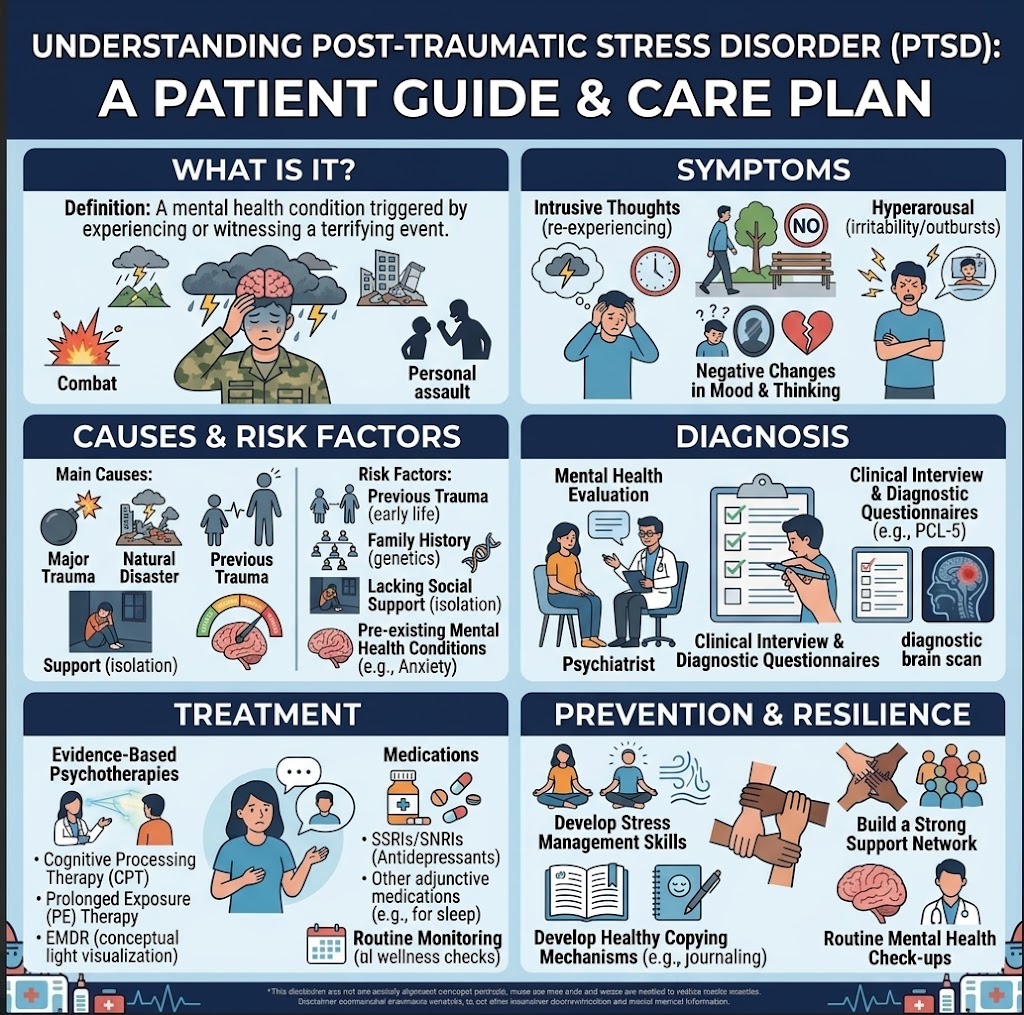
Post-Traumatic Stress Disorder (PTSD) is a mental health condition triggered by experiencing or witnessing a deeply distressing or terrifying event. While most people adjust after trauma, PTSD occurs when symptoms persist for months or years, significantly impacting daily life. These symptoms can include intrusive memories, nightmares, severe anxiety, and persistent negative thoughts related to the event.The exact reasons why some individuals develop PTSD while others don't are complex, often involving a combination of factors. These can include the intensity and duration of the traumatic experience, a family history of mental health conditions like anxiety or depression, individual personality traits, and how the brain processes stress hormones and chemicals.Anyone can develop PTSD, but certain factors increase the risk, such as experiencing severe or repeated trauma, physical injury during the event, a history of earlier trauma (e.g., childhood abuse), having professions like military service or first responder roles, pre-existing mental health issues, substance misuse, or a lack of strong social support.
Understanding the Condition
Post-Traumatic Stress Disorder (PTSD): A Guide for Non-Medical Persons
Understanding the Condition
Post-Traumatic Stress Disorder (PTSD) is a mental health condition triggered by experiencing or witnessing a deeply distressing or terrifying event. While most people adjust after trauma, PTSD occurs when symptoms persist for months or years, significantly impacting daily life. These symptoms can include intrusive memories, nightmares, severe anxiety, and persistent negative thoughts related to the event.The exact reasons why some individuals develop PTSD while others don't are complex, often involving a combination of factors. These can include the intensity and duration of the traumatic experience, a family history of mental health conditions like anxiety or depression, individual personality traits, and how the brain processes stress hormones and chemicals.Anyone can develop PTSD, but certain factors increase the risk, such as experiencing severe or repeated trauma, physical injury during the event, a history of earlier trauma (e.g., childhood abuse), having professions like military service or first responder roles, pre-existing mental health issues, substance misuse, or a lack of strong social support.
Common Symptoms
Intrusive Memories: Repeated, unwanted, distressing memories of the event. Flashbacks, where you feel like the event is happening again. Upsetting dreams or nightmares about the trauma. Strong emotional or physical reactions to triggers that remind you of the event (e.g., panic, sweating, heart palpitations).
Avoidance: Actively trying to avoid thoughts, feelings, or conversations related to the traumatic event. Staying away from places, activities, or people that serve as reminders.
Before your visit, make a list of your symptoms, including when they started and how they affect your daily life. Note any major traumatic events you've experienced and any personal or family history of mental health conditions. Prepare questions you have for the doctor.
Book a doctor visit near me
Diagnosing PTSD involves a comprehensive evaluation by a mental health professional. There are no lab tests or imaging scans for PTSD. Instead, diagnosis is based on a clinical interview, where the professional discusses your symptoms, experiences, and medical history. They will use specific criteria outlined in diagnostic manuals (like the DSM-5) to determine if your symptoms meet the requirements for PTSD.
During the assessment, you will have a detailed conversation with a psychiatrist, psychologist, or other qualified mental health provider. They will ask about the traumatic event(s) you experienced, your current symptoms (such as flashbacks, nightmares, avoidance behaviors, changes in mood or reactions), when these symptoms began, how long they've lasted, and how they impact your daily functioning, relationships, and work. They may also ask about your physical health, other mental health conditions, and any family history of mental illness. This interview may span one or more sessions to gather a complete picture. Be prepared to discuss sensitive topics in a safe and confidential environment.
Acupuncture (Complementary Therapy): An ancient Chinese medicine technique involving the insertion of very thin needles into specific points on the body. While not a primary treatment for PTSD, it may be used as a complementary approach to help manage associated symptoms like stress, anxiety, and pain by influencing nerve stimulation and natural painkiller release. (Duration: Multiple sessions over several weeks or months, depending on symptom management goals.)
Symptom-Targeted Medications: A doctor may prescribe medications to help manage specific PTSD symptoms, such as severe anxiety, depression, sleep disturbances, or irritability. These medications do not cure PTSD but can make other therapies more effective by reducing distressing symptoms. (Duration: Often long-term, tailored and monitored by a prescribing physician.)
Home Remedies & Self-Care
Support Systems: Connecting with trusted family, friends, or support groups can provide comfort, understanding, and practical assistance, helping you feel less isolated. (Duration: As advised)
Consistent Professional Care: Maintaining regular appointments with mental health professionals for ongoing therapy and medication management (if prescribed) is vital for long-term symptom control and preventing relapse.
Strong Social Connections: Nurturing relationships with supportive individuals helps combat feelings of isolation and provides a network for emotional support.
Addressing Complications: Be aware that PTSD can increase the risk of depression, anxiety disorders, substance use issues, and suicidal thoughts. Promptly addressing these co-occurring conditions with professional help is essential for overall health and safety.
Mindfulness and Stress Reduction: Incorporating daily practices such as mindfulness, meditation, or spending time in nature can help regulate emotions and reduce the impact of stress.
Consultation Guide
Negative Changes in Thinking and Mood: Negative beliefs about oneself, others, or the world (e.g., 'I'm bad,' 'No one can be trusted'). Distorted thoughts about the cause or consequences of the trauma, leading to guilt or blame. Feeling detached from others, diminished interest in activities. Inability to experience positive emotions (e.g., happiness, satisfaction).
Changes in Physical and Emotional Reactions (Arousal and Reactivity): Being easily startled or on guard for danger (hypervigilance). Having trouble sleeping. Difficulty concentrating. Irritability, aggressive behavior, or angry outbursts. Self-destructive behavior, like excessive drinking or reckless driving. Overwhelming shame or guilt.
Consultation Guide
Which Specialist to Meet
Diagnostic Procedures
Clinical Assessment and Diagnosis
What to Expect
Treatment Options
You should first consult your primary care doctor, who can provide an initial assessment and refer you to a mental health professional. Specialists include psychiatrists (medical doctors specializing in mental health who can prescribe medication), psychologists, or licensed clinical social workers (who provide therapy).
Preparations Before Your Visit
Therapies
Cognitive Behavioral Therapy (CBT): CBT is a structured form of talk therapy that helps you identify and change negative thinking patterns and behaviors related to the trauma. It involves learning coping skills to manage stress, anxiety, and traumatic memories. Techniques may include exposure therapy (gradually confronting traumatic memories in a safe way) and cognitive restructuring (changing negative thought patterns). (Duration: Typically 12-20 sessions, often over several months.)
Psychotherapy (Talk Therapy): This broad term encompasses various types of talk therapy, where you work with a mental health professional to explore your thoughts, emotions, and behaviors stemming from the trauma. The goal is to develop healthy coping mechanisms, process the event, and improve overall functioning and well-being. Different approaches may be used depending on individual needs. (Duration: Can range from short-term (a few months) to long-term (a year or more), depending on the severity and individual progress.)
Medications
Prevention & Long-Term Wellbeing
Healthy Lifestyle Practices: Regular physical activity, a balanced diet, adequate sleep, and avoiding excessive alcohol or drug use can significantly support mental and physical well-being. (Duration: As advised)
Mindfulness and Relaxation Techniques: Practices like meditation, deep breathing exercises, and yoga can help manage stress, improve focus, and reduce feelings of anxiety. (Duration: As advised)
Prevention
Early Support After Trauma: After a traumatic event, seeking timely support from family, friends, or a mental health professional can help process the experience and prevent normal stress reactions from worsening into PTSD.
Healthy Coping Strategies: Learning and utilizing healthy ways to cope with stress, rather than turning to unhealthy methods like substance misuse, is crucial for resilience.
Long-Term Monitoring and Management
Tags & Topics
Notice an error or need an update?
Help us keep medical information accurate. Report incorrect info or suggest an edit.


