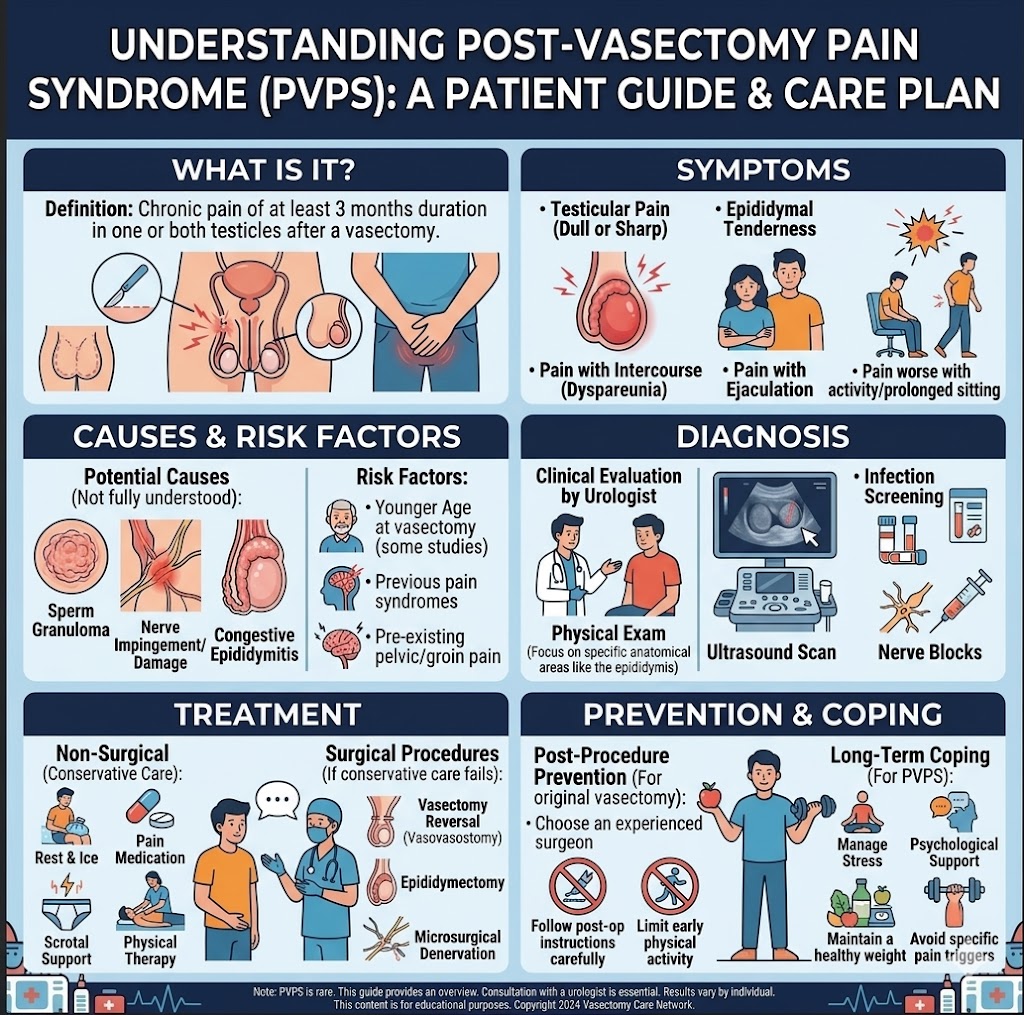
Vasectomy is a common, minor surgical procedure for male birth control, involving blocking the tubes that carry sperm to the semen. While generally safe, some men may develop Post-Vasectomy Pain Syndrome (PVPS). PVPS is defined as ongoing pain in one or both testicles that persists for at least three months after the procedure. This pain can range from a rare, dull ache to sharp, constant discomfort, significantly interfering with daily life and sometimes requiring specialized medical attention. The exact causes are not fully understood but may include infection, nerve compression, back pressure from sperm, or scar tissue formation.
Understanding the Condition
Understanding Post-Vasectomy Pain Syndrome (PVPS)
Understanding the Condition
Common Symptoms
Before your visit, list all your symptoms, including when they started, their frequency and severity, and what makes them better or worse. Bring a list of all current medications and be ready to discuss your medical history and the details of your vasectomy. Prepare any questions you have for your doctor.
Book a doctor visit near me
A standard blood test that provides information about your overall health. It measures red blood cells, white blood cells, and platelets, helping identify infections, anemia, or other blood disorders that could contribute to symptoms or rule out other causes.
Consultation Guide
Vasectomy is a common, minor surgical procedure for male birth control, involving blocking the tubes that carry sperm to the semen. While generally safe, some men may develop Post-Vasectomy Pain Syndrome (PVPS). PVPS is defined as ongoing pain in one or both testicles that persists for at least three months after the procedure. This pain can range from a rare, dull ache to sharp, constant discomfort, significantly interfering with daily life and sometimes requiring specialized medical attention. The exact causes are not fully understood but may include infection, nerve compression, back pressure from sperm, or scar tissue formation.
Nerve-Specific Pain Medications: Medications designed to quiet overactive nerves, which are useful if nerve compression or irritation is suspected as a cause of pain. (Duration: Long-term, as directed by a doctor, often several months to years.)
Antibiotics: Prescribed if an infection is identified as contributing to the pain, to eliminate the bacterial infection. (Duration: Typically 7-14 days, depending on the type and severity of infection.)
Procedures & Therapies
Counseling and Support Groups: Living with chronic pain can cause significant emotional distress. Speaking with a therapist, counselor, or joining support groups can provide coping strategies for pain, anxiety, and depression.
Open Communication: Discuss your pain and its impact with your partner, family, and friends to foster understanding, manage expectations, and build a supportive environment.
Diagnostic Procedures
Pain and tenderness in the scrotum: Discomfort and sensitivity in the sac that holds the testicles.
Pressure or pain after ejaculation: A feeling of pressure or pain experienced after ejaculation.
Dull ache in one or both testicles: A persistent, low-level pain sensation in one or both testicles.
Pain and tenderness at the vasectomy site: Discomfort and sensitivity in the area where the vasectomy was performed.
Swelling of the epididymis: Swelling of the small, coiled tube located behind the testicle where sperm are stored.
Pain with sexual activity: Discomfort experienced during sex.
Emergency Warning Signs: Seek immediate medical attention if you experience severe pain, sudden swelling in your testicles, discharge from your penis, or pain when you urinate. These could indicate a serious infection or other urgent condition.
Consultation Guide
Which Specialist to Meet
You should consult a urologist, who specializes in the male urinary and reproductive systems. For chronic or complex pain, a pain management specialist may also be recommended.
Preparations Before Your Visit
Complete Blood Count (CBC)
What to Expect
A healthcare professional will draw a small blood sample, usually from a vein in your arm. You might feel a brief sting as the needle is inserted. The procedure is quick, typically lasting only a few minutes.
An imaging test that uses high-frequency sound waves to create live pictures of internal body structures. For PVPS, it examines the testicles, epididymis, and surrounding tissues for abnormalities like swelling, fluid, cysts, or inflammation.
What to Expect
You will lie on an examination table. A gel is applied to the skin over your scrotum, and a handheld device (transducer) is moved over the area. You might feel slight pressure, but it's generally painless. The procedure takes 15-30 minutes, and you may be asked to remove jewelry.
A laboratory test of your urine used to detect and manage various conditions, including urinary tract infections, kidney disease, or diabetes, which could present with testicular pain or co-occur with it. It checks the urine's appearance, concentration, and content.
What to Expect
You will be given a sterile cup and instructed to collect a 'clean-catch' urine sample. This involves cleaning the genital area, starting to urinate into the toilet, then collecting a midstream sample in the cup. The collection process takes only a few minutes.
Rest and Support: Adequate rest and wearing supportive undergarments can help reduce testicular movement and discomfort. (Duration: As needed for comfort.)
Temperature Therapy: Applying cold packs (wrapped in cloth) can lessen swelling and pain. Warm compresses may also provide relief by relaxing muscles. (Duration: 15-20 minutes at a time, several times daily, as needed.)
Spermatic Cord Block: An injection of local anesthetic and sometimes a steroid into the spermatic cord to temporarily block pain signals to the testicle. It can also be diagnostic. (Duration: Relief can last from days to weeks; may be repeated as needed.)
Physical Therapy: Targeted exercises and manual techniques to improve pelvic floor function, reduce muscle tension, and address nerve irritation in the groin area. (Duration: Several weeks to months, typically 1-3 sessions per week.)
Vasectomy Reversal: Surgery to undo a vasectomy by reconnecting the sperm-carrying tubes (vas deferens). It is considered an option for treating chronic testicular pain after vasectomy, though pain relief success varies. (Duration: A single surgical procedure, with recovery typically lasting several weeks to months.)
Microsurgical Denervation of the Spermatic Cord (MDSC): A specialized surgical procedure where specific nerves supplying sensation to the testicle within the spermatic cord are carefully identified and cut to relieve severe, persistent pain when other treatments have failed. (Duration: A single surgical procedure, with recovery typically lasting several weeks to months.)
Epididymectomy / Orchiectomy: In some cases, surgical removal of the epididymis or, as a last resort for intractable pain, removal of the affected testicle (orchiectomy) may be considered. (Duration: A single surgical procedure, with recovery typically lasting several weeks.)
Identify and Avoid Triggers: Be aware of specific activities, movements, or situations that consistently worsen your testicular pain and try to minimize or avoid them to prevent flare-ups.
Treatment Options
Medications
Pain and Anti-inflammatory Medications: Over-the-counter or prescription medications used to reduce pain and inflammation, especially if inflammation is a contributing factor. (Duration: Short-term for acute flare-ups, or longer-term as prescribed by a physician.)
Regular Medical Follow-ups: Maintain routine appointments with your healthcare provider to monitor your condition, adjust treatment plans as needed, and explore new or emerging management strategies.
Adherence to Treatment Plan: Consistently follow your prescribed medication regimen, therapy recommendations, and lifestyle adjustments to achieve the best possible long-term pain management and quality of life.
Prevention & Long-Term Wellbeing
Home Remedies & Lifestyle
Emotional and Psychological Support
Lifestyle and Activity Management
Paced Activity and Gentle Exercise: Avoid overexertion by learning to pace yourself during physical activities. Engage in low-impact exercises like walking, swimming, or yoga to maintain fitness, reduce stress, and improve mood without aggravating pain.
Stress Reduction Techniques: Practice mindfulness, meditation, deep breathing exercises, or other relaxation methods to help manage stress, which can often intensify pain perception.
Tags & Topics
Notice an error or need an update?
Help us keep medical information accurate. Report incorrect info or suggest an edit.


