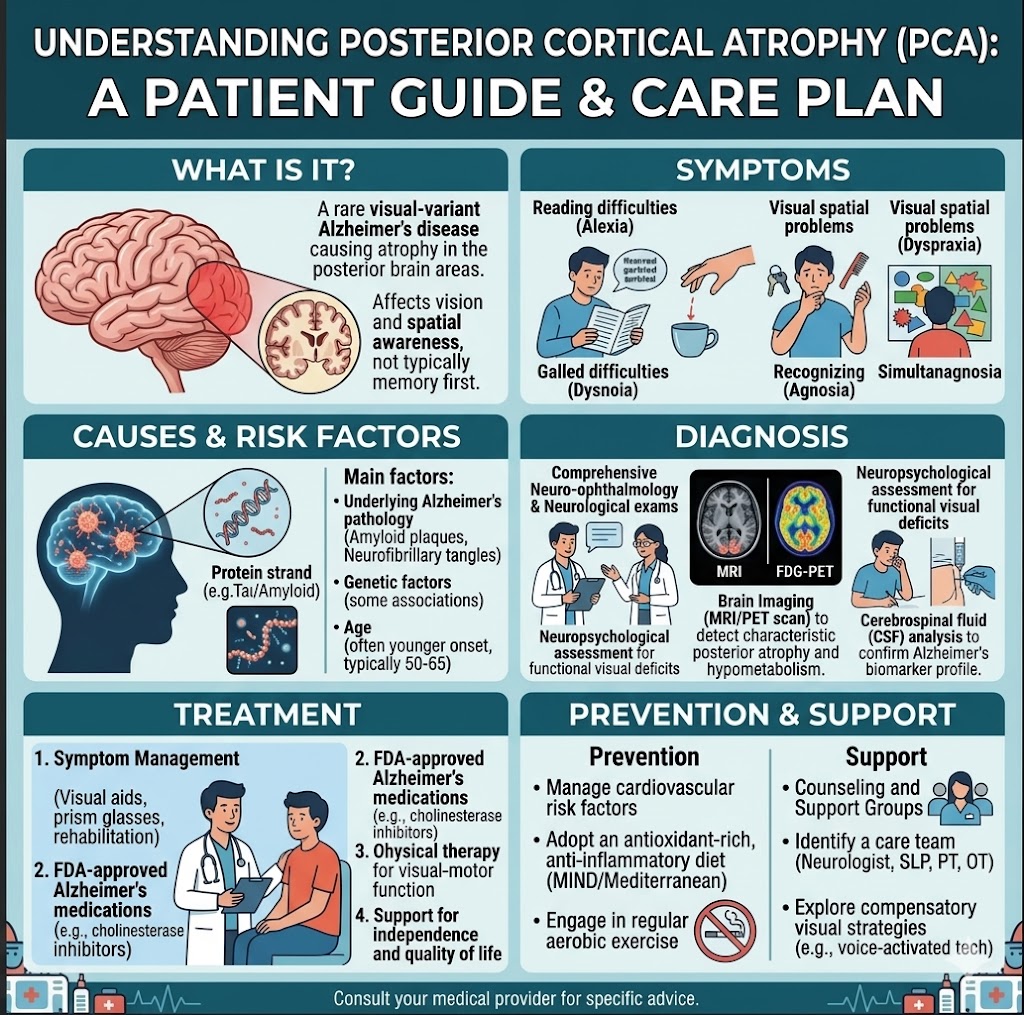
Posterior Cortical Atrophy (PCA) is a rare brain syndrome where brain cells in the back of the brain gradually die over time. This specific region is crucial for processing visual information and understanding spatial relationships. As a result, individuals with PCA experience progressive difficulties with vision-related tasks, such as reading, judging distances, and recognizing objects or faces. While primarily affecting visual and spatial skills, memory and overall thinking abilities may also decline as the condition progresses. In most cases, PCA is a form of Alzheimer's disease that impacts the back of the brain first, but it can also be linked to other neurological conditions.
Understanding the Condition
Posterior Cortical Atrophy (PCA): Understanding a Visual-Spatial Brain Condition
Understanding the Condition
Posterior Cortical Atrophy (PCA) is a rare brain syndrome where brain cells in the back of the brain gradually die over time. This specific region is crucial for processing visual information and understanding spatial relationships. As a result, individuals with PCA experience progressive difficulties with vision-related tasks, such as reading, judging distances, and recognizing objects or faces. While primarily affecting visual and spatial skills, memory and overall thinking abilities may also decline as the condition progresses. In most cases, PCA is a form of Alzheimer's disease that impacts the back of the brain first, but it can also be linked to other neurological conditions.
Common Symptoms
Visual and Spatial Processing Difficulties: Trouble with tasks requiring visual interpretation and spatial awareness, such as reading, spelling, and performing math calculations. Individuals may struggle to judge distances (e.g., when reaching for objects), tell the difference between moving and still objects, or use everyday tools. Recognizing familiar objects or faces and distinguishing left from right can also become challenging. Getting dressed may become difficult due to problems with visual orientation.
Cognitive and Behavioral Changes: Beyond visual problems, some individuals may experience changes in behavior and personality. Memory problems and other thinking difficulties (cognitive skills) often appear later in the disease's progression.
Consultation Guide
Which Specialist to Meet
If you or a loved one are experiencing symptoms suggestive of Posterior Cortical Atrophy, you should consult a neurologist, a doctor specializing in brain and nervous system disorders. A neuro-ophthalmologist (eye doctor specializing in neurological vision problems) or a neuropsychologist (specializing in brain-behavior relationships) may also be part of the diagnostic team.
Preparations Before Your Visit
Before your appointment, gather a detailed list of your symptoms, including when they started and how they have progressed. Bring a complete list of your current and past medical conditions, all medications (including over-the-counter drugs and supplements), and any known family medical history. Prepare a list of questions to ask your doctor.
Book a doctor visit near me
The doctor will ask about your medical history and symptoms. They will then perform various tests to check your mental status (alertness, memory), balance, coordination, reflexes, muscle strength, sensation, and vision. This examination can range from a few minutes to over an hour, depending on the complexity of your symptoms.
Positron Emission Tomography (PET) Scan
Symptom-Managing Medications: While there is no cure for PCA, medications may be prescribed to help manage specific symptoms associated with the underlying cause (e.g., Alzheimer's disease), such as memory problems, behavioral changes, or mood disturbances. These are not a cure but can help improve quality of life. (Duration: Long-term, as prescribed and monitored by a doctor.)
Caregiver Support and Education: Providing resources, training, and emotional support for family members and caregivers to help them understand and cope with the challenges of PCA, ensuring the best care for the individual. (Duration: Ongoing throughout the disease progression.)
Environmental Modifications: Adapting the home and immediate environment to enhance safety and ease of navigation, especially important for visual and spatial challenges. This may include improving lighting, reducing clutter, and using contrasting colors. (Duration: As needed, adapted over time.)
Regular Medical Follow-ups: Consistent visits with your medical team are crucial for monitoring the condition's progression, managing symptoms, and adjusting treatment plans as needed.
Consultation Guide
A comprehensive assessment of your nervous system, including your brain, spinal cord, nerves, and muscles. This exam helps doctors identify potential neurological conditions and understand their cause.
Diagnostic Procedures
Neurological Examination
What to Expect
An advanced imaging test that reveals the metabolic or biochemical activity within your body's tissues and organs. It uses a small amount of a safe radioactive drug (tracer) to highlight areas of unusual metabolic activity, often detecting diseases earlier than other imaging methods.
What to Expect
A radioactive tracer is typically injected into a vein in your arm or hand. You will then lie on a narrow table that slides into a large, doughnut-shaped scanner. You will need to remain very still for approximately 30 minutes while the scanner captures detailed images. PET scans are often combined with CT or MRI scans for better interpretation.
Single-Photon Emission Computerized Tomography (SPECT) Scan
An imaging test that uses a radioactive substance and a special camera to create detailed 3D pictures. Unlike tests that show what organs look like, a SPECT scan shows how well they are functioning, such as blood flow to the heart or activity levels in different brain regions.
What to Expect
Similar to a PET scan, a radioactive tracer is injected. You will lie still on a table, and a camera will rotate around your body to capture images. This process creates a detailed map of blood flow or activity, which can help pinpoint affected areas in the brain or other organs.
Treatment Options
Therapies
Cognitive Behavioral Therapy (CBT): A structured talk therapy that helps individuals learn coping strategies for emotional challenges, such as anxiety or depression, which may arise from living with PCA. It can help manage stress and adapt to changes. (Duration: Typically involves a series of structured sessions over a short to medium term, often with 'homework' to practice skills.)
Occupational Therapy: Focuses on helping individuals maintain independence in daily activities. Therapists provide strategies and adaptations for tasks affected by visual-spatial difficulties, such as dressing, eating, and managing personal care. (Duration: Ongoing, adjusted as needs change.)
Physical Therapy: Aims to maintain physical strength, balance, and mobility, which can be affected by changes in visual perception and coordination. (Duration: Ongoing, tailored to individual needs.)
Speech Therapy: If communication difficulties arise, a speech therapist can help maintain and improve communication skills. (Duration: As needed, based on individual assessment.)
Medications
Prevention & Long-Term Wellbeing
Long-Term Management and Support
Maintain a Healthy Lifestyle: Engage in a balanced diet, regular physical activity suitable for your abilities, and ensure adequate sleep. These habits can support overall brain health and well-being.
Mental Engagement: Continue engaging in activities that stimulate your mind, such as puzzles, reading (with assistance if needed), or hobbies, to help maintain cognitive function for as long as possible.
Social Connection: Stay connected with family and friends and participate in social activities to maintain emotional well-being and combat isolation.
Safety and Adaptation: Work with occupational therapists to adapt your living environment for safety and ease of use, addressing visual-spatial challenges. This may involve clear pathways, good lighting, and assistive devices.
Support Groups: Joining support groups for individuals with PCA or their caregivers can provide valuable emotional support, shared experiences, and practical advice.
Advance Care Planning: Discussing and documenting your future medical and legal preferences with loved ones and your healthcare team ensures your wishes are respected as the condition progresses.
Tags & Topics
Notice an error or need an update?
Help us keep medical information accurate. Report incorrect info or suggest an edit.


