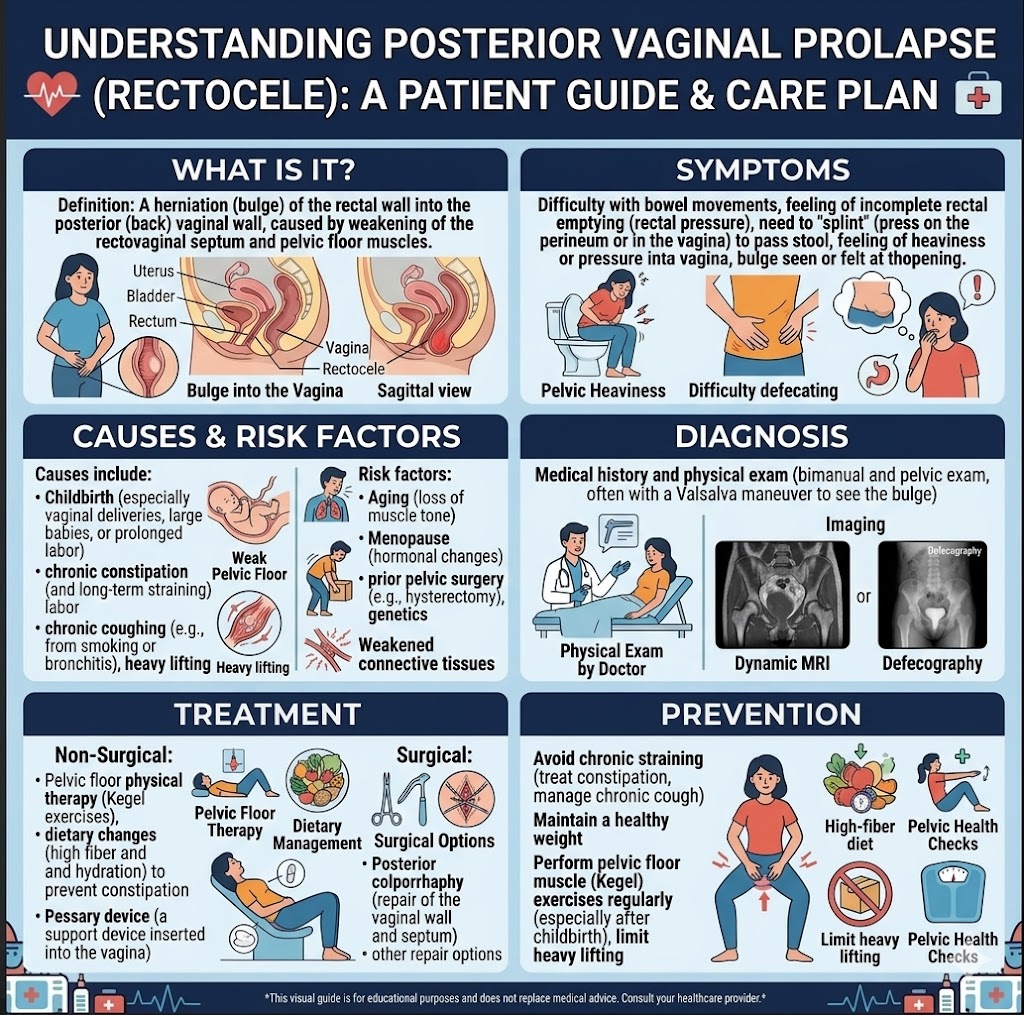
A posterior vaginal prolapse, commonly known as a rectocele, occurs when the wall of supportive tissue between the rectum and the vagina stretches, weakens, or tears. This allows the front wall of the rectum to bulge forward into the vagina. While a small prolapse may not cause any noticeable symptoms, a larger one can cause physical discomfort, pelvic pressure, and difficulties with bowel movements. It is frequently caused by pelvic strain from childbirth, chronic constipation, heavy lifting, or aging, and can be managed effectively through non-surgical therapies or surgical repair.
Understanding the Condition
Understanding Posterior Vaginal Prolapse (Rectocele)
Understanding the Condition
A posterior vaginal prolapse, commonly known as a rectocele, occurs when the wall of supportive tissue between the rectum and the vagina stretches, weakens, or tears. This allows the front wall of the rectum to bulge forward into the vagina. While a small prolapse may not cause any noticeable symptoms, a larger one can cause physical discomfort, pelvic pressure, and difficulties with bowel movements. It is frequently caused by pelvic strain from childbirth, chronic constipation, heavy lifting, or aging, and can be managed effectively through non-surgical therapies or surgical repair.
Common Symptoms
Vaginal Bulge: A soft, noticeable bulge or mass of tissue inside the vagina that may sometimes protrude through the vaginal opening, especially when straining or standing.
Bowel Movement Difficulties: Difficulty passing stool, experiencing chronic constipation, or feeling the need to push or strain excessively during bowel movements.
Pelvic Pressure or Fullness: A persistent sensation of heaviness, fullness, or pressure in the pelvic region or rectum, which may worsen throughout the day or after standing for long periods.
Incomplete Emptying: The feeling that the rectum has not completely emptied after having a bowel movement, sometimes requiring manual support (splinting) by pressing a finger against the vaginal wall to help evacuate stool.
Sexual Discomfort: A feeling of vaginal looseness, pelvic pressure during intercourse, or general embarrassment and discomfort during sexual activity.
Consultation Guide
Which Specialist to Meet
Before your appointment, keep a detailed log of your symptoms, including how long you have experienced them and their severity. Write down your typical bowel patterns, dietary habits, and any history of pregnancies or vaginal births. List all medications, vitamins, and supplements you currently take. Prepare a list of questions regarding treatment options, lifestyle changes, and whether surgery is necessary.
Book a doctor visit near me
Diagnostic Procedures
A standard physical assessment of the pelvic organs to evaluate the strength of your pelvic floor muscles and determine the severity of the vaginal bulge.
What to Expect
During this exam, you will lie on your back on an exam table with your feet in stirrups. The healthcare provider will insert a speculum into your vagina to inspect the vaginal walls. You will be asked to bear down or cough (as if having a bowel movement) so the doctor can observe how far the rectum bulges into the vagina.
An imaging test—using either X-rays or Magnetic Resonance Imaging (MRI)—that visualizes the mechanics of your rectum and pelvic floor muscles while you empty your bowels.
What to Expect
A soft contrast paste, which mimics the consistency of stool, is inserted into your rectum. You will sit on a specialized commode located inside an X-ray or MRI machine. You will be asked to squeeze, relax, and push to empty the paste while video images are recorded to show the precise movement of the rectal walls and pelvic floor.
Treatment Options
You should consult a gynecologist, a urogynecologist (a specialist in female pelvic medicine and reconstructive surgery), or a colorectal surgeon.
Preparations Before Your Visit
Cough Control and Management: Seek prompt medical treatment for any chronic cough, asthma, or bronchitis, and avoid smoking to reduce repetitive strain from coughing.
Maintain a Healthy Body Weight: Keep your weight within a healthy range to reduce chronic, excess physical pressure on the delicate pelvic floor muscles.
Prevention & Long-Term Wellbeing
Home Remedies and Lifestyle Adjustments
High-Fiber Diet and Increased Hydration: Eating high-fiber foods such as fruits, vegetables, beans, and whole grains, alongside drinking plenty of water, to soften stools and prevent constipation. (Duration: Lifelong/Ongoing daily management)
Avoiding Straining: Using proper bowel habits, such as avoiding prolonged sitting or forceful pushing on the toilet, to prevent excessive pressure on the vaginal wall. (Duration: Lifelong/Ongoing)
Non-Surgical Therapies
Pelvic Floor Physical Therapy: Specialized physical therapy sessions focusing on guided Kegel exercises, biofeedback, and pelvic muscle retraining to strengthen the support structures of the vagina. (Duration: 6 to 12 weeks of weekly structured sessions, followed by daily lifelong home practice)
Vaginal Pessary: The fitting and insertion of a removable plastic or silicone ring device into the vagina to physically support the bulging rectal tissue. (Duration: Continuous, long-term use, with removal and cleaning required every few weeks or months)
Posterior Colporrhaphy: A surgical procedure performed through the vagina to reinforce and tighten the weakened connective tissue wall between the rectum and vagina using durable stitches. (Duration: One-time procedure, requiring 4 to 6 weeks of postoperative healing and restricted physical activity)
Prevention and Daily Management
Regular Pelvic Floor Exercises: Perform daily Kegel exercises to build and maintain the strength of your pelvic floor muscles, which is especially beneficial after childbirth.
Proper Lifting Techniques: Avoid heavy lifting when possible. When you must lift, bend at your knees and use your legs instead of your waist or back to minimize abdominal pressure.
Tags & Topics
Notice an error or need an update?
Help us keep medical information accurate. Report incorrect info or suggest an edit.


