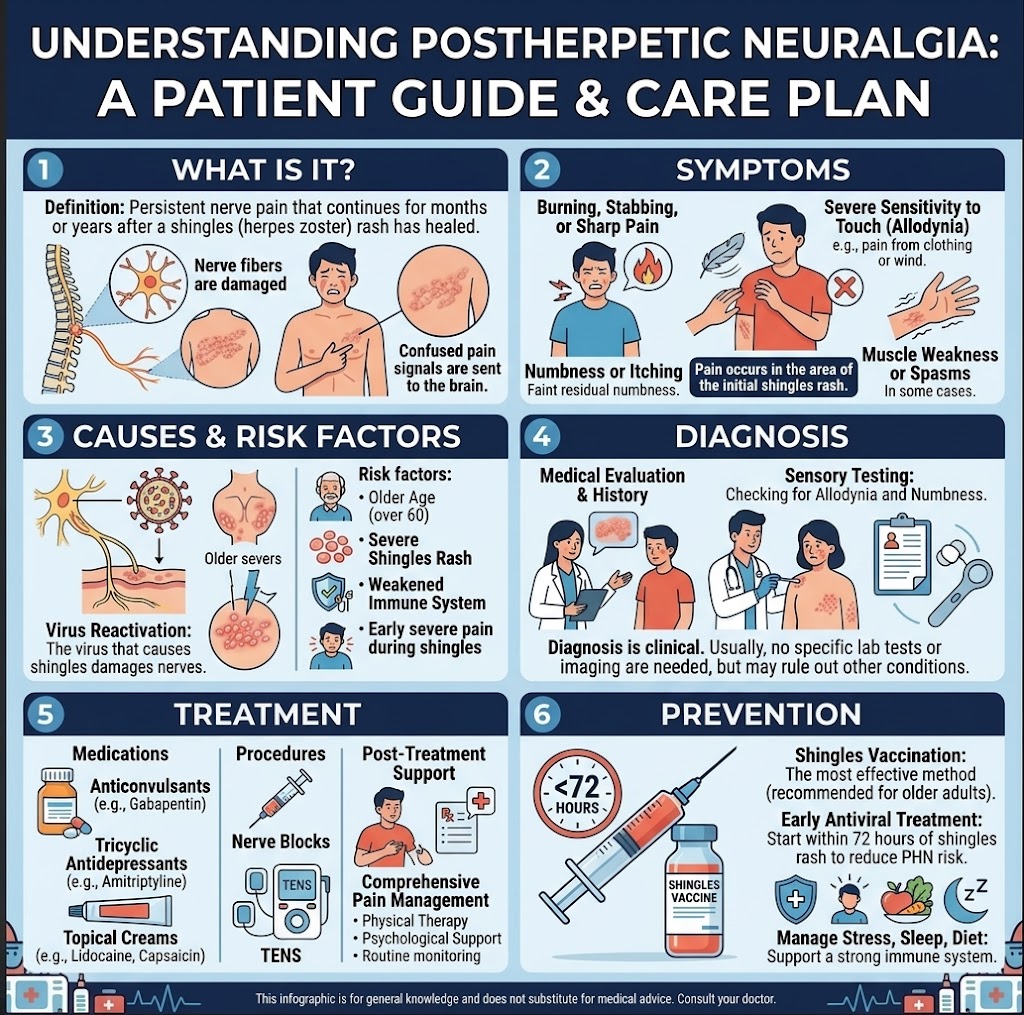
Postherpetic Neuralgia (PHN) is a persistent and often severe nerve pain that occurs in the same area where a shingles rash once appeared. It is the most common long-term complication of shingles. This burning, sharp, or aching pain continues for three months or longer after the shingles rash and blisters have completely healed. While there is no definitive cure, various treatments can significantly ease symptoms. For most individuals, PHN improves over time, but for some, it can be long-lasting. The risk of developing PHN increases with age, particularly affecting people over 60.
Understanding the Condition
Understanding Postherpetic Neuralgia
Understanding the Condition
Postherpetic Neuralgia (PHN) is a persistent and often severe nerve pain that occurs in the same area where a shingles rash once appeared. It is the most common long-term complication of shingles. This burning, sharp, or aching pain continues for three months or longer after the shingles rash and blisters have completely healed. While there is no definitive cure, various treatments can significantly ease symptoms. For most individuals, PHN improves over time, but for some, it can be long-lasting. The risk of developing PHN increases with age, particularly affecting people over 60.
Common Symptoms
Persistent Pain: Pain that lasts three months or more after the shingles rash has fully healed. This pain can feel burning, sharp, jabbing, deep, or aching. It typically occurs in the specific skin area where the shingles outbreak initially happened, often in a band around one side of the body, most commonly the torso.
Extreme Sensitivity to Touch: Also known as allodynia, this symptom makes even a light touch, like that from clothing, bedsheets, or a gentle breeze, feel intensely painful or unbearable on the affected skin.
You should first consult with your primary care provider. If your symptoms are complex or severe, they may refer you to specialists such as a neurologist (a doctor specializing in the nervous system), a pain management specialist (a doctor focused on treating chronic pain), or a dermatologist (a skin specialist) if there are persistent skin concerns.
Preparations Before Your Visit
Before your visit, prepare by making a detailed list of your symptoms, including when they started, how long they've lasted, how intense the pain is, and anything that makes the pain better or worse. Note all medications you are currently taking, including over-the-counter drugs, supplements, and vitamins. Be ready to discuss your medical history, especially any past episodes of shingles or chickenpox, and any other chronic health conditions like diabetes. It's also helpful to write down any questions you have for your doctor.
Book a doctor visit near me
The diagnosis of Postherpetic Neuralgia is primarily based on a thorough review of your medical history, particularly a recent or past episode of shingles, and a physical examination. There are no specific laboratory tests or imaging scans that can definitively diagnose PHN itself, but these might be used to rule out other conditions that could be causing similar symptoms.
Consultation Guide
Itching or Numbness: Less frequently, PHN can cause persistent itching, a tingling sensation, or a complete loss of feeling (numbness) in the affected skin area.
Consultation Guide
Which Specialist to Meet
Physical and Occupational Therapy: Therapists can teach exercises, stretching, and strategies to improve mobility, manage pain, and adapt daily activities to reduce discomfort caused by PHN. (Duration: Several weeks to months, depending on individual needs and progress.)
Psychological Therapies (e.g., Cognitive Behavioral Therapy - CBT): Therapies focused on helping individuals cope with chronic pain, reduce stress, and improve overall mental well-being, which can indirectly lessen the impact of pain. (Duration: Typically involves weekly sessions over several months, with techniques for long-term self-management.)
Diagnostic Procedures
Clinical Assessment and Medical History
What to Expect
During your visit, the doctor will ask detailed questions about your pain, including its location, how intense it is, how it feels (e.g., burning, sharp, aching), and when it began relative to your shingles rash. They will want to know when your shingles rash appeared and completely healed. A physical examination will involve carefully checking the affected skin area for sensitivity to touch, temperature changes, or any lingering skin issues. The doctor may gently touch the area with different textures, such as a cotton swab, to test for extreme sensitivity (allodynia). This process is non-invasive and does not typically involve any special equipment for the diagnosis of PHN.
Treatment Options
Medications
Topical Pain Relief: Creams or skin patches containing numbing agents or substances that reduce nerve overactivity can be applied directly to the affected skin to provide localized pain relief. (Duration: Used as needed for ongoing pain management, typically long-term.)
Nerve Pain Medications: Certain medications originally developed for seizures or depression have proven effective in calming overactive nerve signals responsible for PHN pain. (Duration: Taken daily, often for several months or longer, with dosages adjusted over time.)
Opioid Pain Relievers: For severe, debilitating pain, stronger prescription pain relievers may be used, typically for short periods due to potential side effects and risk of dependence. (Duration: Short-term use, as prescribed by a physician, typically weeks to a few months.)
Procedures and Therapies
Nerve Blocks: Injections of local anesthetic, sometimes combined with other medications, are administered near the affected nerves or into specific nerve clusters to temporarily interrupt pain signals. (Duration: Relief can last from days to weeks; procedures may be repeated as needed.)
Spinal Cord Stimulation: A small device is surgically placed under the skin, sending mild electrical pulses to the spinal cord. These pulses interfere with pain signals traveling to the brain, replacing pain with a tingling sensation or no sensation at all. (Duration: Permanent implant, with a trial period to assess effectiveness (typically 1-2 weeks) before full implantation.)
Transcutaneous Electrical Nerve Stimulation (TENS): A small, battery-operated device delivers mild electrical currents through electrodes placed on the skin, which can help block pain signals and release natural pain-relieving substances. (Duration: Can be used daily, as needed, for short or extended periods.)
Acupuncture: An ancient practice involving the insertion of thin needles into specific points on the body, which some individuals find helpful for chronic pain relief. (Duration: Multiple sessions over several weeks are typically recommended, with ongoing sessions for maintenance.)
Shingles Vaccination: Getting vaccinated is the most effective way to prevent shingles and, consequently, Postherpetic Neuralgia. A highly effective vaccine is recommended for adults aged 50 and older, and for adults 19 and older with weakened immune systems due to certain diseases or treatments. It is typically given in two doses, 2 to 6 months apart, and offers more than 90% effectiveness in preventing both shingles and PHN, even if you've had shingles before or a previous vaccine.
Early Antiviral Treatment for Shingles: If you develop shingles, seeing a healthcare provider at the first sign (often pain before a rash appears) and starting antiviral medication within 72 hours of the rash appearing can significantly reduce the severity and duration of shingles and lower the risk of developing PHN.
Long-Term Management and Support
Chronic Pain Management: Work closely with your healthcare team to develop and regularly review a comprehensive pain management plan. This may involve a combination of medications, therapies, and lifestyle adjustments to maintain the best possible quality of life despite persistent pain.
Addressing Mental Health: Living with chronic pain can lead to depression, anxiety, and sleep disturbances. Seeking support from mental health professionals, joining support groups, or practicing relaxation techniques can be crucial for managing the emotional toll of PHN.
Prevention & Long-Term Wellbeing
Home Remedies and Lifestyle Adjustments
Loose Clothing and Gentle Touch: Wearing loose, soft clothing and protecting the affected skin from friction or pressure can help reduce pain sensitivity (allodynia). (Duration: Ongoing as needed.)
Cool or Warm Compresses: Applying a cool or warm compress (whichever provides relief) to the affected area can temporarily soothe discomfort. (Duration: As needed for temporary relief.)
Stress Management: Techniques such as deep breathing, meditation, or mindfulness can help manage the emotional impact of chronic pain and potentially reduce pain perception. (Duration: Daily practice for long-term well-being.)
Prevention
Healthy Lifestyle: Maintaining a balanced diet, engaging in regular, gentle physical activity as tolerated, ensuring adequate sleep, and avoiding excessive stress can all contribute to overall well-being and better pain management.
Tags & Topics
Notice an error or need an update?
Help us keep medical information accurate. Report incorrect info or suggest an edit.


