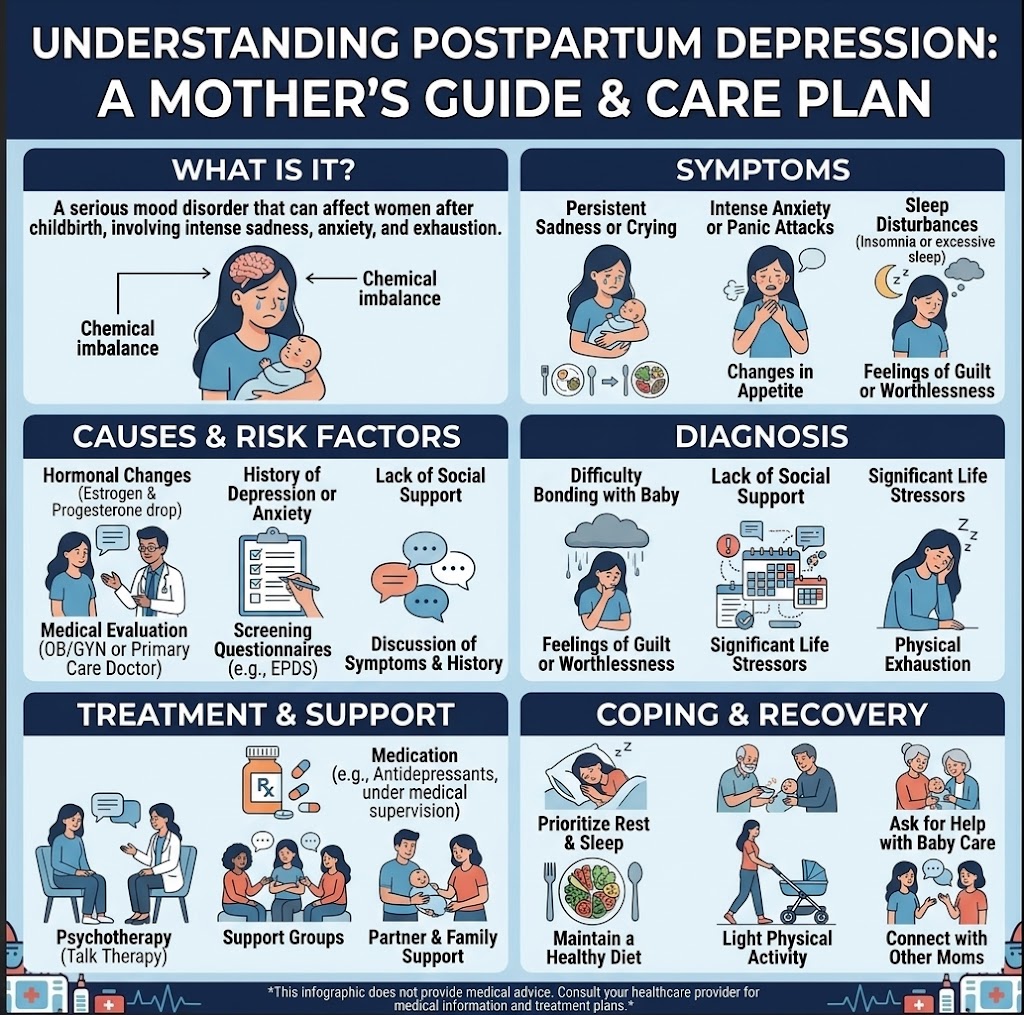
The arrival of a baby can bring a wave of emotions, from immense joy to overwhelming fear. Yet, for some new mothers, it can also lead to an unexpected challenge: depression. Most new moms experience temporary 'baby blues'—mild mood swings, crying spells, or anxiety lasting a few days to two weeks. However, more intense and persistent feelings signal postpartum depression (PPD), a severe form that can begin during pregnancy (peripartum depression) or up to a year after childbirth. PPD is a medical condition, not a personal failing. It's often a complication of birth, influenced by sudden hormone shifts, sleep deprivation, emotional stress, and genetics. Prompt diagnosis and treatment are crucial for managing symptoms and fostering a healthy bond with your baby.
Understanding the Condition
Postpartum Depression (PPD)
Understanding the Condition
The arrival of a baby can bring a wave of emotions, from immense joy to overwhelming fear. Yet, for some new mothers, it can also lead to an unexpected challenge: depression. Most new moms experience temporary 'baby blues'—mild mood swings, crying spells, or anxiety lasting a few days to two weeks. However, more intense and persistent feelings signal postpartum depression (PPD), a severe form that can begin during pregnancy (peripartum depression) or up to a year after childbirth. PPD is a medical condition, not a personal failing. It's often a complication of birth, influenced by sudden hormone shifts, sleep deprivation, emotional stress, and genetics. Prompt diagnosis and treatment are crucial for managing symptoms and fostering a healthy bond with your baby.
Common Symptoms
Baby Blues: Mild mood swings, irritability, feeling overwhelmed, reduced concentration, appetite problems, and trouble sleeping. These usually appear within 2-3 days after delivery and fade within two weeks.
Postpartum Depression (PPD): Symptoms are more severe and long-lasting than baby blues, often interfering with daily life and baby care. They typically develop within the first few weeks after birth but can start during pregnancy or up to a year later. These may include: persistent sadness, intense mood swings, excessive crying, severe irritability or anger, withdrawal from family and friends, significant changes in appetite or sleep, overwhelming fatigue, feelings of worthlessness, guilt, or shame, difficulty bonding with the baby, severe anxiety or panic attacks, and, in rare cases, thoughts of harming oneself or the baby.
Consultation Guide
Which Specialist to Meet
Before your visit, consider noting down your symptoms, when they started, and how they impact your daily life and ability to care for your baby. Prepare a list of questions, and be ready to discuss your medical and family history of mood disorders. Bringing a partner or trusted friend for support can also be helpful.
Book a doctor visit near me
A self-assessment tool consisting of questions about your feelings, mood, sleep, and energy levels over a recent period. Helps healthcare providers assess the presence and severity of depressive symptoms specific to the postpartum period.
A thorough discussion with your healthcare provider to understand your symptoms, medical history, and life stressors. Includes a physical exam and may involve blood tests to rule out other medical conditions, like thyroid imbalances, that mimic depression.
Antidepressant Medications: Prescription medications designed to help balance brain chemicals, which can improve mood, reduce anxiety, and regulate sleep. Your doctor will discuss options, including those considered safe for breastfeeding mothers, based on your specific situation. (Duration: Often taken for several months to a year, or longer, under careful medical supervision, even after symptoms improve)
Electroconvulsive Therapy (ECT): A procedure reserved for severe cases of depression, especially when other treatments haven't worked or a rapid response is vital (e.g., severe psychosis or high suicide risk). Performed under general anesthesia, small electric currents induce a brief, controlled seizure in the brain, quickly altering chemistry to alleviate severe symptoms. Modern ECT is much safer and refined than past practices, minimizing risks. (Duration: A typical course involves 6 to 12 treatments, usually 2-3 times per week. Maintenance treatments may be less frequent if needed.)
Early Postpartum Screening: Ensure you attend an early postpartum check-up, typically within the first few weeks after birth, to be screened for PPD symptoms. Early detection is key for prompt treatment and better outcomes.
Cultivating a Strong Support Network: Actively build and utilize a support system (partner, family, friends). Clearly communicate your needs and accept help with daily tasks, baby care, or emotional companionship.
Consistent Medical Follow-up: Maintain open communication with your provider about your mood and well-being, especially during your baby's first year and if planning future pregnancies. Regular check-ins help manage mental health.
Adherence to Treatment and Self-Awareness: Follow your treatment plan diligently. Do not discontinue medications without consulting your doctor. Learn to recognize early signs of returning symptoms and seek help promptly.
Prioritizing Relationship Health: Actively work on a healthy relationship with your partner and fostering a strong bond with your baby. Consider couples or family counseling if strains develop.
Diagnostic Procedures
Depression Screening Questionnaire
What to Expect
You will complete a questionnaire (paper or digital) during prenatal visits, after delivery, or at a check-up. Your honest responses guide a conversation with your doctor about your mental well-being. No physical procedures are involved.
What to Expect
Your doctor will ask detailed questions about your mood, thoughts, sleep, energy, and appetite. They will perform a physical exam and may order blood tests to check hormone levels. This helps confirm the diagnosis or rule out other conditions.
Treatment Options
Begin by consulting your Primary Care Physician (PCP) or Obstetrician/Gynecologist (OB/GYN). For specialized care, they may refer you to a Psychiatrist (a medical doctor specializing in mental health who can prescribe medication), a Psychologist, or a Licensed Professional Counselor (who provides talk therapy).
Preparations Before Your Visit
Medications
Prevention & Long-Term Wellbeing
Lifestyle and Support
Self-Care Practices and Building a Support System: Prioritize rest by taking naps when the baby sleeps, and ensure nutritious meals. Engage in light physical activity as approved by your doctor. Avoid alcohol and recreational drugs. Share your feelings with your partner, family, or trusted friends. Join a support group for new mothers. Accept help with childcare and household tasks to reduce burden. (Duration: Ongoing, as needed for well-being)
Psychotherapy (Talk Therapy): Working with a mental health professional (such as a psychologist or licensed therapist) to explore your feelings, thoughts, and behaviors. Common effective approaches include Cognitive Behavioral Therapy (CBT), which helps you identify and change negative thought patterns, and Interpersonal Therapy (IPT), which focuses on improving relationships and coping with life changes. (Duration: Typically several weeks to months, with weekly sessions, depending on individual needs)
Prevention
Proactive Planning and Monitoring: If you have a history of depression, especially PPD, inform your healthcare provider before or early in pregnancy. They can monitor you closely and recommend early interventions like support groups or counseling.
Tags & Topics
Notice an error or need an update?
Help us keep medical information accurate. Report incorrect info or suggest an edit.


