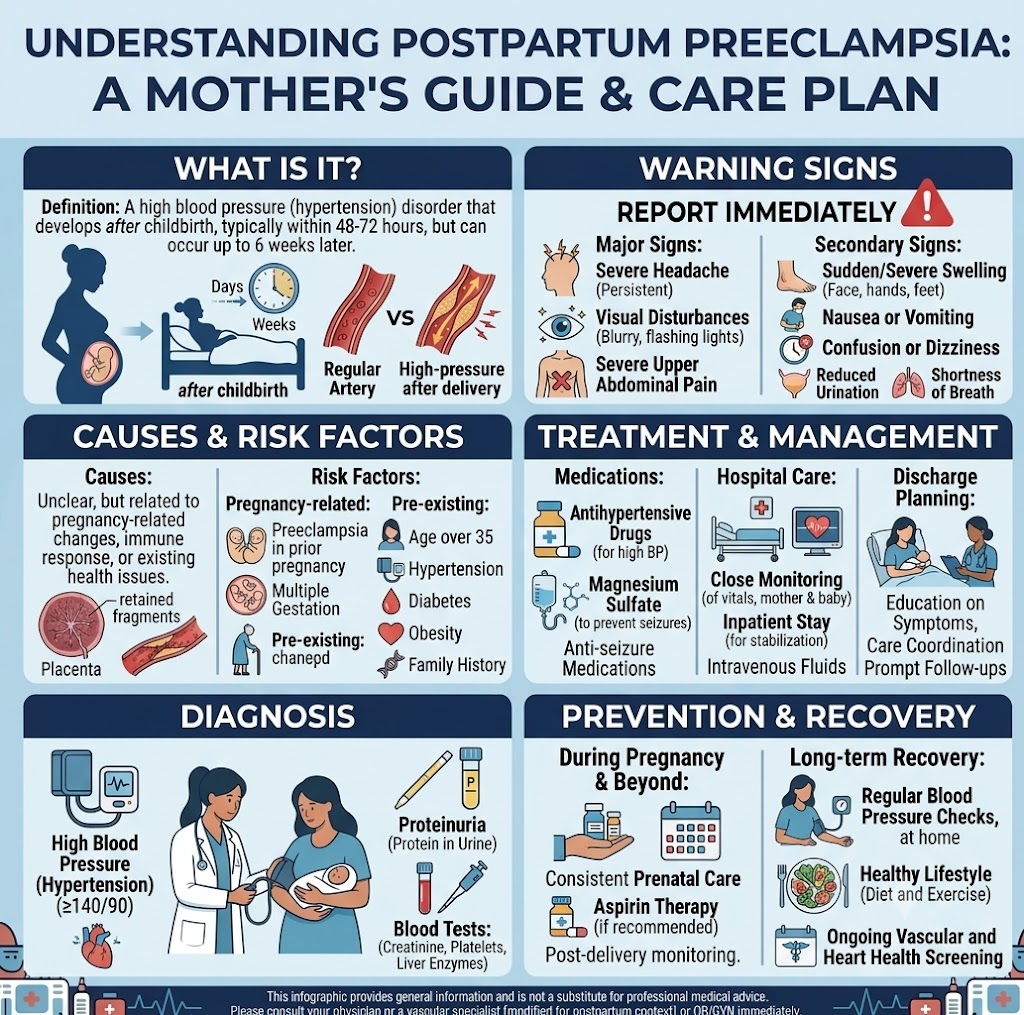
Postpartum preeclampsia is a rare but serious condition that can affect women soon after childbirth. It occurs when a woman develops high blood pressure and excess protein in her urine during the postpartum period. While preeclampsia typically develops during pregnancy and usually resolves after birth, postpartum preeclampsia specifically starts after delivery. Most cases appear within 48 hours, but it can develop up to six weeks or later (late postpartum preeclampsia). This condition requires immediate medical attention, as it can lead to severe complications like seizures if left untreated. Detecting it can be challenging for new mothers focused on recovery and newborn care, especially if they had no prior symptoms.
Understanding the Condition
Postpartum Preeclampsia: A Guide for New Mothers
Understanding the Condition
Postpartum preeclampsia is a rare but serious condition that can affect women soon after childbirth. It occurs when a woman develops high blood pressure and excess protein in her urine during the postpartum period. While preeclampsia typically develops during pregnancy and usually resolves after birth, postpartum preeclampsia specifically starts after delivery. Most cases appear within 48 hours, but it can develop up to six weeks or later (late postpartum preeclampsia). This condition requires immediate medical attention, as it can lead to severe complications like seizures if left untreated. Detecting it can be challenging for new mothers focused on recovery and newborn care, especially if they had no prior symptoms.
Common Symptoms
Severe Headache: A severe headache that is persistent and unresponsive to usual pain relief.
Vision Changes: Blurry vision, seeing flashing lights or spots, or temporary vision loss.
Upper Belly Pain: Pain often felt just below your ribs on the right side.
Nausea or Vomiting: Feeling persistently sick to your stomach or throwing up.
Sudden Swelling: Sudden and significant swelling in your face, hands, or feet.
Sudden Weight Gain: Gaining more than 2-5 pounds in a week due to fluid retention.
Shortness of Breath: Difficulty breathing, potentially due to fluid in the lungs.
Decreased Urination: Urinating less often or producing less urine than usual.
Consultation Guide
Which Specialist to Meet
If you experience symptoms, contact your primary care provider or your obstetrician/gynecologist (OB/GYN) immediately. For complex cases or high-risk factors, a maternal-fetal medicine specialist or a nephrologist (kidney specialist) may be involved in your care.
Preparations Before Your Visit
Before your visit, make a list of all your symptoms, including when they started and how severe they are. Note any recent changes in your health, your complete medical history (especially any history of high blood pressure, diabetes, kidney disease, or autoimmune disorders), and all medications or supplements you are taking. Be prepared to discuss your childbirth experience and any concerns you have about your recovery.
Book a doctor visit near me
Close Monitoring: You may require hospitalization for continuous monitoring of your blood pressure, urine output, and overall health, especially in severe cases or if symptoms are worsening. (Duration: Varies from a few days to a week or more, depending on the severity and how quickly your condition stabilizes.)
Home Remedies and Self-Care
Be Aware of Symptoms: Educate yourself on the signs and symptoms of postpartum preeclampsia and seek immediate medical attention if any arise. Don't dismiss symptoms as normal postpartum discomforts.
Long-Term Monitoring and Future Health
Postpartum Follow-up Care: Attend your postpartum check-up (typically around six weeks after delivery) and any additional follow-up appointments recommended by your doctor, especially for blood pressure monitoring.
Discuss Future Pregnancies: If you've had postpartum preeclampsia, discuss your risk for future pregnancies with your doctor. They can help you create a plan to minimize risks.
Consultation Guide
Maintain a Healthy Weight: If you are planning a pregnancy, strive to achieve and maintain a healthy weight. Obesity is a recognized risk factor.
Regular Prenatal and Postpartum Check-ups: Attend all scheduled appointments during pregnancy and after childbirth. These visits allow early monitoring for potential issues.
Diagnostic Procedures
Blood Pressure Monitoring
This is the primary diagnostic step, as high blood pressure is a hallmark of the condition. Your healthcare provider will measure your blood pressure to check for readings above 140/90 mmHg, especially if recorded twice, four hours apart.
What to Expect
During the procedure, a cuff will be placed around your upper arm and inflated, momentarily squeezing your arm. The device then slowly deflates, measuring the pressure as your heart beats (systolic) and rests (diastolic). This is a quick and painless procedure.
A urinalysis is a test of your urine used to detect the presence of excess protein, which is a key indicator of postpartum preeclampsia and potential kidney involvement. It also helps rule out other conditions like urinary tract infections.
What to Expect
You will be asked to provide a "clean-catch" urine sample. This involves cleaning your genital area with a wipe provided by the clinic, then starting to urinate into the toilet, stopping midway, and collecting a sample of your urine in a sterile cup. The sample will then be sent to a lab for analysis of its appearance, concentration, and content, looking specifically for protein.
Blood tests are performed to assess the function of your liver and kidneys, check your platelet count (cells that help blood clot), and evaluate red blood cell destruction. These tests help determine the severity of the condition and monitor for potential complications.
What to Expect
A healthcare professional will draw a small amount of blood, usually from a vein in your arm, using a needle. You might feel a brief sting or pinch. The blood samples are then sent to a laboratory for analysis.
Treatment Options
Medications
Blood Pressure Lowering Medications: These medicines are used to bring down high blood pressure to a safe level, reducing the risk of stroke and other complications. They can be taken orally. (Duration: Typically for several days to weeks, or longer if high blood pressure persists, gradually decreasing as your condition improves.)
Anti-Seizure Medication: For severe cases or if there's a high risk of seizures (eclampsia), an anti-seizure medication may be administered, often intravenously (through a vein). (Duration: Usually for a short period, such as 24 hours or until the immediate risk of seizures has passed.)
Hospital Care and Monitoring
Prevention & Long-Term Wellbeing
Rest: Adequate rest is crucial for recovery. Limiting strenuous activities can help your body heal and manage blood pressure. (Duration: Continuous throughout your recovery period, often several weeks.)
Hydration and Diet: Maintaining good hydration and following a balanced, low-sodium diet can support your overall health, though diet alone cannot treat the condition. (Duration: Ongoing as part of a healthy lifestyle.)
Prevention and Risk Management
Manage Pre-existing Conditions: If you have conditions like chronic high blood pressure, diabetes, kidney disease, or autoimmune disorders, work closely with your doctor to manage them before and during pregnancy.
Lifestyle Modifications: Continue healthy lifestyle choices, including a balanced diet, regular physical activity, and stress management, to support long-term cardiovascular health.
Tags & Topics
Notice an error or need an update?
Help us keep medical information accurate. Report incorrect info or suggest an edit.


