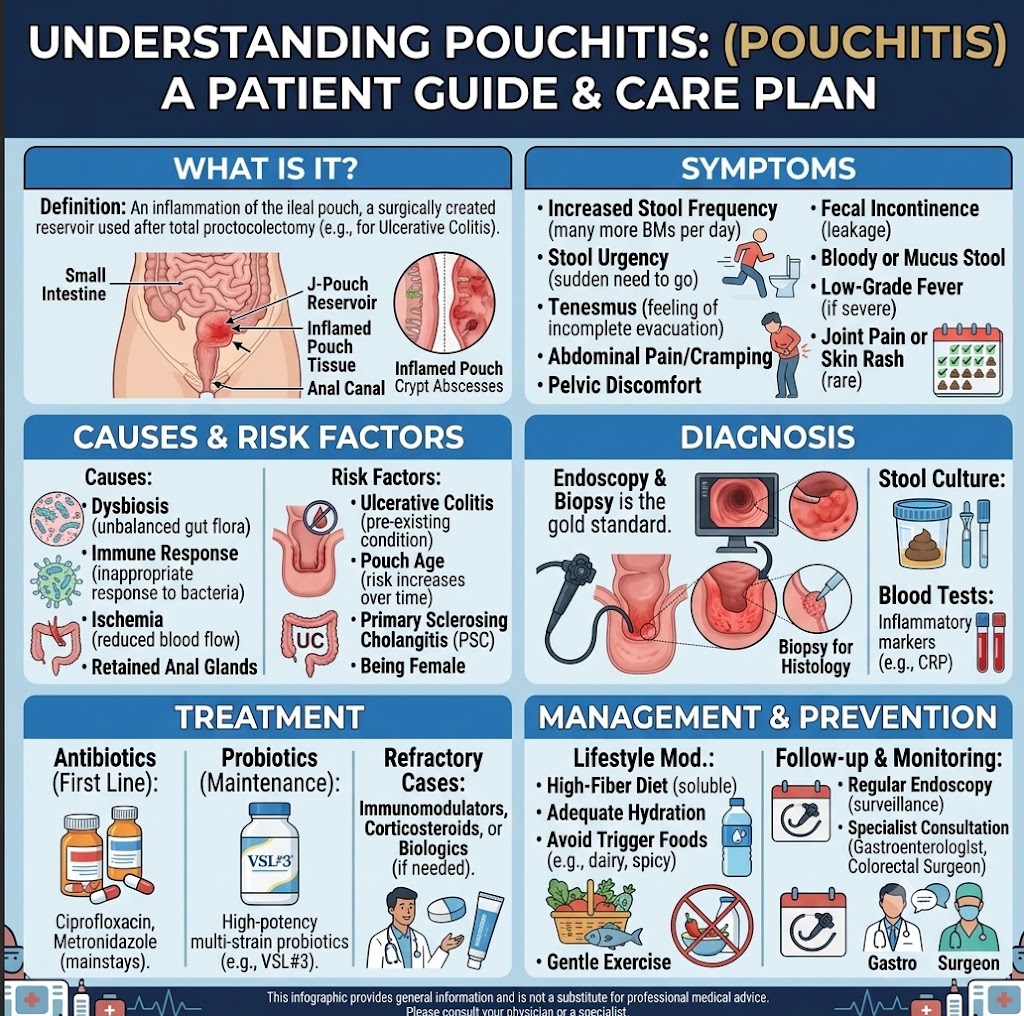
Pouchitis is a condition characterized by swelling and irritation (inflammation) of an internal pouch created during surgery to remove the large intestine. This surgical pouch, often called a J-pouch, is typically formed from the end of the small intestine (ileum) and connected to the area just above the anus. It serves to hold stool before it leaves the body, allowing for a more natural way of passing waste after the large intestine has been removed, commonly for severe ulcerative colitis or other specific bowel diseases. Pouchitis is a relatively common complication, affecting nearly half of individuals who undergo this procedure.
Understanding the Condition
Common Symptoms
Frequent Diarrhea: Loose, watery stools passed more often than usual.
Belly Pain and Cramps: Discomfort or sharp muscle spasms in the abdominal area.
Joint Pain: Aching or stiffness in the body's joints, not directly related to the gut.
Fever: An elevated body temperature, indicating a bodily response to inflammation or infection.
Increased Stool Frequency: Needing to pass stool much more often than usual, sometimes 8-10 or more times a day.
Nighttime Stool Leakage: Accidental passage of stool during sleep.
Difficulty Controlling Stool: Trouble holding back stool, leading to urgency or accidents.
Strong Urge to Pass Stool: An intense and sudden need to have a bowel movement, often difficult to delay.
Consultation Guide
Which Specialist to Meet
Before your visit, keep a detailed log of your symptoms, including when they started, their severity, and any factors that seem to worsen or improve them. List all medications you are currently taking, including over-the-counter drugs and supplements. Prepare a list of questions for your doctor regarding your condition and potential treatments. Be ready to discuss your full medical history.
Book a doctor visit near me
The doctor will discuss your symptoms and medical history, then gently examine your abdomen for tenderness or swelling.
Topical or Oral Anti-inflammatory Medications: These treatments (enemas, suppositories, or oral) reduce swelling and irritation of the pouch lining. (Duration: Varies from a few weeks to ongoing use, depending on symptom control and recurrence.)
Bland Diet during Flares: Eating easily digestible foods and avoiding gut-irritating spicy, fatty, or high-fiber items. (Duration: During symptom flare-ups and until symptoms significantly improve.)
Adequate Hydration: Drinking plenty of fluids throughout the day to prevent dehydration, especially when experiencing diarrhea. (Duration: Ongoing.)
Probiotic Supplements: Supplements containing beneficial bacteria that may help restore a healthier microbial balance in the pouch. (Duration: Can be used long-term as a supportive measure.)
Regular Medical Check-ups: Routine visits with your gastroenterologist are essential for early symptom detection, monitoring pouch health, and adjusting treatment.
Symptom Awareness: Pay attention to changes in bowel habits or new symptoms. Recognizing early signs like increased stool frequency or abdominal discomfort allows for prompt treatment.
Diagnostic Procedures
Pouchitis is a condition characterized by swelling and irritation (inflammation) of an internal pouch created during surgery to remove the large intestine. This surgical pouch, often called a J-pouch, is typically formed from the end of the small intestine (ileum) and connected to the area just above the anus. It serves to hold stool before it leaves the body, allowing for a more natural way of passing waste after the large intestine has been removed, commonly for severe ulcerative colitis or other specific bowel diseases. Pouchitis is a relatively common complication, affecting nearly half of individuals who undergo this procedure.
A doctor will examine your abdomen and assess your overall health, checking for tenderness or swelling.
What to Expect
Samples of your stool are analyzed to check for signs of infection, inflammation markers, or hidden blood.
What to Expect
You will collect a stool sample at home using a provided container, which is then sent to a lab for analysis.
Pouchoscopy (Endoscopy of the Pouch)
A thin, flexible tube with a camera (endoscope) is gently inserted into your surgical pouch through the anus. This allows the doctor to directly view the pouch lining for inflammation and, if necessary, take small tissue samples (biopsies) for further examination.
What to Expect
You'll likely receive a sedative. Lying on your side, a doctor guides the endoscope into the pouch. Air may be inflated for better viewing. The procedure takes 15-30 minutes; you might feel pressure. Biopsies, if taken, are usually painless. After, you'll recover from sedation and may have mild bloating or gas.
Treatment Options
Pouchitis: Understanding Inflammation After J-Pouch Surgery
Understanding the Condition
You should consult with a gastroenterologist, a doctor specializing in digestive system disorders. The surgeon who performed your J-pouch surgery can also provide insights, and your primary care provider can help coordinate care.
Preparations Before Your Visit
Medications
Oral Antibiotic Therapy: Medications that target bacterial overgrowth contributing to inflammation in the pouch. (Duration: Typically 2-4 weeks for an initial course; longer or intermittent courses may be needed for recurring cases.)
Immune System Modulators: For chronic pouchitis, these medications calm the immune response in the pouch. (Duration: Long-term use, often months to years, requiring regular monitoring by a specialist.)
Biologic Medications: Advanced therapies that block specific inflammatory pathways, used for severe, unresponsive pouchitis. (Duration: Long-term treatment, typically administered via injection or intravenous infusion on a regular schedule.)
Pouch Revision Surgery: In rare, severe, or unresponsive cases, or if structural issues exist, surgery corrects anatomical problems with the pouch. (Duration: A single procedure, followed by a recovery period.)
Avoid Certain Medications: Limit nonsteroidal anti-inflammatory drugs (NSAIDs), which can irritate the bowel and worsen pouchitis. Discuss alternatives with your doctor.
Manage Underlying Conditions: Effectively manage inflammatory bowel diseases like ulcerative colitis; uncontrolled disease increases pouchitis risk.
Adherence to Treatment Plan: Consistently follow your prescribed medication and lifestyle recommendations. Adherence is vital for controlling inflammation and preventing recurrence.
Stress Management: Implement stress-reduction techniques (e.g., meditation, yoga). Stress impacts gut health, so managing it can offer benefits.
Prevention & Long-Term Wellbeing
Lifestyle and Dietary Adjustments
Prevention
Maintain a Healthy Diet: Adopt a generally balanced and healthy diet to support gut health. Avoiding specific discomfort-causing foods may be beneficial.
Long-Term Monitoring and Management
Tags & Topics
Notice an error or need an update?
Help us keep medical information accurate. Report incorrect info or suggest an edit.


