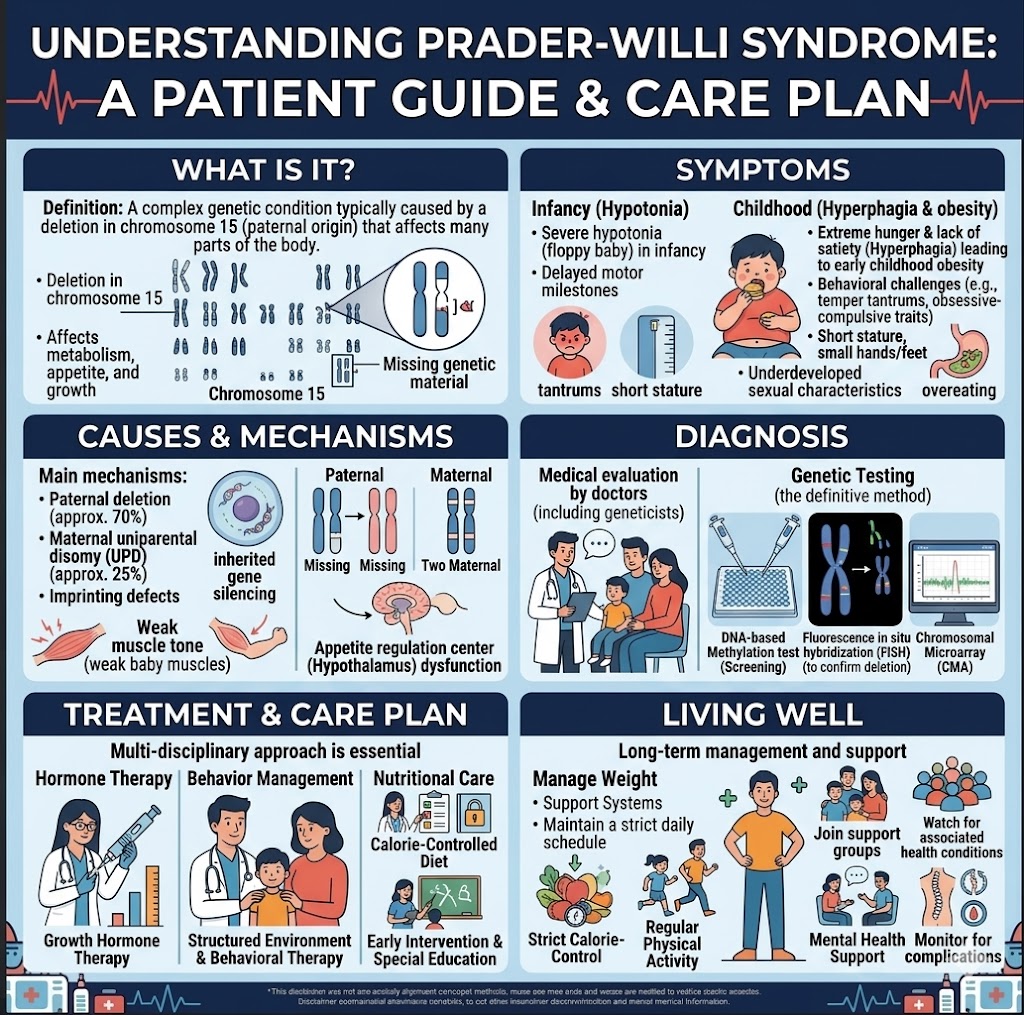
Prader-Willi syndrome (PRAH-dur VIL-e) is a rare genetic condition that affects many parts of the body, leading to physical, mental, and behavioral challenges. A defining feature is an overwhelming, constant feeling of hunger (hyperphagia) that begins in early childhood and never goes away. People with Prader-Willi syndrome never feel full, making weight management very difficult. Many health problems associated with the syndrome are linked to obesity. This condition results from a genetic error on chromosome 15, impacting how a part of the brain called the hypothalamus functions, which regulates hunger, growth, development, and mood.
Understanding the Condition
Prader-Willi Syndrome: A Lifelong Genetic Condition
Understanding the Condition
Prader-Willi syndrome (PRAH-dur VIL-e) is a rare genetic condition that affects many parts of the body, leading to physical, mental, and behavioral challenges. A defining feature is an overwhelming, constant feeling of hunger (hyperphagia) that begins in early childhood and never goes away. People with Prader-Willi syndrome never feel full, making weight management very difficult. Many health problems associated with the syndrome are linked to obesity. This condition results from a genetic error on chromosome 15, impacting how a part of the brain called the hypothalamus functions, which regulates hunger, growth, development, and mood.
Common Symptoms
Symptoms Present from Birth (Infancy): During the first months of life, babies with Prader-Willi syndrome may show:
- Poor Muscle Tone (Hypotonia): Babies often feel floppy, like a rag doll, and their limbs may rest loosely extended. This can make feeding difficult.
- Distinct Facial Features: Babies may be born with almond-shaped eyes, a narrower head at the temples, a downward-turned mouth, and a thin upper lip.
- Weak Sucking Reflex: Due to poor muscle tone, infants may struggle to suck strongly, making feeding challenging and hindering weight gain in early months.
- Generally Low Responsiveness: A baby might appear very tired, respond weakly to stimulation, have trouble waking up, or cry softly.
- Underdeveloped Genitals: In boys, the penis and scrotum may be small, and testicles might not descend properly into the scrotum (undescended testicles). In girls, the clitoris and labia may be small.
Symptoms Appearing in Early Childhood and Continuing Through Life: As children grow, other symptoms become apparent and require ongoing management:
- Constant Food Craving and Rapid Weight Gain: Starting in early childhood, an intense and continuous hunger leads to frequent eating and large portions, resulting in quick and excessive weight gain. Unusual food-seeking behaviors, like hoarding food or eating inappropriate items, are common.
- Underdeveloped Sex Organs (Hypogonadism): Sex organs (testes in males, ovaries in females) produce very little or no sex hormones. This prevents full sexual development, causing delayed or incomplete puberty. Most individuals with Prader-Willi syndrome are unable to have children. Girls may not start their menstrual period until their 30s or not at all without treatment. Boys may have little facial hair and voices that don't fully deepen.
- Poor Growth and Physical Development: Insufficient growth hormone can lead to shorter adult height, less muscle, and more body fat. Other hormone issues like low thyroid hormone (hypothyroidism) or difficulty responding to stress/infections (central adrenal insufficiency) may also occur.
- Difficulty Thinking, Learning, and Solving Problems: Many individuals experience mild to moderate cognitive impairment, affecting their ability to think, reason, and learn. Even without formal impairment, learning disabilities are common.
- Delayed Motor Skills: Children often reach physical milestones like sitting or walking later than other children.
- Speech Problems: Speech development is often delayed, and difficulties with word choice and clear speaking can continue into adulthood.
- Behavioral Challenges: Stubbornness, anger, controlling behavior, and manipulation are common. Tantrums, especially when denied food, and difficulty with routine changes are typical. Obsessive-compulsive or repetitive behaviors, anxiety, and skin picking can also occur.
- Sleep Disturbances: Sleep problems, including disrupted sleep cycles and pauses in breathing during sleep (sleep apnea), are common. These can cause daytime sleepiness and worsen behavioral issues.
- Other Physical Symptoms: These may include small hands and feet, a curved spine (scoliosis), hip problems, reduced saliva, dental issues, nearsightedness, and other vision problems. Pale hair, eyes, and skin (due to lack of pigment) are also possible, along with difficulty regulating body temperature and a higher tolerance for pain.
Consultation Guide
Which Specialist to Meet
Before your visit, gather any medical records, previous test results, and a list of all current medications or supplements. Prepare a list of your child's symptoms, developmental milestones, and any behavioral concerns you have. Write down any questions you want to ask the specialists to ensure all your concerns are addressed. Be ready to discuss family medical history.
Book a doctor visit near me
Consultation Guide
Genetic testing is the primary method for diagnosing Prader-Willi syndrome. It involves examining a person's DNA to look for specific changes or missing pieces on chromosome 15 that cause the condition. This testing can identify if the genetic error is due to a missing paternal gene, inheriting two copies of chromosome 15 from the mother, or a subtle change in the paternal genes on chromosome 15.
Diagnostic Procedures
What to Expect
For most genetic tests, a small sample of blood is drawn from a vein, typically in your arm, or a cheek swab is taken from the inside of your mouth. These procedures have minimal physical risk. For prenatal testing, methods like amniocentesis (collecting amniotic fluid) or chorionic villus sampling (collecting tissue from the placenta) can be performed. These prenatal tests carry a small risk of miscarriage. If initial genetic tests are inconclusive but Prader-Willi syndrome is strongly suspected, more advanced DNA analysis like genome or exome sequencing might be performed, which involves a more comprehensive look at your genetic material from a blood sample.
Sex Hormone Replacement Therapy: For both males and females, hormone therapy (e.g., estrogen for girls, testosterone for boys) can help stimulate puberty and support bone density. This can be important for bone health and the development of secondary sexual characteristics. (Duration: Typically started around puberty and continued through adulthood, under endocrinologist supervision.)
Surgical Correction for Physical Issues: In some cases, surgery may be recommended for conditions like undescended testicles, severe curvature of the spine (scoliosis), or hip problems to improve function and quality of life. (Duration: Performed as a one-time procedure if necessary, with potential for follow-up care.)
Treatment Options
Medications and Hormone Therapies
Growth Hormone Therapy: Daily injections of growth hormone can improve growth, increase muscle mass, reduce body fat, and contribute to overall physical development and strength. This is usually started in early childhood. (Duration: Lifelong, with regular monitoring by an endocrinologist.)
Other Hormone Management: Treatment for other hormone deficiencies, such as thyroid hormone for hypothyroidism or stress hormone support for central adrenal insufficiency, may be necessary to maintain proper body function. (Duration: As needed, often lifelong, with regular monitoring.)
Sleep Management: Treatment for sleep disorders, especially sleep apnea, may include devices like CPAP machines or other interventions to ensure restful sleep and reduce daytime sleepiness and behavioral problems. (Duration: As needed, often lifelong, with regular sleep studies.)
Surgical Procedures
Prevention & Long-Term Wellbeing
Managing Prader-Willi syndrome requires a team of healthcare professionals due to its wide range of effects. You will likely consult with a geneticist (a doctor specializing in genetic conditions), an endocrinologist (hormone specialist), a nutritionist or dietitian, physical and occupational therapists, a speech therapist, and behavioral specialists or psychologists. Your primary care physician will help coordinate this care.
Preparations Before Your Visit
Therapies and Lifestyle Management
Nutritional Counseling and Dietary Management: A strict, low-calorie, healthy diet is crucial to manage weight. Counseling helps families create structured meal plans, control portion sizes, and implement strategies to prevent constant food access. (Duration: Lifelong, starting in early childhood.)
Physical and Occupational Therapy: Physical therapy helps improve muscle tone, strength, and coordination, aiding in motor skill development. Occupational therapy assists with daily living activities and fine motor skills. (Duration: Ongoing, often from infancy through adulthood, adjusted to individual needs.)
Speech Therapy: Speech therapy addresses delays in language development and helps improve articulation and communication skills. (Duration: Ongoing, often from early childhood through adulthood.)
Behavioral Therapy and Mental Health Support: Behavioral strategies and counseling help manage challenging behaviors like tantrums, stubbornness, and obsessive-compulsive tendencies. Mental health support addresses anxiety and other associated conditions. (Duration: Ongoing, adjusted as needed throughout life.)
Prevention and Long-Term Monitoring
Genetic Counseling for Family Planning: If you have a child with Prader-Willi syndrome and are considering having more children, genetic counseling can help assess the risk of recurrence and discuss reproductive options.
Regular Medical Check-ups and Monitoring: Ongoing medical care is essential to monitor growth, hormone levels, bone density, and to screen for complications like type 2 diabetes, high blood pressure, high cholesterol, heart disease, and liver issues.
Structured Environment and Food Security: Creating a highly structured environment at home and school, with limited and controlled access to food, is vital for managing the constant hunger and preventing excessive weight gain.
Lifestyle and Support
Encouraging Physical Activity: Regular physical activity is important to maintain muscle mass, manage weight, and improve overall health, adapted to the individual's physical capabilities.
Community and Support Networks: Connecting with support groups and organizations dedicated to Prader-Willi syndrome can provide valuable resources, advice, and emotional support for individuals and their families.
Tags & Topics
Notice an error or need an update?
Help us keep medical information accurate. Report incorrect info or suggest an edit.


