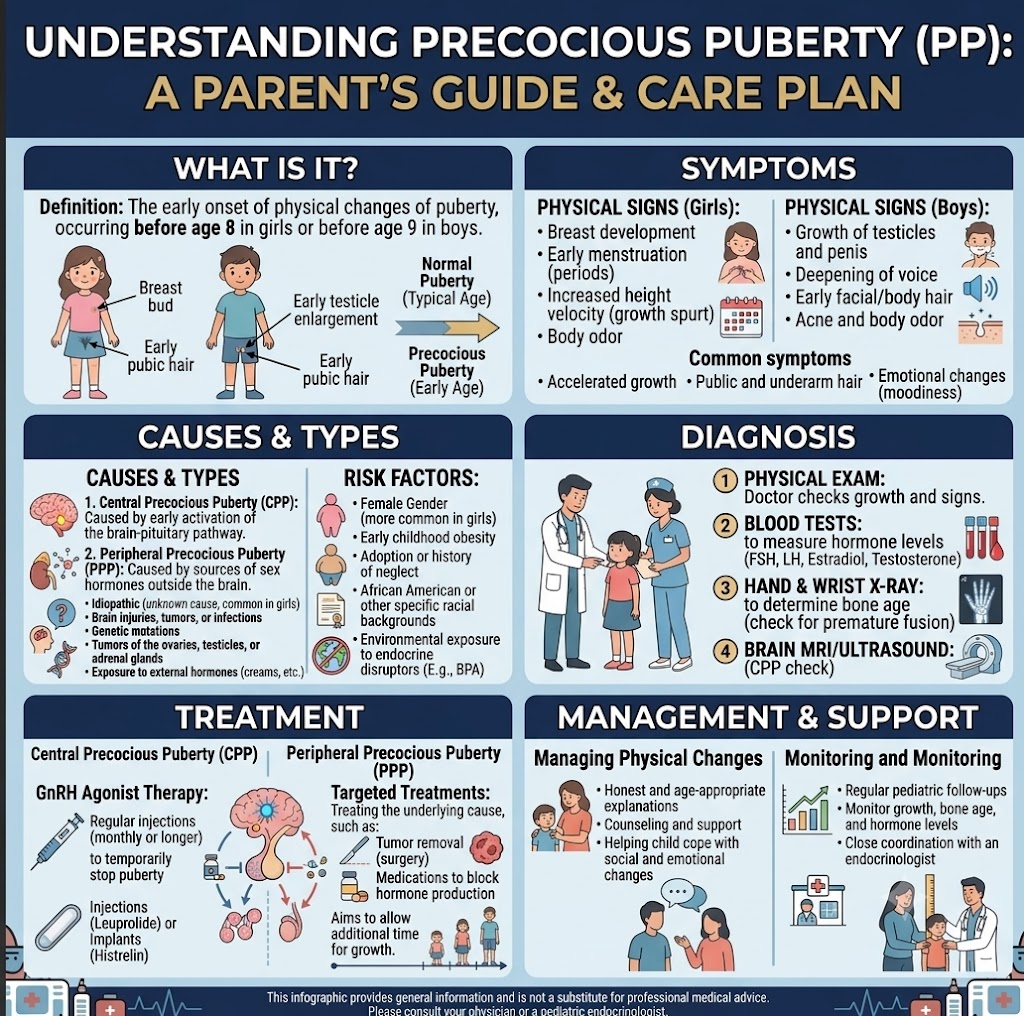
Precocious puberty occurs when a child's body begins to develop adult characteristics too early. This typically means puberty starts before age 8 in girls and before age 9 in boys, though natural timing can vary among ethnic groups. Puberty involves rapid growth of muscles and bones, changes in body shape, and the development of reproductive capability. Often, the exact cause remains unknown. In rare instances, infections, hormone imbalances, tumors, or brain-related issues can trigger it. Treatment usually involves medications to pause or slow down these early changes, allowing the child to develop at a more typical age.
Understanding the Condition
Understanding Early Puberty (Precocious Puberty)
Understanding the Condition
Common Symptoms
For Girls: Breast growth and the start of menstrual periods.
Start by consulting your child's primary doctor (pediatrician). They can assess the symptoms and, if needed, refer you to a pediatric endocrinologist, a specialist in children's hormone conditions and growth. If a brain-related cause is suspected, a pediatric neurologist may also be involved.
Preparations Before Your Visit
Before the visit, make a list of all symptoms your child is experiencing, noting when they started and any changes you've observed. Gather any available growth charts or medical records. Be ready to share information about your child's medical history, current medications, and any supplements. Prepare a list of questions you have for the doctor. Dress your child in comfortable, loose clothing.
Book a doctor visit near me
Consultation Guide
Precocious puberty occurs when a child's body begins to develop adult characteristics too early. This typically means puberty starts before age 8 in girls and before age 9 in boys, though natural timing can vary among ethnic groups. Puberty involves rapid growth of muscles and bones, changes in body shape, and the development of reproductive capability. Often, the exact cause remains unknown. In rare instances, infections, hormone imbalances, tumors, or brain-related issues can trigger it. Treatment usually involves medications to pause or slow down these early changes, allowing the child to develop at a more typical age.
Blood samples are taken to measure the levels of various hormones in your child's body, such as estrogen, testosterone, luteinizing hormone (LH), follicle-stimulating hormone (FSH), and gonadotropin-releasing hormone (GnRH). These levels help determine the specific type of precocious puberty and can point towards its cause.
Other Hormone-Blocking Medications: If precocious puberty is caused by an issue outside the brain, such as in the ovaries, testicles, or adrenal glands (known as peripheral precocious puberty), specific medications may be used to block the action of the excess hormones being produced. (Duration: Varies depending on the underlying cause and the child's response to treatment, often continued until normal puberty age.)
Tumor Removal: In rare instances where a tumor (in the brain, ovary, testicle, or adrenal gland) is identified as the cause of precocious puberty, surgery may be performed to remove the tumor. (Duration: A one-time procedure, followed by a recovery period and ongoing monitoring.)
Addressing Specific Causes: If an infection, cyst, or another specific medical problem is found to be triggering early puberty, treating that underlying condition directly can resolve or slow the precocious puberty. (Duration: Duration varies widely depending on the specific condition being treated.)
Diagnostic Procedures
For Boys: Enlargement of testicles and penis, growth of facial hair, and a deepening of the voice.
For Both Genders: Appearance of hair in the pubic area or underarms, noticeably rapid growth in height, and the development of adult body odor.
Consultation Guide
Which Specialist to Meet
This is a simple X-ray, typically of the left hand and wrist. It helps doctors estimate how mature your child's bones are compared to their actual chronological age. Bones that are significantly more developed than expected can indicate early puberty.
What to Expect
Your child will place their hand and wrist flat on an X-ray plate. A technician will take a quick, painless image. Your child will need to stay still for a few seconds. No specific preparation is required for this test.
What to Expect
A healthcare professional will draw a small amount of blood, usually from a vein in the arm. Your child might feel a brief pinch or sting. Sometimes, a special 'stimulation test' is performed where a medication is given, and blood is drawn at specific intervals to observe how the body's hormones respond.
Pelvic or Abdominal Ultrasound
This imaging test uses sound waves to create pictures of internal organs. For girls, it examines the ovaries and uterus. For boys, it checks the testicles. This helps to identify any cysts, tumors, or other abnormalities that might be producing hormones independently.
What to Expect
Your child will lie on an examination table. A clear gel will be applied to the skin over the area to be examined (pelvis or abdomen). A small handheld device (transducer) will be gently moved over the gelled area. Your child might feel slight pressure, but the procedure is painless and non-invasive.
Magnetic Resonance Imaging (MRI) of the Brain
An MRI uses strong magnets and radio waves to create detailed images of the brain. This test is often performed if hormone tests suggest that the brain is prematurely initiating puberty, helping to check for any brain tumors, birth defects, fluid buildup (hydrocephalus), or injuries.
What to Expect
Your child will lie very still on a narrow table that slides into a large, tunnel-like machine. The machine makes loud knocking noises, so earplugs or headphones are typically provided. Remaining still is crucial for clear images. For very young children, sedation might be necessary. The scan usually takes 30 to 60 minutes.
Avoid External Hormone Exposure: Keep all medications containing estrogen or testosterone, adult supplements, and certain personal care products (like some lotions or creams) safely out of reach of children, as accidental exposure can trigger early puberty.
Maintain a Healthy Weight: Encourage children to maintain a healthy weight through balanced nutrition and regular physical activity, as being overweight or obese can increase the risk of early puberty.
Long-Term Support and Monitoring
Education for Child and Family: Ensure both the child and family understand the condition, its treatment, and what to expect regarding future development and adult height. This knowledge empowers them to cope and make informed decisions.
Treatment Options
Medications
Gonadotropin-Releasing Hormone (GnRH) Analogs: These injectable medications work by blocking the early puberty signals sent from the brain. They effectively pause puberty development, can reverse some physical changes like breast growth, and help slow down the rapid bone maturation. (Duration: Usually administered monthly or every few months until the child reaches the age when puberty would naturally occur.)
Targeted Treatment for Underlying Conditions
Regular Medical Check-ups: Continue regular follow-up appointments with a pediatric endocrinologist to monitor growth, bone development, overall health, and the effectiveness of any treatment, especially after treatment completion.
Emotional and Social Support: Provide open communication and a supportive environment for your child to address any potential emotional challenges, self-esteem issues, or social awkwardness that may arise from early physical development. Counseling or support groups can also be beneficial.
Prevention & Long-Term Wellbeing
Prevention
Tags & Topics
Notice an error or need an update?
Help us keep medical information accurate. Report incorrect info or suggest an edit.


