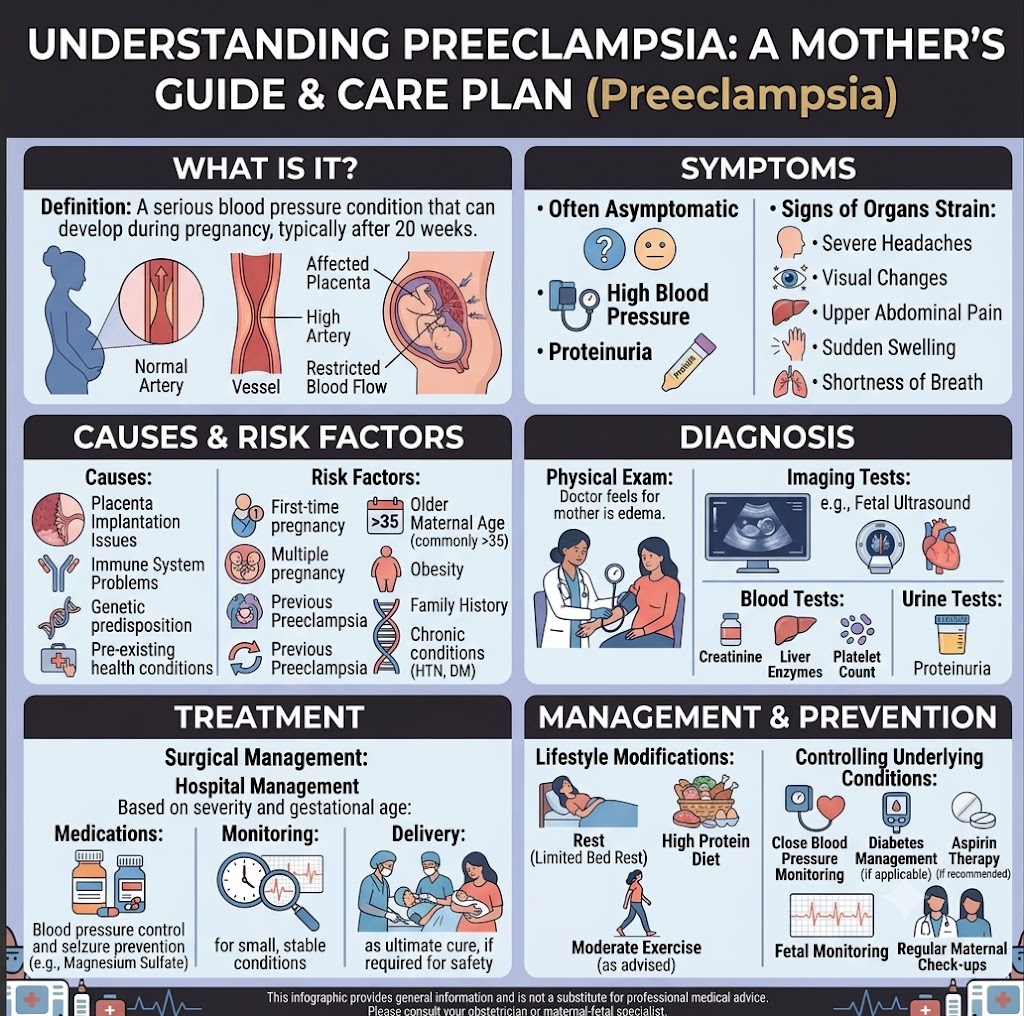
Preeclampsia is a serious pregnancy complication typically appearing after 20 weeks. It's characterized by new-onset high blood pressure, often with signs of organ damage like protein in the urine (kidney damage). Untreated, it can lead to severe, even fatal, risks for both mother and baby. Delivery is often the definitive treatment, with timing based on severity and gestational age. Preeclampsia can also occur after childbirth, known as postpartum preeclampsia.
Understanding the Condition
Preeclampsia: Understanding a Serious Pregnancy Condition
Understanding the Condition
Common Symptoms
High Blood Pressure: This is the hallmark sign, often detected during routine check-ups without noticeable symptoms.
Before your visit, prepare a detailed list of all your symptoms, including when they started and how often they occur. Bring your complete medical history, including any previous pregnancies or existing health conditions. List all medications you are currently taking, including over-the-counter drugs and supplements. Prepare a list of questions you have for your doctor.
Book a doctor visit near me
Diagnostic Procedures
Protein in Urine: Detected through urine tests, this indicates potential kidney damage.
Sudden Swelling: Especially noticeable in the face and hands; rapid or excessive swelling is a warning sign.
Sudden Weight Gain: A rapid increase in weight over a short period.
Severe Headaches: Persistent headaches that don't improve with typical pain relievers.
Vision Changes: Blurred vision, flashing lights, seeing spots, or temporary vision loss.
Severe Abdominal Pain: Often felt in the upper right side of the belly or around the stomach area.
Shortness of Breath: Can be a sign of fluid buildup in the lungs.
Consultation Guide
Which Specialist to Meet
You should consult with an Obstetrician/Gynecologist (OB/GYN), potentially a Maternal-Fetal Medicine specialist for high-risk pregnancies or complications.
Preparations Before Your Visit
Blood Pressure Measurement
This routine check of blood pressure using an arm cuff is essential for diagnosis and monitoring.
What to Expect
A healthcare provider will place a cuff on your arm and inflate it, temporarily restricting blood flow. You might feel a brief squeeze. The cuff slowly deflates, and the device measures your systolic (top number) and diastolic (bottom number) pressures. It's a quick, painless procedure.
Urine Tests for Protein
These tests check for elevated levels of protein in your urine, a key indicator of possible kidney damage.
What to Expect
For a simple dipstick test, you'll provide a urine sample. A test strip is dipped into the sample, changing color if protein is present. For more precision, a 24-hour urine collection may be requested, where you'll collect all your urine at home over a full day following specific instructions.
Blood tests evaluate kidney and liver function, and platelet count (blood clotting cells) to assess organ damage and clotting ability.
What to Expect
A healthcare professional will draw a small sample of blood, usually from a vein in your arm, using a needle. You might feel a brief prick or sting. The sample is then sent to a lab for analysis.
An imaging test used to monitor your baby's growth, amniotic fluid levels, and overall well-being.
What to Expect
You will lie on an exam table, and a gel will be applied to your abdomen. A handheld device (transducer) will be moved over the gelled area, sending sound waves to create images of your baby on a screen. The procedure is painless, though the gel may feel cool.
Nonstress Test and Biophysical Profile
These tests assess your baby's heart rate, movement, breathing, muscle tone, and amniotic fluid volume.
What to Expect
For a nonstress test, you'll have two monitors placed on your abdomen with elastic belts. One monitors your baby's heart rate, and the other tracks uterine contractions. A biophysical profile combines the nonstress test with an ultrasound to get a more comprehensive picture of your baby's health. Both are non-invasive and generally comfortable.
Close Monitoring: For mild cases, frequent outpatient appointments with blood pressure checks and urine tests are conducted. Severe cases often require hospitalization for continuous maternal and fetal monitoring. (Duration: Varies, from weeks until delivery.)
Activity Restriction: Your doctor may advise reduced physical activity or bed rest to help lower blood pressure and improve blood flow to the baby. (Duration: As advised by your doctor, until delivery.)
Regular Prenatal Care: Consistent attendance at all scheduled prenatal appointments allows your healthcare provider to monitor your blood pressure and conduct necessary tests to detect preeclampsia early.
Managing Existing Conditions: Work closely with your doctor to effectively manage chronic conditions such as high blood pressure, diabetes, or autoimmune diseases before and during pregnancy.
Treatment Options
Preeclampsia is a serious pregnancy complication typically appearing after 20 weeks. It's characterized by new-onset high blood pressure, often with signs of organ damage like protein in the urine (kidney damage). Untreated, it can lead to severe, even fatal, risks for both mother and baby. Delivery is often the definitive treatment, with timing based on severity and gestational age. Preeclampsia can also occur after childbirth, known as postpartum preeclampsia.
Monitoring and Management
Medications
Blood Pressure Lowering Medications: These medications are prescribed to control high blood pressure, reducing risks like stroke. (Duration: Taken regularly until delivery, and sometimes for a period postpartum.)
Corticosteroids: If early delivery is likely, these medications may be given to the pregnant person to help accelerate the baby's lung development. (Duration: Typically given in one or two doses over a short period (1-2 days).)
Anticonvulsant Medications: Used to prevent seizures (eclampsia), especially in severe preeclampsia or during labor and delivery. (Duration: Administered intravenously during labor, delivery, and generally for 24 hours postpartum.)
Delivery (Definitive Treatment)
Labor Induction: This procedure involves using medications or other methods to stimulate uterine contractions and start labor, allowing for a vaginal delivery. It is considered when preeclampsia is severe or the pregnancy is near term. (Duration: The process can take several hours to a few days.)
Prevention & Long-Term Wellbeing
Cesarean Section (C-section): A surgical procedure where the baby is delivered through incisions made in the abdomen and uterus. A C-section may be recommended if labor induction isn't successful, if the preeclampsia is very severe, or if there are other complications for the mother or baby. (Duration: The surgical procedure typically lasts about an hour, followed by a recovery period.)
Prevention Strategies
Healthy Lifestyle Choices: Maintain a balanced diet, engage in moderate exercise as approved by your doctor, and avoid smoking and alcohol during pregnancy to support overall health.
Aspirin Therapy (Consult Doctor): For individuals at high risk of preeclampsia, your doctor might recommend taking a low-dose aspirin daily starting in the first trimester. This should only be done under strict medical guidance.
Long-Term Monitoring and Postpartum Care
Postpartum Blood Pressure Monitoring: Preeclampsia can develop or persist after delivery. Your blood pressure should be carefully monitored for several weeks postpartum, and follow-up appointments are crucial.
Future Pregnancy Planning: Discuss the risks of preeclampsia in future pregnancies with your doctor, as having it once increases the likelihood of recurrence.
Cardiovascular Health Focus: Preeclampsia can increase the long-term risk of heart disease and stroke. Adopting a heart-healthy lifestyle, including diet and exercise, is important for sustained well-being after pregnancy.
Tags & Topics
Notice an error or need an update?
Help us keep medical information accurate. Report incorrect info or suggest an edit.


