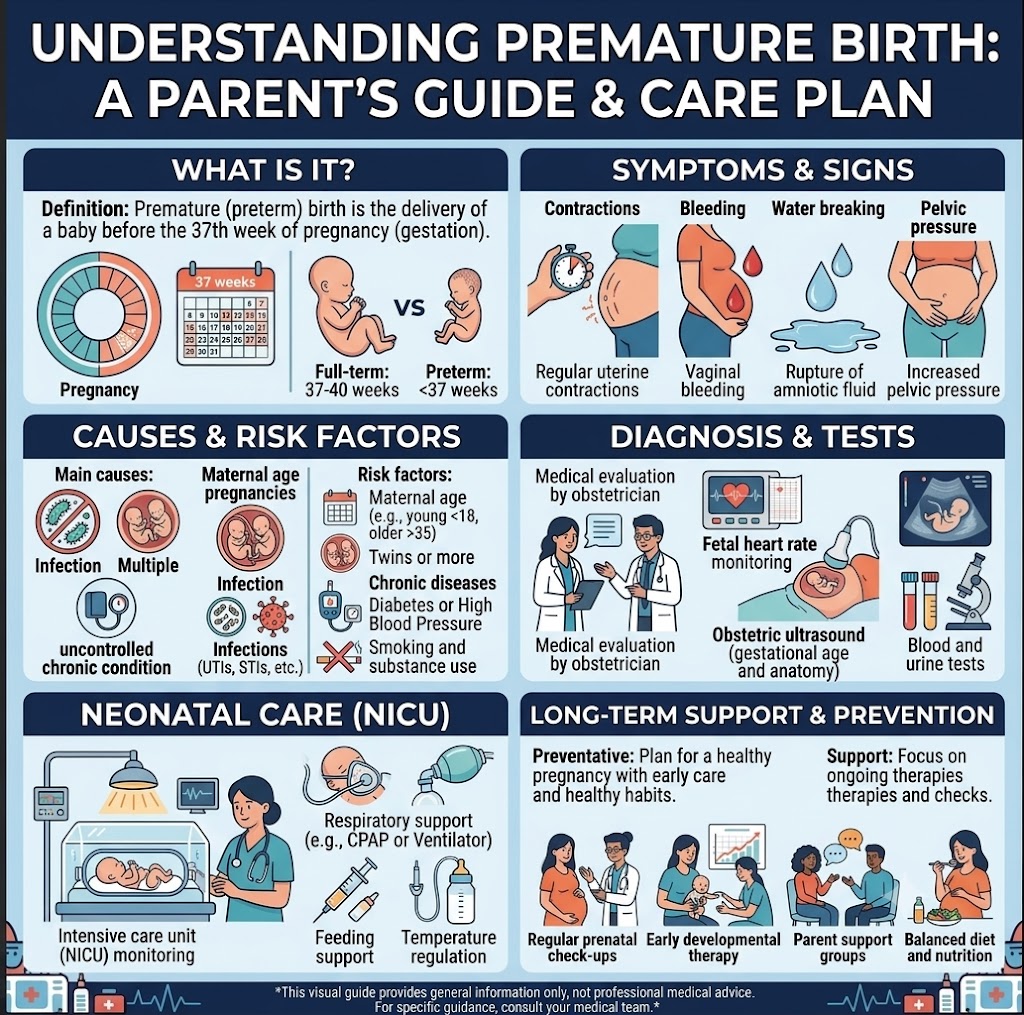
Premature birth occurs when a baby is born too early, before 37 completed weeks of pregnancy (a full-term pregnancy is about 40 weeks). Babies born prematurely often face significant health challenges, with risks increasing the earlier they arrive.Premature births are categorized by gestational age:* **Late preterm:** 34 to 36 weeks.* **Moderately preterm:** 32 to 34 weeks.* **Very preterm:** 28 to 32 weeks.* **Extremely preterm:** Before 28 weeks.Most premature births happen in the late preterm stage.
Understanding the Condition
Premature Birth: Understanding Early Arrival
Understanding the Condition
Premature birth occurs when a baby is born too early, before 37 completed weeks of pregnancy (a full-term pregnancy is about 40 weeks). Babies born prematurely often face significant health challenges, with risks increasing the earlier they arrive.Premature births are categorized by gestational age:* **Late preterm:** 34 to 36 weeks.* **Moderately preterm:** 32 to 34 weeks.* **Very preterm:** 28 to 32 weeks.* **Extremely preterm:** Before 28 weeks.Most premature births happen in the late preterm stage.
Common Symptoms
Small size: Babies are typically smaller with a head that appears large in proportion to their body.
Less rounded features: Due to a lack of stored body fat, their features may appear sharper than those of a full-term baby.
Fine body hair: Much of their body may be covered in very fine, soft hair.
Low body temperature: Especially right after birth, they may struggle to maintain a stable body temperature.
Breathing difficulties: Lungs may not be fully developed, leading to trouble breathing.
Feeding problems: Difficulties with sucking, swallowing, or coordinating feeding.
Consultation Guide
Which Specialist to Meet
Consultation Guide
If you are pregnant and have concerns about premature birth, or if your baby is born prematurely, you should consult with several specialists. An **obstetrician** (a doctor specializing in pregnancy and childbirth) can monitor your pregnancy for risk factors. After birth, a **neonatologist** (a doctor specializing in the care of newborns, especially sick or premature babies) will oversee your baby's health. Your baby will also have ongoing care from a **pediatrician** (a children's doctor).
Preparations Before Your Visit
You will lie on an examination table, and a gel will be applied to your abdomen. A handheld device will be moved over the gelled area, sending sound waves and capturing echoes to form images. It's generally painless, though you might feel slight pressure. For a transvaginal ultrasound (often used for cervical length), a smaller device is inserted into the vagina, which may cause mild discomfort. Preparation may include a full bladder.
This routine test measures the force of blood against the walls of your arteries as your heart pumps. It's important for monitoring overall health during pregnancy, as high blood pressure can be a risk factor for premature birth. It also helps assess a premature baby's condition if low blood pressure is a concern.
Avoiding Ineffective Bed Rest: Bed rest is generally not recommended for prevention and can cause other health complications.
Long-Term Health Monitoring and Support
Regular Pediatric Follow-ups: Essential for tracking growth, development, and overall health, especially during the first few years.
Developmental & Learning Assessments: Early screening for delays, learning disabilities, or ADHD, and timely intervention.
Vision and Hearing Screenings: Crucial checks for common issues like retinopathy of prematurity and hearing loss.
Dental Care: Monitoring for potential dental problems like delayed eruption or alignment.
Mental Health Support: Awareness and support for potential increased risks of anxiety, depression, or behavioral issues.
Chronic Condition Management: Ongoing care for common health problems such as asthma, recurrent infections, and feeding difficulties.
Safe Sleep Practices: Adhering to guidelines to reduce the heightened risk of sudden infant death syndrome (SIDS) in premature babies.
Diagnostic Procedures
This safe procedure uses sound waves to create internal images, monitoring fetal growth, amniotic fluid, and cervical length during pregnancy—a key indicator for premature birth risk.
What to Expect
What to Expect
A cuff will be placed around your arm and inflated, momentarily squeezing your arm. This inflation measures your blood pressure. The feeling lasts only a few seconds and is usually quick and painless, though some find the squeeze slightly uncomfortable.
An echocardiogram uses sound waves to create moving pictures of the heart, showing blood flow and heart valve function. In premature babies, it diagnoses and monitors heart conditions like persistent vessel openings (patent ductus arteriosus) or checks overall heart health.
What to Expect
For a baby, sensors (electrodes) will be placed on the chest and sometimes legs to monitor heart rhythm. Gel is applied to the chest, and a handheld device gently moved over the area to capture heart images. The procedure is non-invasive and painless for the baby.
Specialized Feeding (Tube Feeding): Delivering liquid nutrition via a tube through the nose to the stomach or small intestine if oral feeding is difficult. (Duration: Short-term or longer, until independent feeding is possible.)
Treatment Options
Be prepared to discuss your complete medical history, including any previous pregnancies, health conditions, or fertility treatments. Bring a list of any questions you have about your pregnancy or your baby's health.
Book a doctor visit near me
Medical Care and Support for Premature Babies
Respiratory Support: Oxygen, breathing machines, or medication to help underdeveloped lungs expand and function. (Duration: Weeks to months, until lungs mature.)
Heart Problem Management: Monitoring and treatment for heart conditions like open vessels (patent ductus arteriosus). May involve medication, procedures, or blood transfusions for low blood pressure. (Duration: As needed, often spontaneous resolution or short-term intervention.)
Temperature Regulation: Incubators or warmers to maintain a stable body temperature due to lack of stored fat. (Duration: Initial weeks until stable body temperature control develops.)
Digestive Support: Careful feeding plans, often starting with breast milk or specialized formula, to support an immature digestive system and prevent bowel issues. (Duration: Throughout hospitalization, adapting as baby matures.)
Blood Disorder Treatment: Management of anemia (low red blood cells) potentially with blood transfusions, and jaundice (yellow skin/eyes) usually with light therapy. (Duration: As needed; transfusions short-term, light therapy days to weeks.)
Blood Sugar Management: Monitoring and treatment for low blood sugar levels, often requiring glucose administration. (Duration: Until stable, typically first days to weeks.)
Infection Control: Administering antimicrobial medications for suspected or confirmed infections due to immature immune systems. (Duration: Typically 1-2 weeks or more, depending on the infection.)
Prevention & Long-Term Wellbeing
Prevention of Premature Birth
Progesterone Supplements: Hormone therapy to reduce risk in individuals with prior premature birth or a short cervix.
Cervical Cerclage: Surgical stitching of the cervix to provide support for those with a short cervix and history of early birth. Stitches are removed before delivery.
Optimal Pregnancy Spacing: Allowing 18-24 months between pregnancies for body recovery.
Managing Chronic Conditions: Close control of high blood pressure, diabetes, and other health issues before and during pregnancy.
Tags & Topics
Notice an error or need an update?
Help us keep medical information accurate. Report incorrect info or suggest an edit.


