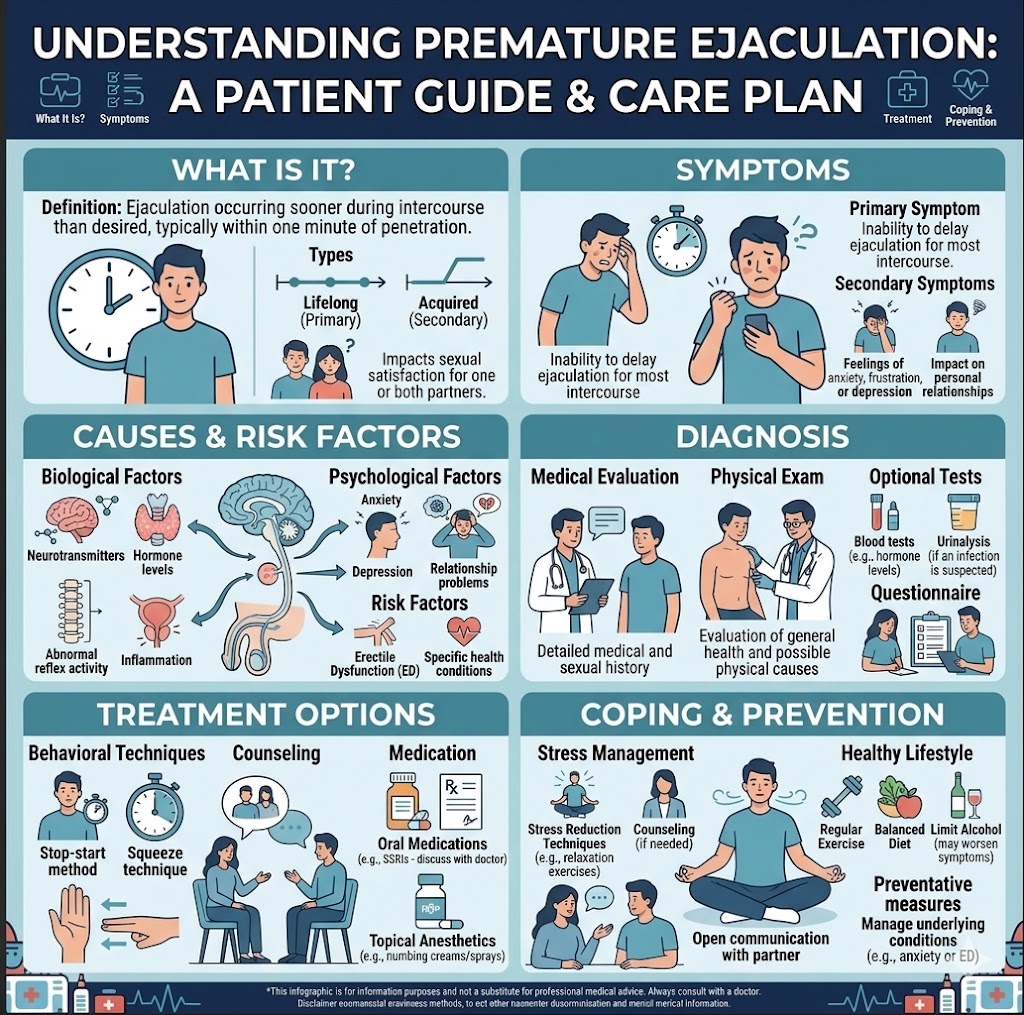
Premature ejaculation (PE) occurs when a man ejaculates sooner than he or his partner would like during sexual activity. It's a common sexual concern, affecting up to one in three men at some point. While occasional early ejaculation isn't usually a problem, it may be diagnosed as PE if it consistently happens within one to three minutes of penetration, if there's an inability to delay ejaculation, and if it causes significant distress, frustration, or avoidance of sexual intimacy. PE is a treatable condition, and various approaches, including medications, counseling, and specific techniques, can help improve sexual experiences.
Understanding the Condition
Common Symptoms
Rapid Ejaculation: The primary symptom is consistent ejaculation within one to three minutes after vaginal penetration. This can occur in various sexual situations, including masturbation.
Inability to Delay Ejaculation: A persistent or recurrent inability to control or delay ejaculation during nearly all sexual encounters.
Medical History and Symptom Review
Diagnosis typically begins with a thorough discussion of your medical and sexual history. Your doctor will ask about your symptoms, including how long you've experienced them, how often they occur, and their impact on your life and relationships. This helps determine if your experience fits the criteria for premature ejaculation or if it's an occasional occurrence.
Consultation Guide
Premature Ejaculation: Understanding, Causes, and Treatment
Understanding the Condition
Premature ejaculation (PE) occurs when a man ejaculates sooner than he or his partner would like during sexual activity. It's a common sexual concern, affecting up to one in three men at some point. While occasional early ejaculation isn't usually a problem, it may be diagnosed as PE if it consistently happens within one to three minutes of penetration, if there's an inability to delay ejaculation, and if it causes significant distress, frustration, or avoidance of sexual intimacy. PE is a treatable condition, and various approaches, including medications, counseling, and specific techniques, can help improve sexual experiences.
Healthy Lifestyle: Maintaining a healthy lifestyle, including a balanced diet, regular physical activity, adequate sleep, and limiting alcohol and tobacco, supports overall physical and mental health, which can positively impact sexual function and reduce the risk factors for PE.
Addressing Underlying Conditions: If premature ejaculation is linked to other health issues like erectile dysfunction or anxiety, effectively managing these conditions can also improve PE. This might involve working with your doctor to treat the root cause.
Practice Techniques Regularly: Consistent practice of behavioral techniques (like start-stop or squeeze methods) and pelvic floor exercises, even after initial improvement, is crucial for long-term maintenance of ejaculatory control.
Diagnostic Procedures
Emotional Distress and Avoidance: Feelings of frustration, embarrassment, or distress, often leading to a reduced desire for sexual intimacy or avoidance of sex altogether. This emotional impact is a key factor in diagnosing the condition.
Lifelong vs. Acquired: PE can be 'lifelong,' meaning it has been present since the first sexual experiences, or 'acquired,' meaning it develops after a period of normal ejaculatory control.
Consultation Guide
Which Specialist to Meet
You may consult with a general practitioner, who can often initiate the conversation and refer you to a specialist. Specialists typically include urologists (doctors specializing in male reproductive and urinary health) or sexual health therapists/counselors.
Preparations Before Your Visit
What to Expect
You will have a private conversation with your doctor where they ask detailed questions about your sexual experiences, relationship status, general health, and emotional state. You might be asked to describe specific instances of early ejaculation and any associated feelings of distress or anxiety. This discussion is crucial for understanding the nature of the problem.
A physical exam helps rule out any underlying physical conditions that might contribute to premature ejaculation, such as prostate problems, hormonal imbalances, or nerve damage.
What to Expect
Your doctor will perform a general physical examination, which may include checking your blood pressure, heart rate, and examining your genitals to ensure there are no obvious physical abnormalities. Blood tests may also be ordered to check hormone levels or other health markers.
Psychological Evaluation
Given the strong connection between mental and emotional health and sexual function, your doctor or a referred therapist may conduct an evaluation to explore psychological factors such as anxiety, stress, depression, or relationship issues that could be contributing to premature ejaculation.
What to Expect
Treatment Options
Before your visit, consider noting down your sexual history, including when you first noticed the issue, how often it occurs, and how it impacts your relationships and emotional well-being. Be prepared to discuss any current medications, stress levels, or relationship concerns. It's helpful to be open and honest, as sexual health can be sensitive to discuss, but healthcare providers are accustomed to these conversations.
Book a doctor visit near me
This involves a structured conversation where a healthcare professional asks questions about your mood, stress levels, relationship dynamics, and any past traumas or anxieties. This assessment helps identify psychological triggers or underlying mental health conditions that may need to be addressed as part of your treatment plan.
Behavioral Therapies and Techniques
Start-Stop Technique: This involves sexually stimulating yourself or your partner until you feel close to ejaculation, then stopping the stimulation until the feeling subsides. This is repeated several times before allowing ejaculation. It helps improve awareness and control over arousal levels. (Duration: Practiced regularly, often for several weeks or months, as an ongoing technique during sexual activity.)
Squeeze Technique: Similar to the start-stop method, but when you feel close to ejaculating, you or your partner firmly squeeze the end of the penis (where the head meets the shaft) for about 10-20 seconds until the urge passes. Stimulation is then resumed. This technique aims to reduce arousal and delay ejaculation. (Duration: Practiced regularly, often for several weeks or months, as an ongoing technique during sexual activity.)
Pelvic Floor Exercises: Strengthening the pelvic floor muscles, often known as Kegel exercises, can improve control over ejaculation. These exercises involve contracting and relaxing the muscles used to stop urination. (Duration: Performed daily for several weeks to months, then continued for maintenance.)
Counseling and Psychotherapy
Cognitive Behavioral Therapy (CBT): CBT helps individuals identify and change negative thought patterns and behaviors related to sexual performance, anxiety, or relationship issues that contribute to premature ejaculation. It provides coping strategies and reframes problematic thoughts. (Duration: Typically involves 8-20 structured sessions over several weeks or months, with ongoing practice of learned skills.)
Sex Therapy: A specialized form of counseling that helps individuals and couples address sexual concerns, including PE. It focuses on communication, intimacy, and exploring underlying psychological or relationship factors. (Duration: Varies widely, from a few weeks to several months, depending on individual needs and progress.)
Medications
Topical Anesthetic Creams or Sprays: These products contain numbing agents and are applied to the penis before intercourse to reduce sensitivity, thereby helping to delay ejaculation. (Duration: Applied 10-20 minutes before sexual activity, as needed.)
Oral Medications: Certain oral medications, originally developed for other conditions, have been found to have a side effect of delaying ejaculation. These are taken under medical supervision and can help extend the time to ejaculation. (Duration: Taken as prescribed, either daily or 'on-demand' (1-3 hours before sexual activity), with effects lasting as long as the medication is active.)
Prevention & Long-Term Wellbeing
Prevention and Long-Term Strategies
Open Communication with Partner: Discussing your concerns openly and honestly with your partner can reduce performance anxiety and foster a supportive environment. Partners can work together on techniques and share expectations, enhancing intimacy and reducing pressure.
Stress Management: Chronic stress and anxiety, whether related to sexual performance or other life aspects, can worsen premature ejaculation. Incorporating stress-reducing practices like mindfulness, meditation, regular exercise, or hobbies can significantly improve overall well-being and sexual function.
Tags & Topics
Notice an error or need an update?
Help us keep medical information accurate. Report incorrect info or suggest an edit.


