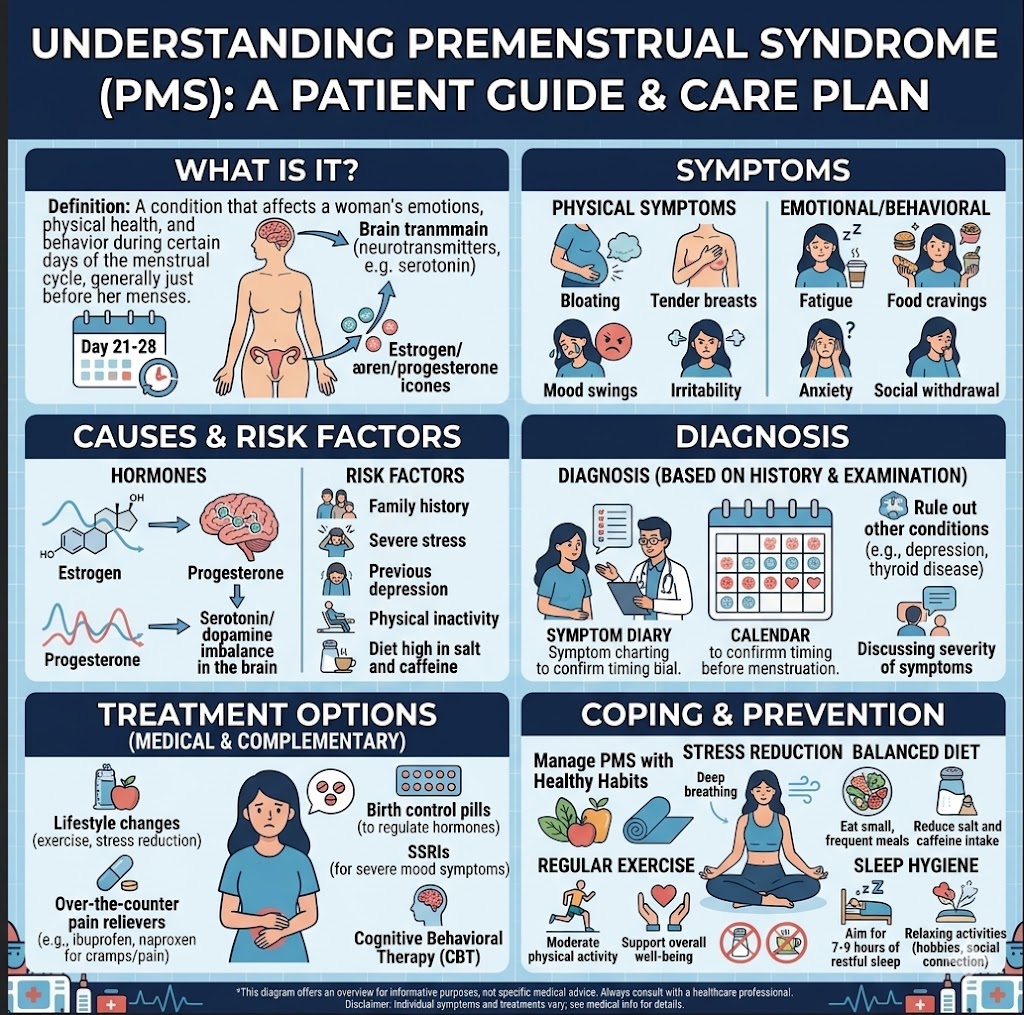
Premenstrual Syndrome (PMS) is a very common condition affecting many women in the days or weeks leading up to their menstrual period. It involves a wide range of physical and emotional changes, which can vary from mild to intense. It's estimated that as many as 3 out of every 4 menstruating women experience some form of PMS. While these symptoms typically follow a predictable pattern and usually disappear within a few days after the period starts, for a smaller number of women, the symptoms can be severe and disabling every month. This more intense form is called Premenstrual Dysphoric Disorder (PMDD). Both PMS and PMDD are manageable conditions, and various treatments and lifestyle adjustments can significantly reduce their impact on daily life.
Understanding the Condition
Understanding Premenstrual Syndrome (PMS) and Premenstrual Dysphoric Disorder (PMDD)
Understanding the Condition
Premenstrual Syndrome (PMS) is a very common condition affecting many women in the days or weeks leading up to their menstrual period. It involves a wide range of physical and emotional changes, which can vary from mild to intense. It's estimated that as many as 3 out of every 4 menstruating women experience some form of PMS. While these symptoms typically follow a predictable pattern and usually disappear within a few days after the period starts, for a smaller number of women, the symptoms can be severe and disabling every month. This more intense form is called Premenstrual Dysphoric Disorder (PMDD). Both PMS and PMDD are manageable conditions, and various treatments and lifestyle adjustments can significantly reduce their impact on daily life.
Common Symptoms
Premenstrual Syndrome (PMS): PMS symptoms can include mood swings, tender breasts, food cravings, fatigue, irritability, and feelings of depression. Most women only experience a few of these problems, and their severity can range from slightly noticeable to quite bothersome. These symptoms generally resolve within four days after the start of menstruation.
Premenstrual Dysphoric Disorder (PMDD): PMDD is a more severe form where emotional and behavioral symptoms are prominent and can significantly disrupt daily life and relationships. Key PMDD symptoms include severe depression, extreme mood swings, intense anger or irritability, anxiety, feeling overwhelmed, and difficulty concentrating or feeling tense. Physical symptoms like bloating, breast tenderness, and fatigue can also be present, similar to PMS, but the emotional distress is typically much more pronounced.
Consultation Guide
Which Specialist to Meet
You should start by consulting your primary care doctor or a gynecologist. If your symptoms are primarily severe mood-related issues, especially those characteristic of PMDD, they might refer you to a mental health professional, such as a psychiatrist or therapist, for specialized evaluation and treatment.
Preparations Before Your Visit
Before your visit, it's highly recommended to keep a symptom diary for at least two to three menstrual cycles. In this diary, record daily physical and emotional symptoms, their severity (e.g., on a scale of 1-10), and precisely when they start and stop in relation to your menstrual period. Be ready to discuss your medical history, any current medications or supplements you're taking, and any family history of mood disorders. Also, prepare a list of questions you have for your doctor.
Book a doctor visit near me
Symptom Tracking and Medical History Review
Diagnosing PMS or PMDD primarily relies on a detailed review of your symptoms and medical history, as there are no specific laboratory tests to confirm these conditions. Your doctor will ask about the type, severity, and timing of your physical and emotional symptoms over several menstrual cycles. This helps them identify the predictable pattern characteristic of PMS or PMDD and rule out other conditions that might have similar symptoms.
Your doctor will likely ask you to keep a detailed symptom diary for at least two to three menstrual cycles. You'll record daily physical and emotional symptoms, their intensity, and precisely when they occur in relation to your menstrual cycle. This meticulous tracking is crucial for identifying the cyclical pattern required for diagnosis and for distinguishing PMS/PMDD from other health issues. Your doctor will also conduct a physical exam and may order blood tests (for example, to check thyroid function) to rule out other medical conditions that could be causing your symptoms, such as thyroid disorders, anemia, or other mood disorders.
Antidepressant Medications: Certain types of antidepressants, often those that increase serotonin levels, are frequently prescribed for severe mood symptoms associated with PMDD. They can be taken daily or sometimes only during the 1-2 weeks before your period. (Duration: Varies, often long-term or cyclical as needed, under medical supervision)
Hormonal Contraceptives: Oral contraceptives, particularly combination pills containing estrogen and a progestin, can help regulate hormone fluctuations, reduce PMS/PMDD symptoms, lighten periods, and may prevent ovulation. Progestin-only pills are also an option for some women. (Duration: Long-term, as prescribed, typically years)
Diuretics: These medications can help reduce fluid retention and bloating, providing relief for associated physical discomfort. (Duration: As needed, cyclically during symptomatic phase)
Pain Relievers: Over-the-counter pain medications can help manage physical symptoms such as headaches, breast tenderness, and menstrual cramps. (Duration: As needed during symptomatic phase)
Cognitive Behavioral Therapy (CBT): CBT is a type of talk therapy that helps you identify and change negative thought patterns and behaviors that contribute to mood symptoms and stress. (Duration: Typically 6-20 sessions, but can be ongoing as needed)
Mindful Eating: Continue to avoid or limit trigger foods like excessive caffeine, alcohol, and high-sugar or high-sodium items, especially in the week or two before your period, as these can worsen symptoms.
Ongoing Stress Reduction: Regularly incorporate stress-reducing activities into your daily life, such as meditation, deep breathing, or spending time in nature, to lower overall stress and its impact on symptoms.
Adequate Sleep: Aim for 7-9 hours of quality sleep per night. Poor sleep can exacerbate fatigue and mood disturbances associated with PMS and PMDD.
Continued Symptom Tracking: Regularly tracking your symptoms can help you and your doctor assess the effectiveness of treatments, identify any new patterns or triggers, and make necessary adjustments to your management plan.
Regular Medical Check-ups: Maintain open communication with your healthcare provider through regular check-ups to review your symptoms, treatment effectiveness, and overall health. This ensures your management plan remains optimized.
Diagnostic Procedures
What to Expect
Treatment Options
Medications
Not Typically Used: Surgical interventions are generally not a primary treatment for PMS or PMDD. In very rare, severe, and treatment-resistant cases where all other options have failed, a doctor might discuss extreme measures, but this is highly uncommon and not a standard treatment approach. (Duration: N/A)
Adherence to Treatment: Consistently follow any prescribed medication schedules or therapy recommendations. Skipping doses or sessions can reduce the effectiveness of your treatment plan.
Build Support Systems: Engage with support groups, trusted friends, family, or mental health professionals to help cope with the long-term challenges of managing PMS or PMDD.
Prevention & Long-Term Wellbeing
Home Remedies & Lifestyle Adjustments
Balanced Diet: Focus on a diet rich in whole grains, lean proteins, fruits, and vegetables. Limit intake of salt, sugar, caffeine, and alcohol, especially in the week or two before your period. (Duration: Ongoing)
Regular Exercise: Engage in at least 30 minutes of moderate physical activity most days of the week. This can help improve mood and reduce physical discomfort. (Duration: Ongoing)
Stress Management: Practice relaxation techniques such as yoga, meditation, deep breathing exercises, or mindfulness to help manage stress and anxiety. (Duration: Ongoing)
Nutritional Supplements: Some women find relief with supplements like calcium, magnesium, or vitamin B-6. Always consult your doctor before starting any supplements. (Duration: As advised by doctor, typically ongoing)
Consistent Routine: Maintain regular sleep patterns, meal times, and exercise routines to help stabilize hormone levels and overall well-being throughout the month.
Tags & Topics
Notice an error or need an update?
Help us keep medical information accurate. Report incorrect info or suggest an edit.


